Bouleuterion
Athens, Greece
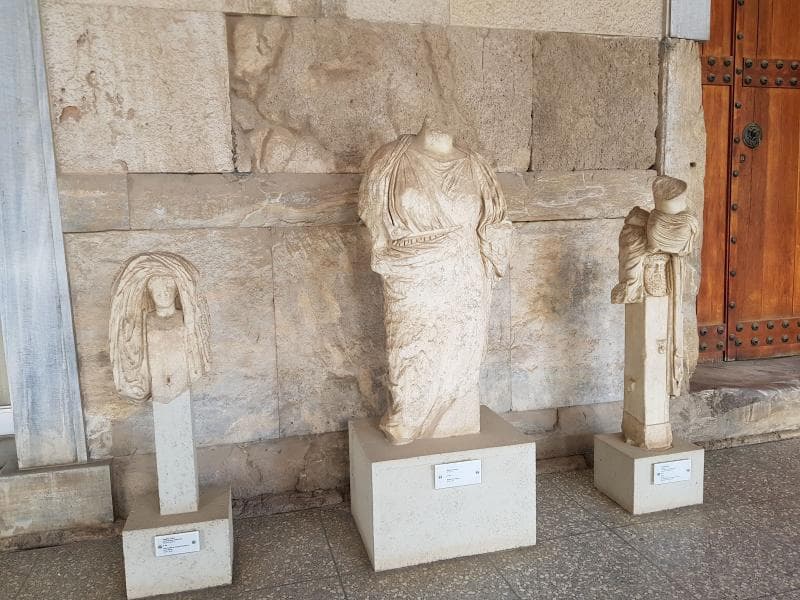
Explore the Bouleuterion in Athens, Greece, the ancient council house where Athenian democracy thrived. Discover its history, function, and significance in shaping the world's first democratic city-state.
Overview
Deep within the heart of Athens, nestled within the sprawling archaeological site of the Ancient Agora, lie the remnants of the Bouleuterion, a place of immense historical significance. This wasn't merely a building; it was the vibrant engine room of Athenian democracy, where the Council of 500, known as the Boule, convened to shape the laws and policies of one of the world's first democratic societies. Visitors today can explore the subtle foundations and outlines of both the Old and New Bouleuterion, imagining the fervent debates and civic duties that once unfolded here, standing on ground where monumental decisions were made for ancient Athens.
The Bouleuterion served as the council house, housing a deliberative body that played a pivotal role in the Athenian legislature. Made up of 500 citizens, 50 from each of Athens' ten tribes, these individuals were chosen by lot to serve one-year terms. Their daily meetings, except on festival days, were dedicated to proposing legislation that would later be ratified by the entire citizen assembly, the Ekklesia.
History & Cultural Background
The story of the Bouleuterion begins with the foundations of Athenian democracy itself. Solon is credited with establishing a council in 594 BC, initially with 100 members. However, it was with Cleisthenes' reforms around 507 BC that the Boule, or Council of 500, was firmly established, comprising 50 citizens from each of the ten newly created tribes.
The Boule originally met in what is now known as the Old Bouleuterion, constructed around the end of the 6th century BC on the west side of the Agora, east of the Tholos. This simple structure initially accommodated the 500 members, likely with wooden seating. It also functioned as a crucial repository for public documents, laws, and treaties, often inscribed on stone and displayed for public view.
As Athens' democratic needs evolved, a new and more advanced Bouleuterion was constructed immediately adjacent to the old one in the late 5th century BC, specifically around 412/411 BC. The New Bouleuterion was designed with a more theatrical arrangement, featuring 12 rows of semi-circular wooden benches to seat over 500 members. After its completion, the Old Bouleuterion was repurposed, primarily serving as an archive for state records and possibly a sanctuary for the Mother of the Gods, eventually being replaced by the Metroon in the 1st century BC.
What Makes It Special
The Bouleuterion holds a special place in history as the physical embodiment of ancient Athenian democratic ideals. It wasn't just a government building; it was a symbol of civic participation and direct democracy, a place where ordinary citizens could actively contribute to the governance of their city-state. The transition from the Old to the New Bouleuterion reflects the growth and increasing sophistication of Athenian political organization, demonstrating a commitment to providing a dedicated and appropriate space for legislative deliberation.
Unlike many ancient structures that fell completely into disrepair, the New Bouleuterion was notable for being one of the few buildings in the Agora to be repaired and reused even after devastating events like the Heruli raid in 267 AD, underscoring its enduring importance to the city. Its architectural evolution, from a simple rectangular hall to a more sophisticated theatre-like structure, also showcases the practical adaptation of design to meet the complex needs of a developing democracy.
Stories, Fun Facts & Local Details
Imagine the daily scene: 500 citizens, chosen by lot, arriving at the Bouleuterion, ready to discuss and debate the myriad issues facing Athens. These were not career politicians, but ordinary men from various walks of life, serving for a single year, bringing a diverse range of perspectives to the legislative process. Their work in the Bouleuterion was fundamental, setting the agenda for the larger assembly of citizens who would then cast their final votes.
One fascinating detail is that during the first century of its use, the Old Bouleuterion displayed important documents, laws, and treaties inscribed on stone. A quote attributed to Lykourgos mentions words 'on the stone in the Bouleuterion concerning traitors and those who attempt to overthrow the democracy,' highlighting its role in civic education and transparency. The presence of an altar dedicated to Hestia Boulaia (Hestia of the Council) within the New Bouleuterion further suggests the spiritual and ceremonial significance attached to the council's work.
Visitor Perspective
Today, visitors to the Ancient Agora of Athens will find the remains of the Bouleuterion on the western side of the site, near the Tholos. While largely reduced to their foundations, particularly the Old Bouleuterion, the outlines of these crucial structures are still discernible. Informative signage helps to bring the site to life, allowing one to connect the scattered stones with the bustling political activity that once defined this space.
Standing amidst these venerable ruins, it is easy to feel a profound connection to the origins of Western democracy. Although little of the original superstructure remains, especially for the Old Bouleuterion, the sheer historical weight of the location is palpable. The New Bouleuterion's foundations, excavated by the American School of Classical Studies, offer a clearer sense of its layout. Visitors can reflect on the democratic ideals born here, which continue to resonate across millennia, making the Bouleuterion a truly inspiring, if visually understated, highlight of the Ancient Agora.
Coordinates: 23.7162, 37.9795
View on Google Maps💬 How Travelers Describe This Place
Based on community votes
Must See
872Beautiful
684Unique
363Interesting
250Photogenic
88
Traveler Stories
Discover memorable experiences shared by travelers who have visited this place.
No traveler stories yet.
Be the first traveler to share what made this place memorable.

Tour
By
Spot
Discover amazing places around the world. Your journey starts here.
Explore
© 2026 TourBySpot. All rights reserved.