Botanical Trails
Tbilisi, Georgia
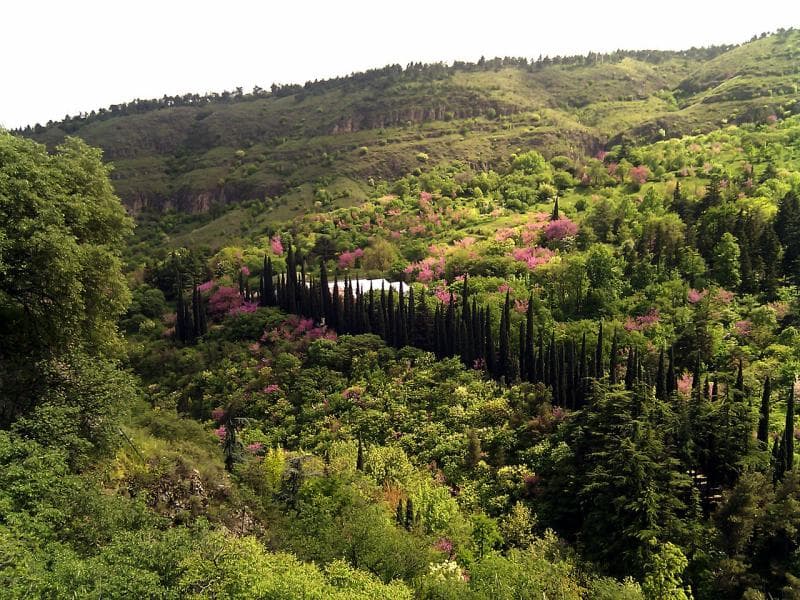
Explore the serene Botanical Trails of Tbilisi Botanical Garden, Georgia. Discover diverse flora, historical charm, and stunning waterfalls in this urban oasis.
Overview
Nestled in the heart of Tbilisi, Georgia, the National Botanical Garden of Georgia, often referred to as the Tbilisi Botanical Garden, offers a verdant escape from the bustling city. Spanning an impressive 161 hectares (or 128 hectares depending on historical periods of expansion), this natural sanctuary is far more than just a collection of plants; it is a vibrant ecosystem intricately woven with history and culture. [4, 8, 14, 16, 20, 21]
The 'Botanical Trails' within this expansive garden are not a single, designated area, but rather the comprehensive network of winding paths and routes that invite curious travelers to explore its diverse landscapes. These trails lead visitors through picturesque gorges, up gentle hillsides, and alongside the flowing Tsavkisistskali River, revealing a spectacular array of over 4,500 taxonomic groups of flora from across the globe, including species from the Caucasus, China, Japan, the Himalayas, and North America. [4, 8, 9, 14, 16, 17, 20]
History & Cultural Background
The history of the Tbilisi Botanical Garden dates back much further than its formal establishment, with its origins tracing to royal gardens in the early 17th century, possibly as early as 1625. [3, 4, 8, 10, 20, 21] French travelers like Jean Chardin in 1671 and Joseph Pitton de Tournefort in 1701 recorded the existence of these royal or 'fortress gardens,' noting their beauty and well-kept plants. [3, 4, 8, 20]
Officially designated as the Tbilisi Botanical Garden in 1845, it evolved from being royal pleasure grounds into a significant scientific and cultural institution. [3, 4, 6, 8, 10, 20, 21] Over the centuries, the garden expanded, incorporating additional territories and plant collections. A notable historical layer includes the presence of a former Muslim cemetery, which became part of the garden between 1932 and 1958, where a small pantheon now serves as the final resting place for eminent Azerbaijani figures, symbolizing Tbilisi's multicultural past. [3, 7, 8]
Today, the National Botanical Garden of Georgia stands as a leading institution for research, cultural education, and nature conservation, preserving both botanical diversity and a rich historical heritage. [3, 6, 19, 20]
What Makes It Special
What truly sets the Botanical Garden's trails apart is the seamless integration of natural beauty with curated botanical collections. The Tsavkisistskali River carves its way through the garden, creating a dramatic gorge and several captivating waterfalls, including a prominent 22-meter waterfall that serves as a focal point. [4, 5, 9, 10, 11, 14, 15, 19] An iconic arched bridge, built in 1914, spans high above this waterfall, offering a truly spectacular view and becoming a symbolic landmark. [6, 8, 9]
As you wander the trails, you'll discover distinct themed areas such as the tranquil Japanese Garden, complete with authentic plants like sakura, which is especially breathtaking in spring. [5, 14] The fragrant Lilac Garden (Siringari) bursts into color and scent during May and June, attracting butterflies and delighting visitors. [5, 15] There's also a unique Bamboo Alley, where bamboo stalks reach heights of 8-10 meters, forming a green tunnel, and the 'Alley of Forgotten Fruits,' dedicated to rare fruit trees. [5, 11, 14]
The garden's landscape feels surprisingly wild and untamed despite its central urban location, offering a rare blend of dense forests, open lawns, and dramatic geological features that make each turn on the trails a discovery. [11, 14, 16]
Stories, Fun Facts & Local Details
The land occupied by the garden has long been significant, with maps from 1735 referring to it as a 'fortress garden,' hinting at its connection to the nearby Narikala Fortress. Some historical accounts even suggest that a route through the garden area once formed part of the ancient Silk Road. [3]
For those seeking a dash of adrenaline, a unique feature of the garden is the zipline that originates near the Narikala Fortress and descends directly into the garden, offering a thrilling, rapid view of its waterfalls and diverse sections. [4, 9, 15] This provides an unconventional entry point, contrasting with the more traditional main entrance on Botanikuri Street or the upper entrance near the Mother of Georgia statue, often accessed via cable car from Rike Park. [3, 5, 7, 9, 10, 11, 20]
The garden is considered a 'living museum,' where each plant tells a story of its origin and adaptation. [14] The remnants of ancient walls and terraces, visible in the eastern part of the garden, are tangible links to its royal past, allowing visitors to walk through centuries of history and botanical evolution. [11]
Visitor Perspective
Embarking on the Botanical Trails is an immersive experience that caters to nature lovers, families, and photographers alike. It's recommended to allocate two to three hours to fully appreciate the garden's offerings, and comfortable walking shoes are a must, given the varied terrain and numerous steps. [4, 7, 9, 11]
Many visitors choose to enter from the upper entrance near Narikala Fortress, allowing for a pleasant downhill stroll through the garden, passing key highlights like the Japanese Garden, the Rose Garden, and the main waterfall, eventually exiting onto Botanikuri Street near the historic sulfur baths. [7, 11]
The trails are well-marked, and a visitor center offers maps and information, with guided tours available for those who wish to delve deeper into the garden's botanical aspects and history. [9, 19] Benches strategically placed along the paths provide serene spots for rest and reflection, often offering panoramic views of the city peeking through the lush canopy. [4, 14] The best times to visit are during spring and autumn when the garden is particularly vibrant with blooming flowers or golden foliage, offering a peaceful and inspiring retreat from urban life. [5, 14]
Coordinates: 44.8029, 41.6855
View on Google Maps💬 How Travelers Describe This Place
Based on community votes
Unique
995Beautiful
964Photogenic
929Interesting
730Must See
482
Traveler Stories
Discover memorable experiences shared by travelers who have visited this place.
No traveler stories yet.
Be the first traveler to share what made this place memorable.

Tour
By
Spot
Discover amazing places around the world. Your journey starts here.
Explore
© 2026 TourBySpot. All rights reserved.