Book Of Kells Exhibition
Dublin, Ireland
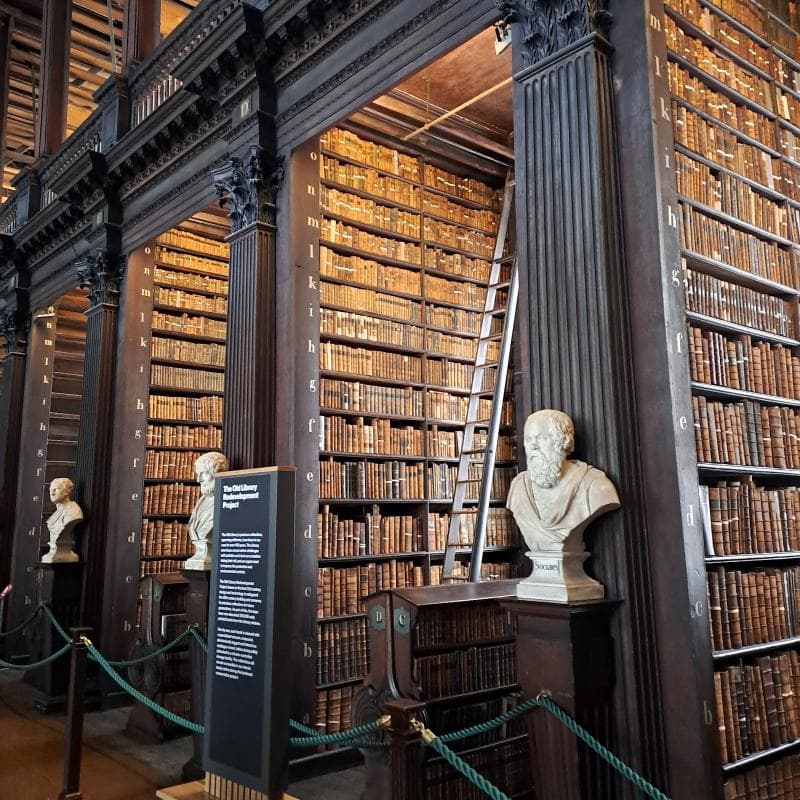
Explore the Book of Kells Exhibition at Trinity College in Dublin, Ireland. Discover the history, artistry, and cultural significance of this ancient illuminated manuscript.
Overview
Stepping into the Book of Kells Exhibition at Trinity College in Dublin, Ireland, is like journeying back in time to an era of unparalleled artistry and devotion. Housed within the majestic Old Library, this experience showcases one of the world's most famous medieval manuscripts. The Book of Kells, a ninth-century gospel manuscript, is not merely a religious text but a masterpiece of early Christian art, drawing close to a million visitors annually to witness its intricate beauty. It stands as a unique icon, recognized by UNESCO as a 'Memory of the World'.
History & Cultural Background
The story of the Book of Kells begins around 800 AD, a period often referred to as the 'Dark Ages' in much of Western Europe, yet a time of flourishing artistic and intellectual prowess in Ireland. Created by Irish monks, likely on the Scottish island of Iona, the manuscript was later moved to Kells, County Meath, to protect it from Viking raids. This relocation gave the book the name it carries today. For centuries, it remained in Kells until the Irish Rebellion of 1641, when it was sent to Dublin for safekeeping. By 1661, it found its permanent home at Trinity College, where it has been a treasured possession ever since. The Book of Kells is a powerful symbol of Irish cultural identity and heritage, reflecting the rich scholarly and artistic traditions of early medieval Ireland.
What Makes It Special
What truly sets the Book of Kells apart is its extraordinary artistic value. It is considered one of the greatest examples of illuminated manuscripts globally, renowned for its intricate designs, vivid colors, and exquisite calligraphy. Each page features decoration, from full-folio compositions to tiny details that augment the text. The manuscript is famous for its 'carpet pages' – entire pages filled with elaborate, abstract designs resembling intricately woven textiles. The decoration often incorporates stylized human figures and animals, such as snakes symbolizing Christ's resurrection, peacocks representing immortality, and lions mirroring Christ's resurrection through the tale of a revived lion cub. The precision of some details is so fine that it's almost invisible to the naked eye, a testament to the monks' incredible skill. While containing the Latin texts of the four Christian gospels, its least noteworthy feature is the text itself; the artistry is the primary draw for most visitors.
Stories, Fun Facts & Local Details
- The sheer scale of its creation is astounding; approximately 185 calfskins were needed to make the vellum pages, and the inks were handcrafted, with some pigments like orpiment (an arsenic sulfide mineral) requiring careful handling.
- Despite its perfection, the meticulous work of the monks occasionally included small 'mistakes,' a charming reminder of its human creation.
- The Book of Kells was not intended for daily reading but served as a ceremonial manuscript, likely displayed on an altar.
- Typically, two of the four volumes are displayed at Trinity College at any given time: one open to a major decorated page and another to a typical text page, with the displayed pages changed regularly to preserve the manuscript and allow visitors to see different sections.
- The exhibition also grants access to the magnificent Long Room, a breathtaking chamber within the Old Library housing 200,000 of the library's oldest books, with its towering oak bookcases creating an awe-inspiring atmosphere.
Visitor Perspective
A visit to the Book of Kells Exhibition typically begins with an introductory exhibition, often titled 'Turning Darkness into Light,' which delves into the manuscript's history, creation, and symbolism through displays and videos. This preparatory section helps visitors grasp the profound significance of this medieval treasure. Following this, guests proceed to the Treasury, where the actual Book of Kells is on display, often in dim lighting to protect its delicate pages. After marveling at the ancient manuscript, the journey continues into the iconic Long Room, a highlight for many. Trinity College Dublin also offers digital exhibitions, including 'The Book of Kells 360' and 'The Long Room Reimagined,' providing immersive experiences that complement the physical viewing. Given its immense popularity, especially with up to a million visitors annually, it is highly recommended to book tickets online in advance to avoid long queues and ensure entry.
Coordinates: -6.254635974706802, 53.34376145374009
View on Google Maps💬 How Travelers Describe This Place
Based on community votes
Photogenic
896Beautiful
102Unique
102Interesting
95Must See
87
Traveler Stories
Discover memorable experiences shared by travelers who have visited this place.
No traveler stories yet.
Be the first traveler to share what made this place memorable.

Tour
By
Spot
Discover amazing places around the world. Your journey starts here.
Explore
© 2026 TourBySpot. All rights reserved.