Bodhi Tree
Hanoi, Vietnam
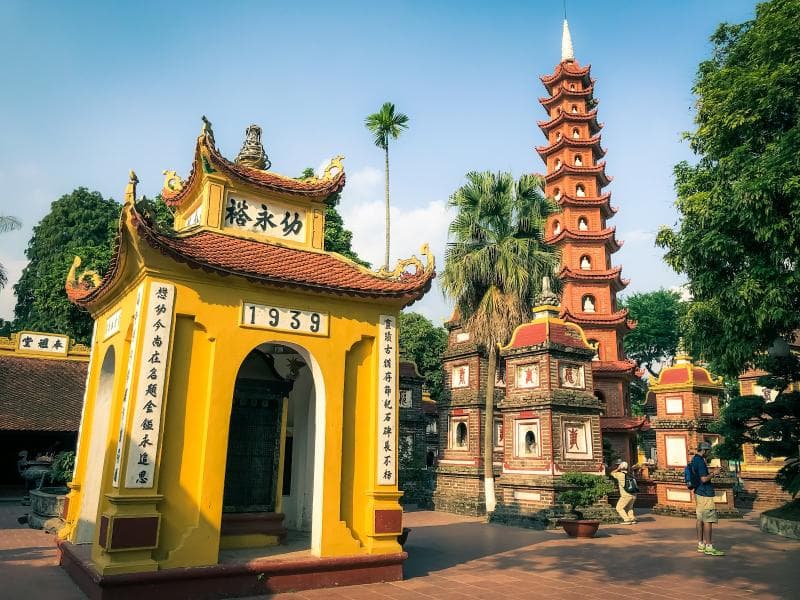
Discover the sacred Bodhi Tree at Tran Quoc Pagoda in Hanoi, Vietnam – a descendant of the tree under which Buddha attained enlightenment. Explore its history and spiritual significance.
Overview
Nestled peacefully within the revered Tran Quoc Pagoda in Hanoi, Vietnam, stands a sacred Bodhi Tree, a living testament to centuries of Buddhist faith and international friendship. This particular tree is not just any tree; it is a direct descendant of the revered Jaya Sri Maha Bodhi in Anuradhapura, Sri Lanka, which itself was propagated from the original Bodhi Tree in Bodh Gaya, India, where Siddhartha Gautama attained enlightenment to become the Buddha. Its presence imbues the ancient pagoda with profound spiritual significance, making it a focal point for both local devotees and curious travelers seeking a connection to Buddhist history and philosophy. Located on an islet on the eastern shore of West Lake, the tree contributes to the pagoda's tranquil ambiance, offering a serene space for contemplation amidst the bustling city of Hanoi.
History & Cultural Background
The story of the Bodhi Tree at Tran Quoc Pagoda is deeply intertwined with the history of Buddhism and the diplomatic relations between nations. The original Bodhi Tree in Bodh Gaya is perhaps the most sacred site in Buddhism, marking the spot of the Buddha's enlightenment over 25 centuries ago. The tree within Tran Quoc Pagoda was a significant gift from then Indian President Rajendra Prasad to Vietnam in 1959, presented to President Ho Chi Minh. This gesture symbolized the enduring spiritual and cultural ties between India and Vietnam, reinforcing a shared heritage rooted in Buddhist traditions. The Tran Quoc Pagoda itself boasts an impressive history, dating back to 541 AD, making it the oldest Buddhist temple in Hanoi. Originally named Khai Quoc Pagoda, it was later relocated in 1615 to its current picturesque setting on West Lake to protect it from river erosion and renamed 'Tran Quoc', meaning 'to protect the country'.
What Makes It Special
The Bodhi Tree at Tran Quoc Pagoda is special for several compelling reasons. Foremost is its direct lineage to the original Bodhi Tree, making it a living relic of immense spiritual importance. For Buddhists, it embodies wisdom, compassion, and the path to enlightenment, serving as a powerful reminder of the Buddha's journey. Beyond its religious significance, the tree stands as a tangible symbol of international friendship and solidarity between India and Vietnam, representing a 'diplomatic tree' rooted in shared cultural values. Its heart-shaped leaves are distinctive and add to its charm. The meticulous care provided by the pagoda's monks over more than six decades has allowed the tree to flourish, providing generous shade and enhancing the overall peaceful atmosphere of the pagoda grounds.
Stories, Fun Facts & Local Details
Visitors to the Bodhi Tree often find themselves drawn to its tranquil presence, a stark contrast to the vibrant energy of Hanoi. A local detail that adds to its mystique is the belief among many that praying before this Bodhi Tree can bring peace, wisdom, and good fortune, especially due to its connection to the Buddha's enlightenment. It is a site where many pilgrims come to worship and meditate, seeking spiritual solace. The thriving foliage and extensive root system of the tree, carefully tended for nearly 70 years, stand as a testament to the dedication of the monastic community. The practice of nurturing such a sacred tree highlights the deep respect for living symbols of faith within Vietnamese Buddhism. The serene setting, with the West Lake as its backdrop, further amplifies the tree's significance, creating a picturesque and deeply spiritual experience.
Visitor Perspective
For a traveler, visiting the Bodhi Tree at Tran Quoc Pagoda offers more than just a sightseeing opportunity; it's an immersive cultural and spiritual experience. Approaching the pagoda, one is immediately struck by its ancient beauty and its serene location on the lake. The Bodhi Tree, often found within the garden of stupas, invites quiet reflection. It's common to see visitors respectfully observing the tree, some offering prayers or simply enjoying the peaceful shade. The pagoda itself is considered a National Historical and Cultural Monument, and its architecture, particularly the eleven-tiered stupa, complements the natural beauty of the area. While there's no entrance fee, visitors are encouraged to dress modestly, covering shoulders and knees, to show respect for this sacred Buddhist site. The best times to visit are often the early mornings on weekdays when the pagoda is quieter, allowing for a more profound connection with the site's spiritual essence and the venerable Bodhi Tree.
Coordinates: 105.83676, 21.0479
View on Google Maps💬 How Travelers Describe This Place
Based on community votes
Photogenic
998Must See
685Unique
472Beautiful
399Interesting
92
Traveler Stories
Discover memorable experiences shared by travelers who have visited this place.
No traveler stories yet.
Be the first traveler to share what made this place memorable.

Tour
By
Spot
Discover amazing places around the world. Your journey starts here.
Explore
© 2026 TourBySpot. All rights reserved.