BIX Media Façade
Graz, Austria
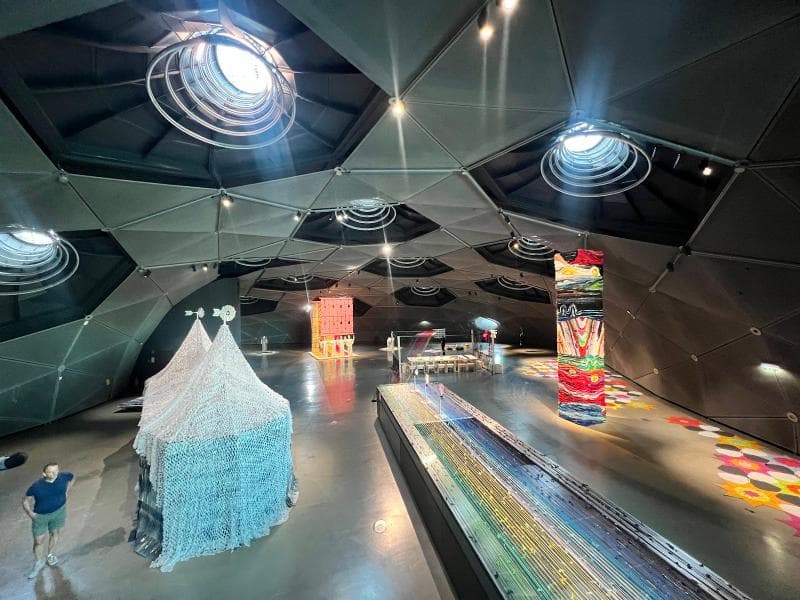
Discover the BIX Media Façade of Kunsthaus Graz, Austria – a 'Friendly Alien' that uses light and pixels to communicate art and culture with the city.
Overview
Perched gracefully within the vibrant cityscape of Graz, Austria, the Kunsthaus Graz stands as a beacon of modern architectural innovation. Integral to its iconic identity is the BIX Media Façade, a captivating surface that transcends traditional building exteriors. More than just a facade, the BIX transforms the Kunsthaus into a dynamic canvas, a low-resolution screen that communicates with the urban environment through light and movement. This interactive display is a key feature of the building affectionately dubbed the 'Friendly Alien' due to its biomorphic, unconventional form that strikingly contrasts with Graz's historic baroque surroundings. It invites curiosity and interaction, making the Kunsthaus Graz and its BIX Façade a must-see destination for any traveler intrigued by the intersection of art, technology, and architecture.
History & Cultural Background
The Kunsthaus Graz, with its remarkable BIX Media Façade, was conceived and inaugurated in 2003 as a highlight of Graz's tenure as the European Capital of Culture. This ambitious project aimed to breathe new life into the city's architectural landscape, deliberately contrasting with the traditional red-tiled roofs of the historic center. Designed by renowned British architects Peter Cook and Colin Fournier, the Kunsthaus itself is an example of 'blob architecture,' its organic shape often likened to a 'baby hippo' or 'sea snail.' The BIX Media Façade specifically was developed by the Berlin-based architectural studio realities:united. Its creation was not merely an aesthetic choice; it was a strategic move to foster communication and engagement between the museum, its art, and the public. Situated in the formerly less-privileged Lend district, the Kunsthaus and its luminous façade played a significant role in the area's urban revitalization, fostering a new creative scene around it.
What Makes It Special
The BIX Media Façade is a groundbreaking fusion of architecture and new media, earning it international recognition, including inclusion in MoMA's permanent collection in 2010. Comprising 926 circular fluorescent lamps, each 40 cm in diameter, integrated into the eastern Plexiglas facade of the Kunsthaus, BIX acts as a vast urban screen. These 40-watt lamps can be individually controlled, dimmable, and capable of flashing up to 20 times per second, allowing for the display of images, animations, and lettering. Despite its large scale, the BIX operates at a low resolution, famously described as 56 by 25 pixels, which was a deliberate design choice to prioritize its integration into the architecture over high-definition video capabilities. This 'communicative display skin' transforms the building itself into an expressive medium, projecting artistic content and messages outwards, and thereby extending the museum's reach beyond its interior walls into the public realm.
Stories, Fun Facts & Local Details
The name 'BIX' is a clever portmanteau of 'BIG' and 'PIXEL,' perfectly encapsulating its nature as a large-scale, low-resolution display. The Kunsthaus Graz is often affectionately called the 'Friendly Alien' by locals and visitors alike, a nickname coined by architect Colin Fournier himself, highlighting its unique biomorphic form that seems to have 'landed' amidst the traditional urban fabric. A fascinating detail is the 'Sunscriber' project, introduced in 2021. This innovative initiative ensures that the BIX Media Façade is powered by a photovoltaic system installed on the roof of the 'Needle,' a prominent glazed bridge of the Kunsthaus. This means that the duration and intensity of the BIX's nightly illumination are directly determined by the amount of sunshine Graz receives during the day, creating a sustainable and poetic connection between nature and art. The BIX facade also contributed to the Kunsthaus Graz becoming one of the most popular photo spots in the city.
Visitor Perspective
Experiencing the BIX Media Façade is a unique part of any visit to Graz. As dusk settles, the 'Friendly Alien' truly comes alive, its blue-tinted acrylic skin glowing with ever-changing patterns and artistic expressions. Walking along the Mur River or through the city center, the BIX offers impressive views, becoming a luminous landmark that engages passersby in a direct dialogue. It's not just a static architectural element but an active participant in Graz's cultural life, constantly showcasing new art projects and messages. Even without entering the museum, the exterior of the Kunsthaus, largely defined by the BIX, provides a captivating visual spectacle that sparks wonder and encourages contemplation about the role of art and technology in public spaces. The subtle reflections of the surrounding cityscape on its translucent cladding further integrate the building into its environment, creating an evolving artistic encounter for every curious traveler.
Coordinates: 15.4341, 47.0714
View on Google Maps💬 How Travelers Describe This Place
Based on community votes
Beautiful
873Interesting
477Unique
422Photogenic
157Must See
53
Traveler Stories
Discover memorable experiences shared by travelers who have visited this place.
No traveler stories yet.
Be the first traveler to share what made this place memorable.

Tour
By
Spot
Discover amazing places around the world. Your journey starts here.
Explore
© 2026 TourBySpot. All rights reserved.