Biblical Message Series Rooms
Nice, France
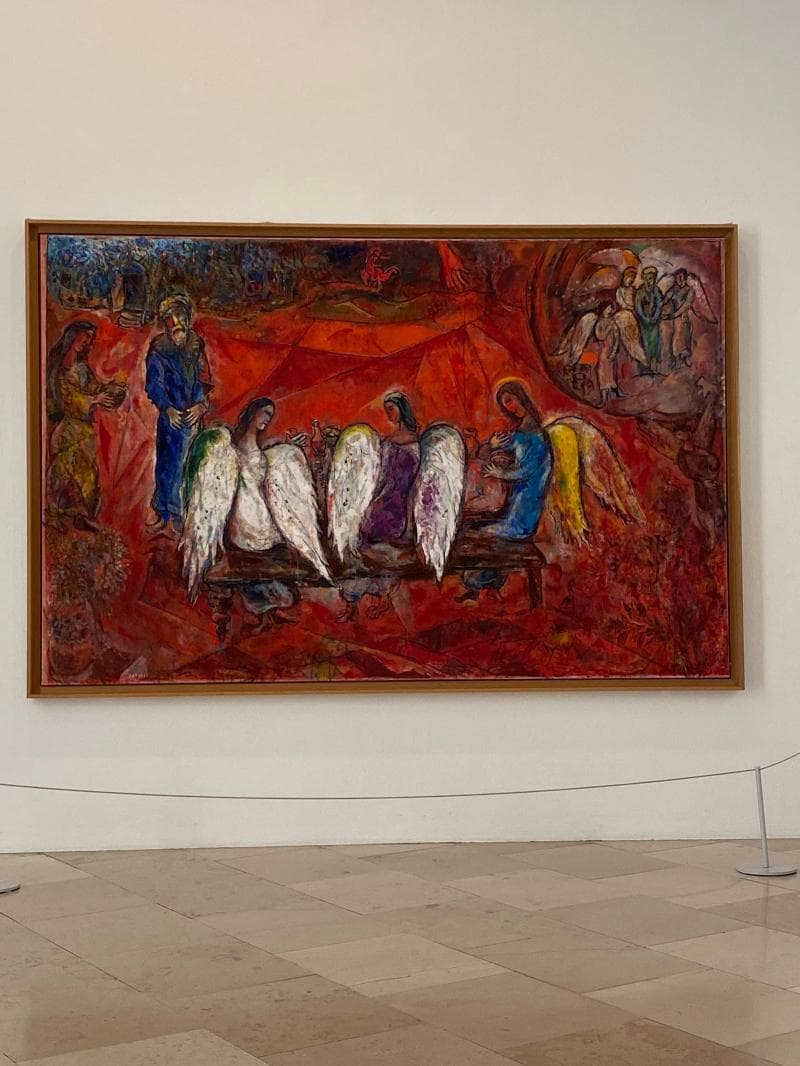
Explore the Biblical Message Series Rooms at Musée Marc Chagall in Nice, France. Discover Marc Chagall's visionary biblical cycle, a unique spiritual and artistic journey.
Overview
Nestled in the picturesque city of Nice, France, within the serene Musée Marc Chagall, lies a profound artistic sanctuary known as the 'Biblical Message Series Rooms'. This dedicated space houses the monumental artistic cycle created by Marc Chagall, an extraordinary collection of seventeen large-format paintings. These works illustrate powerful narratives from the Old Testament: Genesis, Exodus, and the lyrical Song of Songs, offering visitors an immersive journey into Chagall's unique spiritual vision. The rooms are not merely a display of art; they are a thoughtfully conceived environment, with Chagall himself meticulously involved in their design and the placement of each masterpiece.
History & Cultural Background
The Musée Marc Chagall holds a special place in art history as it was the first French national museum dedicated to a living artist. Inaugurated in 1973, on Chagall's 86th birthday, the museum was a testament to his enduring legacy. The core of its collection, the 'Biblical Message' cycle, was painted between 1956 and 1966. Chagall generously gifted this series to the French State in 1966 and 1972, intending for them to convey a universal humanist message. Interestingly, these powerful works were initially conceived to adorn a chapel in Vence, near Nice, where Chagall resided. However, the scope of his vision grew, leading to the creation of this purpose-built museum. Chagall's deep spiritual connection, profoundly shaped by his Hasidic Jewish upbringing in Vitebsk, Russia, provided an endless wellspring of inspiration, allowing him to interpret biblical stories with a blend of personal experience and universal symbolism.
What Makes It Special
What truly distinguishes the Biblical Message Series Rooms is the sheer scale and emotional depth of Chagall's interpretation. The seventeen paintings, presented in two distinct parts, capture pivotal moments from the Bible. Twelve canvases depict scenes from Genesis and Exodus, while a separate, intimate circular room is dedicated to five vibrant paintings illustrating the Song of Songs. Chagall's personal touch extends beyond the canvases; he also contributed mosaic art, preparatory sketches, and magnificent stained-glass windows, creating an all-encompassing artistic experience within the museum. The architect of the museum, André Hermant, collaborated closely with Chagall, ensuring the space harmonized with the artworks, a rarity for an artist to be so involved in the presentation of their work during their lifetime. The surrounding Mediterranean garden, with its reflecting pool and mosaic wall, was also conceived with Chagall's specific instructions, adding another layer to the spiritual journey.
Stories, Fun Facts & Local Details
Chagall's personal life is beautifully woven into the fabric of the Biblical Message. The stunning Song of Songs room, for instance, is a heartfelt dedication to his second wife, Valentina, affectionately known as Vava. An inscription by Chagall himself confirms this, translating to 'To Vava, my wife, my joy and my gladness.' Visitors might notice that the paintings in the main hall are not displayed in strict biblical chronological order; this arrangement was specifically chosen by Chagall to guide the viewer through an emotional rather than purely sequential narrative. The museum's garden features Agapanthuses, also known as African lilies, which bloom around July 7th, coinciding with Chagall's birthday, a charming detail that personalizes the landscape. The vibrant colors and dreamlike imagery, characteristic of Chagall's style, reflect his belief in the spiritual permeating the physical world, a concept rooted in his Hasidic background.
Visitor Perspective
Stepping into the Biblical Message Series Rooms is to embark on a poetic journey, a profound encounter with Marc Chagall's vivid imagination and spiritual fervor. The interplay of monumental canvases, rich colors, and symbolic narratives creates an atmosphere of contemplation and wonder. Travelers often find themselves drawn into the emotive power of Chagall's brushstrokes, which transcend mere illustration to become a universal dialogue about humanity, love, faith, and peace. It's a space that invites reflection, allowing each visitor to connect with the ancient stories and Chagall's deeply personal interpretations on their own terms. The thoughtful design of the museum, where art, architecture, and nature converge, ensures that the experience is not just about viewing paintings, but about feeling the profound spiritual resonance Chagall poured into his magnum opus. It truly is a unique opportunity to witness the artistic and spiritual legacy of one of the 20th century's most iconic painters.
Coordinates: 7.269527, 43.709136
View on Google Maps💬 How Travelers Describe This Place
Based on community votes
Unique
995Beautiful
964Photogenic
929Interesting
730Must See
482
Traveler Stories
Discover memorable experiences shared by travelers who have visited this place.
No traveler stories yet.
Be the first traveler to share what made this place memorable.

Tour
By
Spot
Discover amazing places around the world. Your journey starts here.
Explore
© 2026 TourBySpot. All rights reserved.