Beverly Wilshire Hotel Area
Los Angeles, United States
Overview
Nestled at the vibrant intersection of Wilshire Boulevard and the iconic Rodeo Drive in Beverly Hills, Los Angeles, the Beverly Wilshire Hotel Area embodies a distinct blend of old-world glamour and contemporary luxury. This storied landmark, officially known as Beverly Wilshire, A Four Seasons Hotel, serves as a gateway to the world-renowned shopping and cultural experiences of Rodeo Drive. It's more than just a hotel; it's a historical and cultural cornerstone that has played a significant role in shaping the identity of Beverly Hills, drawing in visitors eager to witness its grandeur and immerse themselves in its rich narrative.
The area surrounding the Beverly Wilshire is defined by its elegant architecture, meticulously curated storefronts, and a palpable sense of Hollywood history. Even for those not checking into a suite, the presence of the hotel enriches the entire district, inviting curious travelers to explore the lavish surroundings and discover the stories etched into its very fabric. It offers a unique vantage point to observe the ebb and flow of luxury, fashion, and celebrity that defines this prestigious part of Los Angeles.
History & Cultural Background
The Beverly Wilshire's history dates back to January 1, 1928, when it first opened its doors as the Beverly-Wilshire Apartment Hotel. Built on the former site of the Beverly Hills Speedway, a prominent race track, its construction by real estate developer Walter G. McCarty aimed to attract a discerning clientele to what was then a burgeoning community of fewer than 18,000 residents. Architects Walker & Eisen designed the E-shaped structure in an Italian Renaissance style, utilizing Tuscan stone and Carrara marble, giving it a timeless, opulent aesthetic.
Throughout its nearly century-long existence, the hotel has undergone significant transformations. Renamed the Beverly Wilshire Hotel, it saw major renovations in the 1940s, which included the addition of a ballroom, an Olympic-sized swimming pool, and championship tennis courts. Noted African American architect Paul Revere Williams contributed to its renovations between 1946 and 1957, further enhancing its luxury. In 1971, the 12-story Beverly Wing was added, connected by a cobblestone driveway called El Camino Real, lined with gaslight lanterns. The hotel was added to the National Register of Historic Places on June 12, 1987, recognizing its architectural significance and cultural impact.
Rodeo Drive itself has a fascinating evolution. Once a humble path through lima bean fields and part of a Spanish land grant known as 'El Rodeo de las Aguas' (The Gathering of the Waters), it transformed into a luxury shopping mecca in the 20th century. The arrival of Fred Hayman's Giorgio Beverly Hills boutique in 1961, followed by other high-end European fashion houses in the late 1960s, cemented its reputation as a global destination for luxury and style.
What Makes It Special
The Beverly Wilshire Hotel area stands out for its seamless integration of historical grandeur with contemporary luxury, serving as a beacon of sophistication at the heart of Beverly Hills. Its architectural elegance, characterized by its Second Renaissance Revival style, Tuscan stone, and Carrara marble, offers a visual feast that transports visitors to a bygone era of glamour.
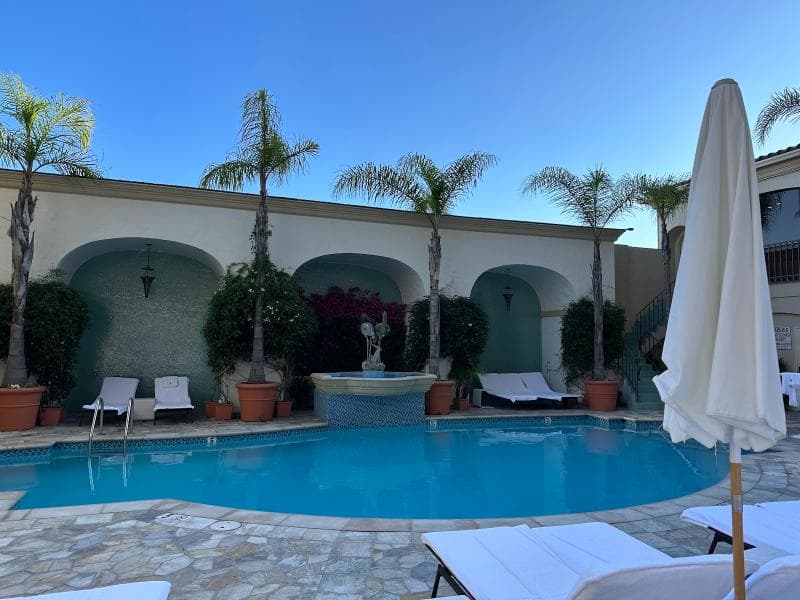
Beyond its striking facade, the hotel is renowned for its exceptional service and a commitment to providing a luxurious experience. The hotel's pool, modeled after Sophia Loren's private Italian villa pool, adds a touch of European charm and exclusivity. Culinary delights await at establishments like CUT by Wolfgang Puck, designed by architect Richard Meier, and THEBlvd, offering diverse dining experiences. The hotel's ability to maintain its prestige while evolving with the times makes it a truly special destination, embodying the aspirational lifestyle of Beverly Hills.
Stories, Fun Facts & Local Details
The Beverly Wilshire is steeped in stories and has been a preferred residence for numerous notable figures. Elvis Presley, Warren Beatty, and John Lennon (during his separation from Yoko Ono) all spent significant periods living at the hotel. Legendary socialite Barbara Hutton lived her final years there, and F. Scott Fitzgerald once lunched at the hotel with Ginevra King, believed to be an inspiration for Daisy Buchanan.
Its cinematic presence is undeniable, gaining worldwide fame as the primary setting for the 1990 film 'Pretty Woman' starring Julia Roberts and Richard Gere. While many interior scenes were filmed elsewhere, the hotel's exterior and lobby were prominently featured, making its striped awnings instantly recognizable. Other productions, including 'Clueless', 'Escape from the Planet of the Apes', 'Sex and the City: The Movie', and HBO's 'Entourage', have also used the hotel as a backdrop. The hotel even serves a popular 'Feeling Pretty' cocktail inspired by the movie.
A poignant moment in its history occurred in 1940 when the hotel, despite its discriminatory policies of the time, agreed to accommodate Paul Robeson for $100 per night under an assumed name. Robeson defiantly sat in the lobby daily, where he was recognized, a gesture that contributed to Los Angeles hotels lifting restrictions on Black guests shortly thereafter. Additionally, Rodeo Drive features the 'Walk of Style', honoring fashion icons with plaques along the sidewalk, akin to Hollywood's Walk of Fame, and is home to unique architectural elements, including a store designed by Frank Lloyd Wright.
Visitor Perspective
For a curious traveler, the Beverly Wilshire Hotel Area offers a rich tapestry of experiences, whether you're seeking a glimpse into luxury or a deeper dive into Hollywood lore. Starting your exploration at the hotel's grand entrance on Wilshire Boulevard, you can admire its impressive architecture and soak in the ambiance that has attracted royalty, celebrities, and discerning travelers for decades. The hotel's public spaces, with their elegant decor and seasonal floral displays, are often accessible and provide a taste of its refined atmosphere.
Stepping out, you are immediately on Rodeo Drive, where window shopping becomes an art form. The street itself is a spectacle of high fashion, architectural marvels, and a constant parade of luxury vehicles. Even if high-end shopping isn't on your agenda, a stroll along Rodeo Drive is an essential Beverly Hills experience, offering insights into the city's distinctive culture of glamour and aspiration. Dining options range from casual elegance to Michelin-starred cuisine, allowing visitors to indulge in world-class culinary experiences while people-watching at the only sidewalk café the hotel has ever had. This area provides an opportunity to not just observe, but to feel a part of the vibrant, luxurious, and historically significant heart of Beverly Hills, creating lasting memories for any traveler.
Coordinates: -118.40083, 34.06694
View on Google Maps💬 How Travelers Describe This Place
Based on community votes
Interesting
926Unique
646Photogenic
482Beautiful
380Must See
291
Traveler Stories
Discover memorable experiences shared by travelers who have visited this place.
No traveler stories yet.
Be the first traveler to share what made this place memorable.

Tour
By
Spot
Discover amazing places around the world. Your journey starts here.
Explore
© 2026 TourBySpot. All rights reserved.