Berlin Cathedral
Berlin, Germany
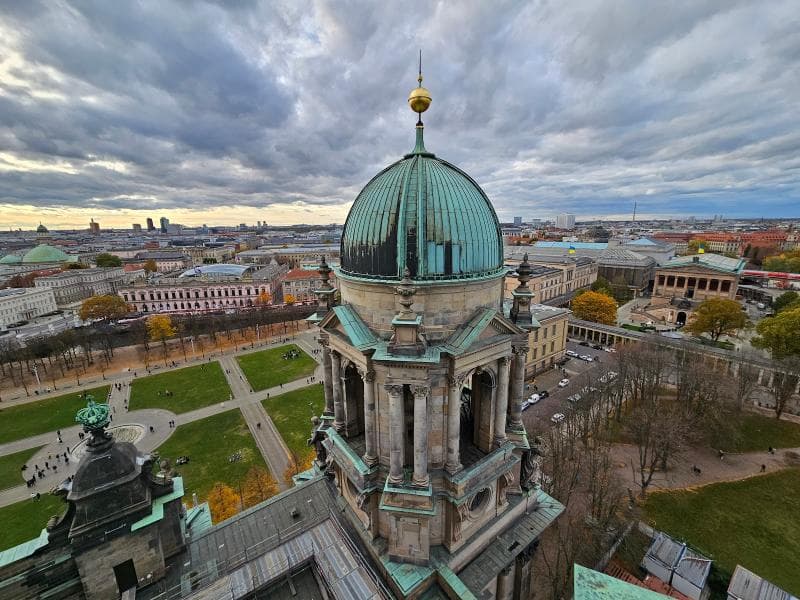
Explore the majestic Berlin Cathedral on Museum Island, Berlin, Germany. Discover its rich history, stunning architecture, and royal Hohenzollern Crypt.
Overview
Dominating the cityscape of central Berlin, the Berlin Cathedral, or Berliner Dom, stands majestically on Museum Island, an ensemble of world-renowned museums. This monumental German Protestant church, officially known as the Evangelical Supreme Parish and Collegiate Church, is not only a significant place of worship but also a powerful symbol of German history and architecture. With its impressive dome and ornate facade, it draws visitors from across the globe to admire its beauty and explore its rich past.
Situated prominently on the Lustgarten, a picturesque park, the cathedral forms a striking centerpiece amidst Berlin's historic heart. Despite its common name, it's important to note that the Berlin Cathedral has never actually been the seat of a bishop; instead, it holds the distinguished status of a supreme parish and collegiate church, historically serving as a representative stage for the powerful Hohenzollern dynasty.
History & Cultural Background
The origins of the Berlin Cathedral trace back to the 15th century, with the consecration of St. Erasmus Chapel in 1465, located within the royal palace of Cölln on the Spree. Over the centuries, several structures occupied this site, undergoing transformations to reflect the changing tastes and religious affiliations of the times. In the early 19th century, renowned Prussian architect Karl Friedrich Schinkel redesigned the court church in a neoclassical style.
However, the present awe-inspiring edifice was constructed between 1894 and 1905 under the ambitious patronage of Emperor Wilhelm II. Designed by Julius Raschdorff in a lavish Renaissance and Baroque Revival style, Wilhelm II envisioned it as Berlin's monumental answer to iconic cathedrals like St. Peter's in Rome and St. Paul's in London, aiming to showcase the power and prestige of the imperial monarchy.
The cathedral suffered severe damage during a 1944 bombing raid in World War II, which caused its main dome to collapse. Restoration efforts began in East Berlin in 1975, but it wasn't until 1993, after the reunification of Germany, that the exterior was fully restored, albeit with a simplified dome. The interior restoration was completed by 2002, bringing much of its original splendor back to life.
What Makes It Special
Beyond its striking exterior, the Berlin Cathedral captivates visitors with several unique features. The most prominent is its grand dome, which, despite being rebuilt to a slightly reduced height of 98 meters after WWII, still offers breathtaking panoramic views of Berlin's city center from its viewing platform, accessible by climbing 270 steps.
Inside, the opulent design is a feast for the eyes, featuring elaborate decorative mosaics, gold features, and impressive statues. The dome itself is adorned with eight mosaics by Anton von Werner, depicting the Beatitudes. Artworks of particular note include the marble and onyx altar, designed by Friedrich August Stüler, and the white marble baptismal font by Christian Daniel Rauch.
Another profoundly significant area is the Hohenzollern Crypt, located beneath the cathedral. It stands as Germany's most important dynastic burial site and is considered one of the most significant royal burial places in Europe. Here, visitors can explore the final resting places of 91 members of the House of Hohenzollern, spanning five centuries, including rulers like Frederick I and Sophie Charlotte. After extensive renovation, the crypt proudly reopened its doors to the public in March 2026.
The cathedral is also home to the Great 'Sauer' organ, an instrument of immense historical and musical value. Installed in 1905, it was once Germany's largest organ with 7269 pipes and 113 registers. It remains the largest preserved organ of the Late Romantic period in its original state, capable of producing rich tones during services and special concerts.
Stories, Fun Facts & Local Details
One fascinating detail is that Kaiser Wilhelm II, keen on adopting new technologies, requested an elevator for the richly decorated Imperial Staircase, which was exclusively intended for imperial use. While not always accessible to the public, this small fact offers a glimpse into the era's grand ambitions. The cathedral's reconstruction story after WWII is also compelling, as funds were scarce, and the ruins remained exposed for nearly a decade before rebuilding could commence, reflecting the perseverance of the German people.
Despite its name, the 'Dom' in Berliner Dom refers to its status as a collegiate church rather than the seat of a bishop, a common misconception for many visitors. This nuance highlights its unique ecclesiastical history within the Protestant tradition. The area surrounding the cathedral, Museum Island, is itself a UNESCO World Heritage Site, making the cathedral part of a larger cultural and historical treasure trove in the heart of Berlin.
Visitor Perspective
A visit to the Berlin Cathedral offers a multifaceted experience. Most visitors recommend allowing approximately 1.5 hours to explore the main church, ascend to the dome, and delve into the Hohenzollern Crypt. Audio guides are often included with the admission fee, providing valuable insights into the cathedral's history and art.
The climb of 270 steps to the dome is a highlight for many, rewarding them with unparalleled views across the city, including the Spree River, the Lustgarten, and the surrounding Museum Island. The reopened Hohenzollern Crypt offers a solemn yet awe-inspiring journey through five centuries of Brandenburg-Prussian burial culture. Additionally, the cathedral regularly hosts services, organ concerts, and events, allowing visitors to experience its vibrant musical tradition and spiritual atmosphere firsthand.
Coordinates: 13.40111, 52.51917
View on Google Maps💬 How Travelers Describe This Place
Based on community votes
Photogenic
922Interesting
665Unique
645Beautiful
244Must See
80
Traveler Stories
Discover memorable experiences shared by travelers who have visited this place.
No traveler stories yet.
Be the first traveler to share what made this place memorable.

Tour
By
Spot
Discover amazing places around the world. Your journey starts here.
Explore
© 2026 TourBySpot. All rights reserved.