Benedictine Monastery
Dubrovnik, Croatia
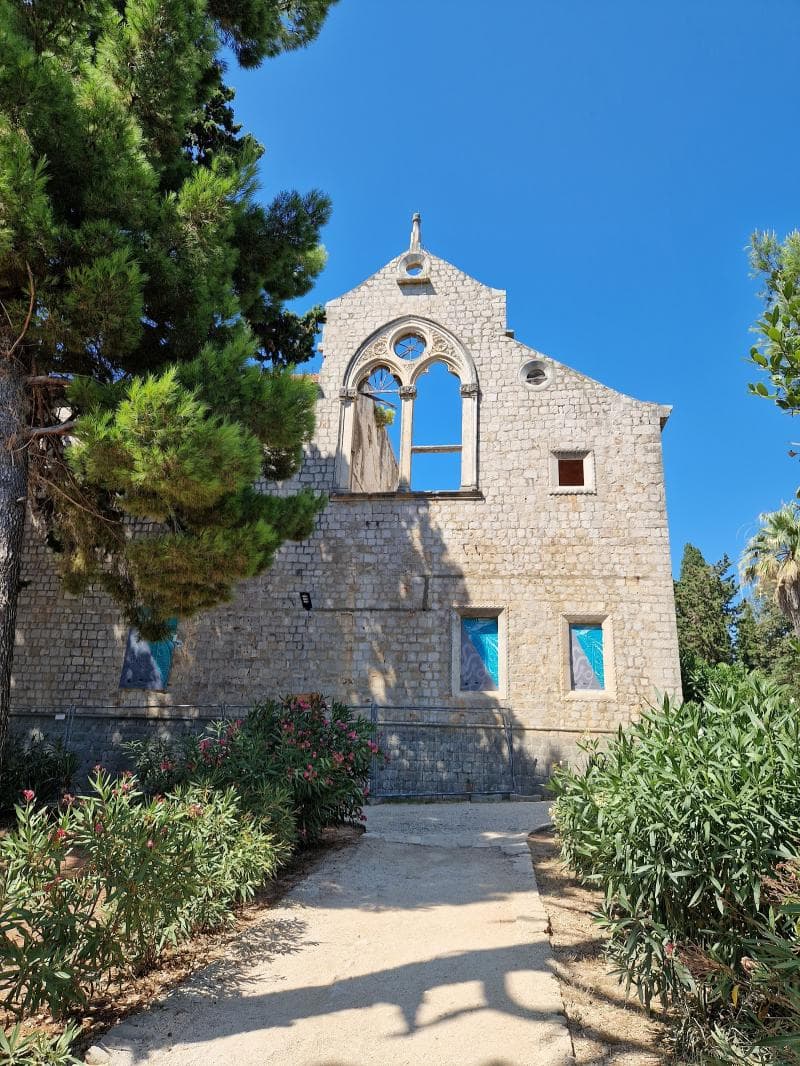
Explore the ancient Benedictine Monastery ruins on Lokrum Island, a serene nature reserve near Dubrovnik, Croatia. Discover history, legends, and the famous Iron Throne replica.
Overview
Just a short ferry ride from the bustling city of Dubrovnik, Croatia, lies the tranquil oasis of Lokrum Island, home to the historically rich Benedictine Monastery. This captivating sub-spot offers visitors a unique blend of ancient history, lush nature, and intriguing legends. The island itself is a protected nature reserve, characterized by its serene environment where cars, hotels, and overnight stays are strictly prohibited. It serves as a perfect day-trip destination for those seeking a peaceful escape and a journey through centuries of heritage.
Within the island's verdant landscape, the ruins of the Benedictine Monastery stand as a testament to its profound past. Here, amongst free-roaming peacocks and a vibrant botanical garden, visitors can explore architectural remnants that whisper tales of monastic life, royal intrigue, and even a mysterious curse.
History & Cultural Background
The story of the Benedictine Monastery on Lokrum Island begins over a millennium ago. The earliest written mention of the monastery dates to 1023 AD, though some historical records suggest Benedictine monks may have settled here even earlier, around 915 AD. The island's name, Lokrum, is thought to derive from the Latin word 'acrumen', meaning 'sour fruit', a nod to the monks' tradition of cultivating exotic plants and orchards.
For centuries, the monastery was a vibrant spiritual and cultural hub. It once owned the entire island, with its abbey serving as a hospital and almshouse until the mid-15th century, providing essential services to the local community. The abbots of Lokrum held significant ecclesiastical standing, considered the first prelates of the Dubrovnik Church after the archbishop. During the 12th century, the monastery flourished, leading to the construction of a new three-nave and three-apse church. Further expansion in the 15th and 16th centuries saw the addition of a new Gothic-Renaissance monastery and cloister, built to the south of the original Romanesque structures. However, a devastating earthquake in 1667 caused significant damage to the medieval parts of the complex, with functions subsequently transferred to the newer Renaissance buildings.
The Benedictine presence on Lokrum came to an abrupt end. Towards the close of the 18th century, around 1798 or 1808, the monks were compelled to leave the island due to a decision by the Republic of Dubrovnik and Pope Pius VI, compounded by the French occupation. Following the monks' departure, the island passed through various hands, notably being acquired in 1859 by Archduke Maximilian of Austria, who transformed parts of the monastery into a summer residence and further developed the island's famous botanical garden.
What Makes It Special
The Benedictine Monastery is not merely a collection of ruins; it is a layered archaeological site where various historical periods converge. Visitors can still discern the remains of the Romanesque-Gothic basilica from the 12th and 13th centuries, alongside the more ornate Gothic-Renaissance monastery and cloister from the 15th and 16th centuries. The later additions by Archduke Maximilian, including elements of his 19th-century summer residence, showcase a fascinating blend of Neo-Romanesque, Neo-Gothic, and Neo-Renaissance architectural styles.
Beyond its ancient stones, the monastery complex has found a unique place in modern culture. It houses a replica of the iconic Iron Throne from the popular television series 'Game of Thrones', which had many scenes filmed in Dubrovnik. This unexpected attraction offers a fun photo opportunity, bridging centuries of history with contemporary storytelling. The surrounding botanical garden, initially cultivated by the Benedictines for medicinal purposes and later expanded by Maximilian, adds another layer of charm, featuring diverse plant species and acting as a tranquil haven.
Stories, Fun Facts & Local Details
The most enduring and captivating story associated with the Benedictine Monastery and Lokrum Island is the infamous 'Lokrum Curse'. Legend has it that as the monks were forced to abandon their centuries-old home, they performed a solemn ritual. They circled the island three times in their hooded cloaks, carrying upside-down candles that dripped wax along their path, chanting a dire curse: 'Whosoever claims Lokrum for his own personal pleasure shall be damned!'
This curse is believed by many to have brought misfortune upon subsequent owners of the island. Tales abound of tragic fates befalling various proprietors, including the execution of Archduke Maximilian (who briefly owned the island) and the suicide of his son, Crown Prince Rudolf, lending a chilling credence to the monks' powerful hex. Another local legend connects the island to Richard the Lionheart, who is said to have been shipwrecked near Lokrum in 1192 while returning from the Crusades. He vowed to build a church on the island if he survived, though at the plea of Dubrovnik citizens, the church was eventually constructed in Dubrovnik itself.
An interesting detail found within the monastery's cloister is an inscription above a door: 'CONCORDIA.RES.PARUAE.CRESCUNT DISCORDIA.MAXIMAE.DILABUNTUR'—a Latin saying meaning 'Harmony makes small things grow, lack of it makes great things decay.' Today, the island is also famous for its resident peacocks, introduced by Maximilian, which roam freely, adding to the island's unique and enchanting atmosphere.
Visitor Perspective
Visiting the Benedictine Monastery is an integral part of the Lokrum Island experience. The island is easily accessible via a regular, short ferry ride, typically lasting between 10 and 15 minutes, departing from Dubrovnik's Old Port. The ferry ticket often includes the entrance fee to the nature reserve, granting access to the monastery ruins and all other attractions.
Once on Lokrum, visitors can spend hours exploring the monastic complex, walking through its historic corridors, and contemplating the lives that once unfolded here. Beyond the monastery, the island offers opportunities to wander through the botanical garden, swim in the tranquil saltwater lake known as the 'Dead Sea', and find rocky spots along the coast for a refreshing dip in the Adriatic. It is advisable to wear water shoes for comfort when exploring the rocky shores. As there are no hotels, visitors cannot stay overnight, ensuring the island retains its pristine, wild character. It's also recommended to bring your own water and potentially some snacks, as on-island dining options can be limited or costly.
Coordinates: 18.1167, 42.6333
View on Google Maps💬 How Travelers Describe This Place
Based on community votes
Beautiful
585Unique
546Photogenic
503Interesting
92Must See
56
Traveler Stories
Discover memorable experiences shared by travelers who have visited this place.
No traveler stories yet.
Be the first traveler to share what made this place memorable.

Tour
By
Spot
Discover amazing places around the world. Your journey starts here.
Explore
© 2026 TourBySpot. All rights reserved.