Bellevue Palace Area
Berlin, Germany
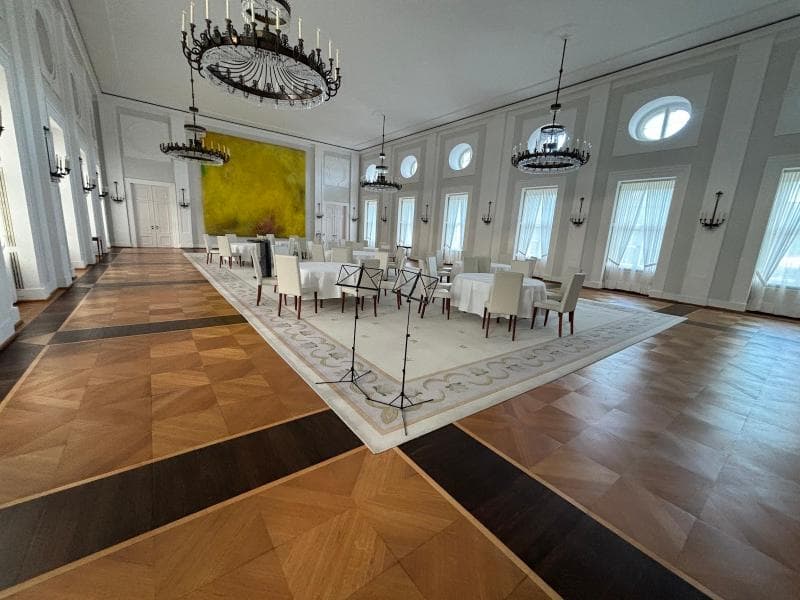
Explore Bellevue Palace Area in Berlin, Germany, the official residence of the German Federal President. Discover its neoclassical architecture and rich history.
Overview
Nestled gracefully at the northern edge of Berlin's expansive Tiergarten park, the Bellevue Palace Area offers a glimpse into Germany's rich history and democratic present. This elegant neoclassical palace, whose name 'Bellevue' fittingly translates from French as 'beautiful view,' serves as the official residence of the German Federal President. While its primary role is one of state, receiving dignitaries and hosting significant events, the surrounding area invites curious travelers to appreciate its serene beauty and historical weight. The palace stands proudly by the banks of the River Spree, its pristine white facade a stark yet harmonious contrast to the lush greenery of its park.
As you explore this distinguished Berlin landmark, you'll discover a place where princely origins meet the solemn responsibilities of a modern head of state. Though direct access to the interior is typically restricted, the exterior architecture, the surrounding park, and the palpable sense of history make the Bellevue Palace Area a compelling destination for those seeking to understand the heart of German governance and its past.
History & Cultural Background
The story of Bellevue Palace begins in 1785, commissioned by Prince Augustus Ferdinand of Prussia, the youngest brother of Frederick the Great. Designed by architect Michael Philipp Boumann, it was envisioned as a private summer residence, not a grand showpiece palace. This distinction is reflected in its early Neoclassical style, which, at the time, was a pioneering architectural statement in Germany.
Over centuries, the palace witnessed significant transformations. After serving as a royal residence until 1918, it took on various roles, including an ethnography museum and a guest house for the Third Reich. During World War II, the palace suffered severe damage, leaving much of it in ruins. A painstaking reconstruction in the 1950s restored its original 18th-century appearance. In 1959, it became the secondary official residence for the West German President, a symbol of commitment to a reunified Berlin. Following Germany's reunification in 1990, Bellevue Palace was elevated to the Federal President's primary official residence in 1994, solidifying its place as a crucial symbol of the German republic.
What Makes It Special
What truly sets the Bellevue Palace Area apart is its dual identity: a historical monument and a living symbol of contemporary German democracy. Its elegant Neoclassical architecture, with a central pediment supported by Corinthian columns and sandstone figurines depicting Agriculture, Fishing, and Hunting, distinguishes it as Germany's first building in this style. Unlike many historical palaces designed for ostentation, Bellevue was initially conceived for quiet enjoyment, offering its royal inhabitants a 'beautiful view' over the Spree and the park.
Today, it embodies the federal republic's understated approach to power, presenting a presidential residence that is dignified yet not overly opulent. The palace grounds, including a spacious park, offer a tranquil green oasis within the bustling city, inviting visitors to reflect on the interplay of nature and history. Its location adjacent to the vast Tiergarten further integrates it into Berlin's most famous urban park landscape.
Stories, Fun Facts & Local Details
Despite its official status, Bellevue Palace has a number of fascinating stories woven into its fabric. Prince Ferdinand hosted notable figures like Friedrich Schiller, Napoleon Bonaparte, and Alexander von Humboldt within its walls, creating a vibrant hub for intellectual and political exchange of its time. Interestingly, for a period in the 19th century, the palace housed the 'Vaterländische Galerie' (Patriotic Gallery), serving as one of Prussia's first museums for contemporary art.
A quirky detail nearby is an old red fire alarm station, a well-preserved relic from a bygone era without mobile phones. A retired painter, Dieter Binger, has taken it upon himself to maintain these historical alarms, earning him the title 'Angel of the Great City' from the Berlin Fire Department. While the palace itself is mostly viewed from the outside, the flying of the Presidential Standard flag indicates when the President is in residence, a subtle local detail that offers a moment of connection to the nation's head of state.
Visitor Perspective
While the Bellevue Palace is not generally open for public tours due to its function as a working presidential residence, visitors can still immerse themselves in its grandeur. The best way to experience the area is by strolling through the surrounding Tiergarten park, along the Spreeweg, which offers picturesque views of the palace from outside its perimeter. From these vantage points, you can admire its Neoclassical architecture, the meticulously maintained facade, and its setting by the Spree River. Occasionally, the palace hosts special 'Open Day' events or Citizens' Festivals, allowing a limited number of guests to explore its interiors and grounds. These rare opportunities provide a unique insight into the official life of the German President. For everyday visitors, a peaceful walk in the park, enjoying the 'beautiful view' that gave the palace its name, remains a rewarding experience, connecting them to a significant piece of German heritage.
Coordinates: 13.35333, 52.5175
View on Google Maps💬 How Travelers Describe This Place
Based on community votes
Unique
922Beautiful
665Must See
645Photogenic
379Interesting
183
Traveler Stories
Discover memorable experiences shared by travelers who have visited this place.
No traveler stories yet.
Be the first traveler to share what made this place memorable.

Tour
By
Spot
Discover amazing places around the world. Your journey starts here.
Explore
© 2026 TourBySpot. All rights reserved.