Bell Towers
Budapest, Hungary
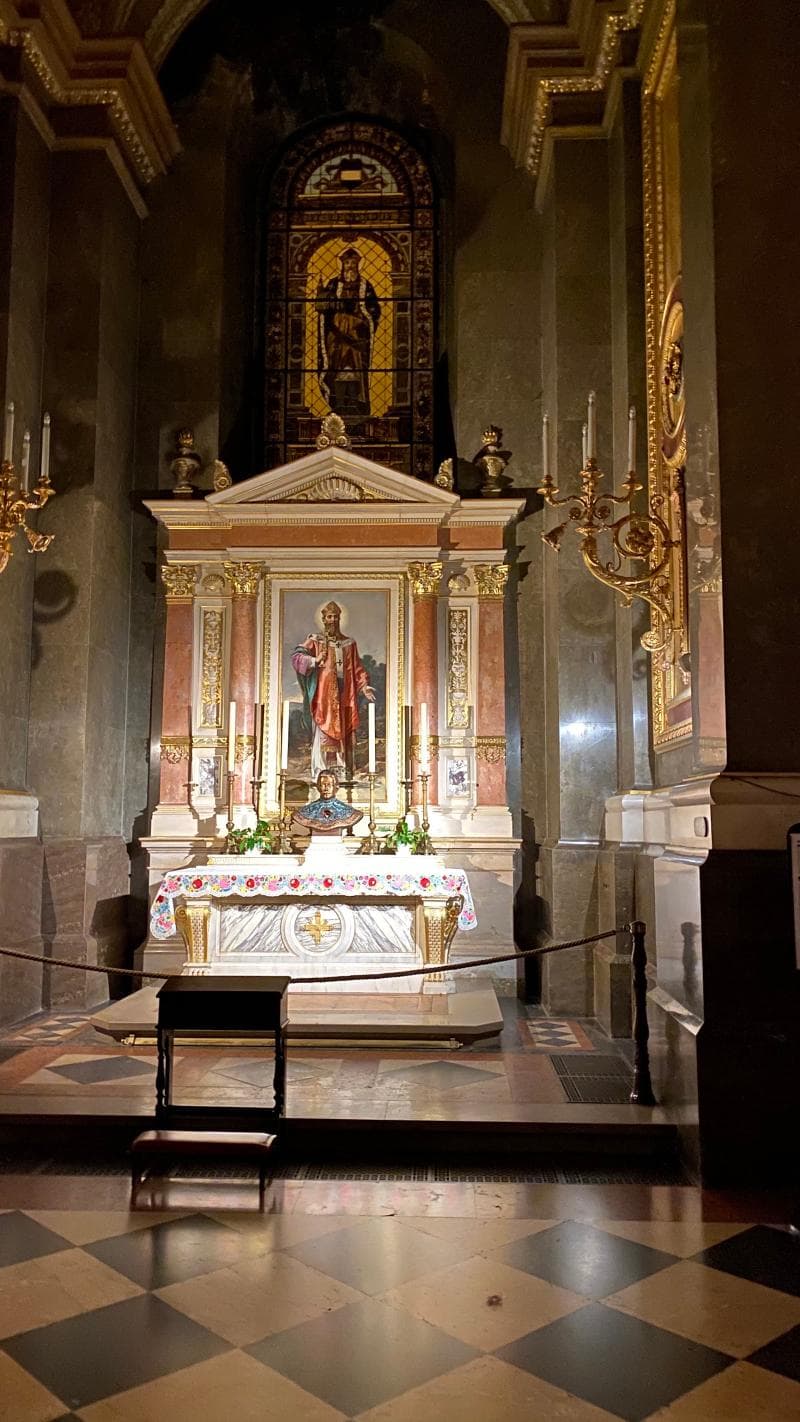
Discover the historic Bell Towers of St. Stephen's Basilica in Budapest, Hungary, home to the nation's largest bell and panoramic city views.
Overview
Soaring majestically above Budapest, St. Stephen’s Basilica is not just a breathtaking architectural marvel but also home to significant bell towers that resonate with Hungary’s rich history and cultural identity. These imposing towers frame the basilica’s grand facade, drawing the eye upwards to its impressive dome. As the largest church in Budapest and the third largest in Hungary, the basilica’s bell towers house a collection of bells, each with its own story, culminating in the nation's largest bell.
Visitors to this iconic landmark often focus on its stunning interiors and the panoramic views from its dome, but the bells themselves are a crucial element of the basilica's spiritual and historical significance, offering a deeper connection to the city's past and its enduring traditions.
History & Cultural Background
The construction of St. Stephen's Basilica was a monumental undertaking, spanning over 54 years from its inception in 1851 to its consecration in 1905. The project saw the involvement of three prominent architects: József Hild, who laid the groundwork with a neoclassical design; Miklós Ybl, who continued the work and introduced neo-Renaissance elements after Hild's passing in 1867; and finally, József Kauser, who brought the grand vision to completion in 1905.
A notable challenge during its construction was the catastrophic collapse of the dome in 1868, which necessitated a complete rebuilding from the foundations up. The basilica is named in honor of Stephen I, the first King of Hungary, who established Christianity in the kingdom around 1000 AD. The building suffered significant damage during the Siege of Budapest in World War II, requiring extensive restoration of its walls, towers, and roof.
What Makes It Special
The bell towers of St. Stephen's Basilica are a testament to Hungarian craftsmanship and history, particularly due to the impressive collection of bells they house. The southern tower is home to Hungary's largest bell, famously known as the 'Great St. Stephan bell'. This colossal bell weighs an astonishing 9,250 kilograms and measures 252 centimeters in diameter, making it a true national treasure. It was cast by the Perner bell foundry in Passau, Germany, in 1990, replacing a predecessor of almost 8 tonnes that was melted down for military purposes during World War II.
In contrast, the northern tower contains five smaller bells. Among these is the 'Assumption of the Blessed Virgin Mary bell', cast by Ferenc Walser in Pest in 1863, making it the oldest bell in the church, weighing 3,100 kg. Four other bells in the north tower were cast in 1993 in Passau, dedicated to Hungarian saints and figures: St. Henry, Blessed Gizella, St. Emeric, and St. Elizabeth. Together, these six bells contribute to the basilica's resonant presence in Budapest's soundscape, chiming hours and marking significant occasions.
Stories, Fun Facts & Local Details
The Great St. Stephan bell in the south tower is not an everyday sound. It is typically rung only twice a year: on August 20th, which is St. Stephen's Day and Hungary's national holiday, and at midnight on New Year's Eve, marking moments of profound national and spiritual significance. This tradition adds to the bell's mystique, making its powerful chime a rare and cherished event for locals.
The basilica itself stands at a symbolic height of 96 meters, precisely matching that of the Hungarian Parliament Building. This equal height is a deliberate architectural choice, symbolizing the equal importance and balance between church and state in Hungary, and commemorating the year 896 AD, when the Magyar tribes are believed to have founded the Hungarian nation. Beyond the bells, the basilica also famously houses the 'Holy Right Hand', the mummified right hand of St. Stephen, a revered relic that underscores the deep spiritual connection to Hungary's founding king.
Visitor Perspective
While the bells themselves are not directly accessible for close inspection by the public, the experience of the bell towers is intrinsically linked to visiting the basilica's panoramic observation deck. Situated at the base of the dome, between the two towers, this deck offers an unparalleled 360-degree view of Budapest. Reaching this vantage point is an adventure in itself; visitors can choose to ascend by elevator or climb 364 steps, each offering a glimpse into the basilica's structural grandeur.
From this height, the city unfolds beneath you, showcasing the Danube, the Parliament, and the Buda Hills. It's a prime location for photography and an ideal spot to grasp the layout and beauty of Hungary's capital. The sounds of the city drift upwards, occasionally punctuated by the distant, resonant peal of the bells, connecting the visual splendor with the deep-seated history contained within the towers.
Coordinates: 19.053889, 47.500833
View on Google Maps💬 How Travelers Describe This Place
Based on community votes
Must See
886Beautiful
564Unique
201Interesting
121Photogenic
87
Traveler Stories
Discover memorable experiences shared by travelers who have visited this place.
No traveler stories yet.
Be the first traveler to share what made this place memorable.

Tour
By
Spot
Discover amazing places around the world. Your journey starts here.
Explore
© 2026 TourBySpot. All rights reserved.