Bell Towers
Helsinki, Finland
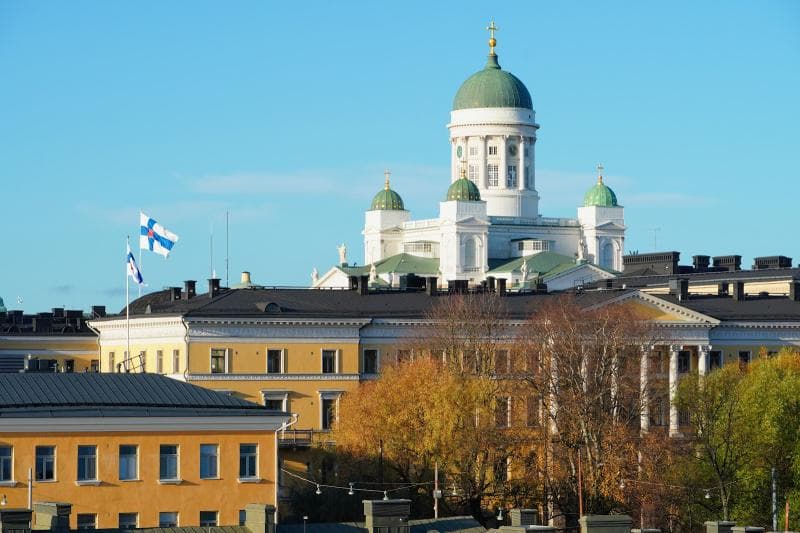
Explore the historic Bell Towers of Helsinki Cathedral in Helsinki, Finland. Discover their unique architecture, origin, and cultural significance.
Overview
As you approach the iconic Helsinki Cathedral, its brilliant white facade and majestic green domes immediately capture attention, but tucked discreetly into its grand design are the significant Bell Towers. These structures, particularly the western pavilion, serve as more than just architectural accents; they are the sonorous heart of the cathedral, housing its historic bells and even welcoming visitors as the location for the visitor center. While the central dome majestically crowns the main body of the church, the Bell Towers, added during a later phase of construction, are integral to the cathedral's complete neoclassical grandeur and functional purpose, contributing to the symphony of Helsinki's cityscape.
History & Cultural Background
The story of Helsinki Cathedral, and by extension its Bell Towers, is deeply intertwined with Finland's past and its connection to the Russian Empire. Designed initially by the renowned German architect Carl Ludvig Engel, the cathedral (originally known as St. Nicholas' Church) was conceived as the centerpiece of Helsinki's Empire-style Senate Square. Engel's vision for the main church was largely completed by his death in 1840. However, it was his successor, Ernst Bernhard Lohrmann, who truly completed the architectural narrative, adding the distinctive four smaller domes that surround the central one, and significantly, the two side pavilions flanking the main steps. The western pavilion was designated as the clock tower and bell tower, while the eastern pavilion became a chapel. This addition of the corner towers and pavilions by Lohrmann was influenced by models like Saint Isaac's Cathedral and Kazan Cathedral in St. Petersburg, strengthening the architectural ties to Russian imperial aesthetics. Interestingly, the bells themselves carry a piece of this shared history, having been donated by Moscow merchants and crafted in Moscow, reflecting the era's cultural exchanges. Furthermore, a bell from the earlier Ulrika Eleonora Church, which stood on the site before the cathedral, was reused and installed in the central tower of Helsinki Cathedral, linking the present structure to its ecclesiastical predecessors.
What Makes It Special
What sets Helsinki Cathedral's Bell Towers apart is not merely their visual contribution to the Helsinki skyline, but the fascinating details nestled within them. The western bell tower houses a collection of bells that includes two large ones and eight smaller chimes. One of these large bells is particularly noteworthy, weighing approximately 5200 kg and holding the distinction of being the second-largest bell in all of Helsinki. These impressive bells are not merely ornamental; they are played manually by a bell ringer from the top floor using a traditional system of ropes and pedals. This dedication to manual operation in a modern age adds a layer of authenticity and historical preservation to the cathedral's soundscape. The bells are also adorned with intricate engravings, featuring prayers in Church Slavonic, icons of saints such as Saint Nicholas, and depictions of significant religious events like the Dormition of Virgin Mary. While the bell tower's interior is not typically open for public ascent, its base cleverly integrates into the visitor experience, housing the cathedral's visitor center and ticket sales during certain periods, making it a functional as well as symbolic entrance point for many who come to admire the cathedral.
Stories, Fun Facts & Local Details
The Bell Towers hold several captivating stories. For instance, the current largest bell is a replacement for an earlier, equally grand bell. The original behemoth, weighing around 4900 kg, was in service from 1869 to 1886 until a significant crack formed, necessitating its replacement. The parish rallied to fund a new bell, which, even grander than its predecessor, now rings out as Helsinki's second-largest. Imagine the sound of that earlier cracked bell and the effort required to replace such a massive instrument! Another intriguing detail lies in the bell's historical mechanics. The original clockwork for the church bell, a testament to Finnish craftsmanship, was constructed by Juho Könni and is now preserved and displayed at the Finnish Museum of Horology in Espoo. This means that the intricate gears and levers that once marked time for Helsinki from this very tower are now historical artifacts in their own right. The bell tower's bells, originating from Moscow, quietly whisper tales of cultural connections and shared histories between Finland and Russia, reflecting a period when the cathedral itself was named after a Russian tsar.
Visitor Perspective
For the curious traveler, the Bell Towers of Helsinki Cathedral offer a rich experience, even if climbing them is not generally possible. Standing in Senate Square, gazing up at the magnificent neoclassical facade, the Bell Towers form a crucial part of the cathedral's instantly recognizable silhouette. Their presence reinforces the Greek-cross architectural plan, providing balance and grandeur to Engel and Lohrmann's design. Visitors arriving at the cathedral might find themselves directed to the western bell tower pavilion, as it sometimes houses the visitor center and is where tickets for entry can be purchased during specific seasons. While you cannot ascend to witness the manual bell-ringing process or inspect the Slavonic inscriptions up close, the audible presence of the bells, particularly during services or special occasions, connects you to centuries of tradition. The physical presence of these towers, designed to be both functional and aesthetically pleasing, completes the architectural narrative of one of Finland's most cherished landmarks. They stand as silent, yet occasionally vocal, guardians of Helsinki's past and present.
Coordinates: 24.9523, 60.1703
View on Google Maps💬 How Travelers Describe This Place
Based on community votes
Interesting
886Photogenic
564Beautiful
443Must See
310Unique
233
Traveler Stories
Discover memorable experiences shared by travelers who have visited this place.
No traveler stories yet.
Be the first traveler to share what made this place memorable.

Tour
By
Spot
Discover amazing places around the world. Your journey starts here.
Explore
© 2026 TourBySpot. All rights reserved.