Bell Tower
Manila, Philippines
Discover the historic Bell Tower of San Agustin Church in Manila, Philippines. Learn about its earthquake-resistant architecture and unique single-tower facade.
Overview
Nestled within the historic walled city of Intramuros in Manila, Philippines, stands the venerable San Agustin Church, an enduring testament to centuries of faith and resilience. Completed in 1607, it proudly holds the distinction of being the oldest stone church in the country. Recognized for its profound historical and architectural significance, San Agustin Church was designated a UNESCO World Heritage Site in 1993, as part of the 'Baroque Churches of the Philippines'. Its iconic facade, characterized by a striking asymmetry, tells a silent story of survival, a narrative intrinsically linked to its bell tower.
Originally boasting two bell towers, the church's left (or east) bell tower suffered irreparable damage during the powerful 1880 earthquake and was subsequently removed, leaving only its base. This singular remaining tower has become a defining feature, a silent sentinel guarding the rich history encased within the church's ancient stone walls. More than just a structure, the bell tower symbolizes the church's indomitable spirit, having witnessed and withstood countless trials over its 400-year existence.
History & Cultural Background
The history of San Agustin Church is one of perseverance. The current stone edifice is actually the third Augustinian church built on this very site. The first two structures, constructed from more fragile materials like bamboo, nipa, and wood, were tragically consumed by fires in 1574 and 1583, respectively. Learning from these misfortunes, the Augustinian friars commenced construction of the present stone church in 1586, under the design of Juan Macías, finally completing it in 1607.
Its robust construction proved vital as Manila, situated in an active seismic zone, frequently experienced devastating earthquakes. San Agustin Church famously withstood numerous major tremors, including significant ones in 1645, 1699, 1754, 1796, 1825, 1852, 1863, and 1880. Remarkably, during the catastrophic 1863 earthquake that leveled much of Manila, San Agustin Church stood virtually undamaged, a testament to its innovative design and sturdy construction. However, the series of strong earthquakes in July 1880 finally took its toll on the east bell tower, causing a large crack that necessitated its permanent removal, shaping the church's distinctive silhouette.
Beyond natural disasters, the church has also played a role in significant historical events. It served as a hospital for the injured after the 1863 earthquake and was the solemn venue where the terms for Spain's surrender of Manila to the United States were prepared in 1898. During the Japanese occupation in World War II, it was tragically used as a concentration camp and a machine-gun post. Miraculously, it was the only church in Intramuros to survive the extensive destruction of the Battle of Manila in 1945, standing as a poignant symbol amidst the ruins.
What Makes It Special
The bell tower of San Agustin Church is special not only for its lone standing presence but for the story it tells. Its survival, even in a modified form, reflects the overall resilience of the church itself. The church's unique elliptical foundation is often credited for its exceptional ability to withstand countless earthquakes, making it an early example of earthquake-resistant architecture.
The decision to not rebuild the second tower after the 1880 earthquake was reportedly due to a lack of funds and will, leaving the church with its now iconic asymmetrical facade. This architectural quirk has, in turn, become a symbol of endurance and adaptability. Furthermore, the bell tower once housed a magnificent bell, named 'The Most Sweet Name of Jesus', cast in 1829. This enormous bell, weighing approximately 7,500 pounds, was reserved for significant occasions and emergencies, its deep tones echoing across the walled city. Though the bell was brought down in 1927 and never reinstalled, its history adds another layer to the tower's unique legacy.
Stories, Fun Facts & Local Details
The enduring presence of San Agustin Church, and its partially absent bell tower, has woven itself into the fabric of Manila's collective memory. The visual contrast of its single, solid tower against the city's modern skyline serves as a constant reminder of the past. The original, intricate wooden doors of the church, featuring Rococo carvings of St. Augustine of Hippo and St. Monica, are themselves replacements for those destroyed by the British during their 1762 invasion, underscoring the many layers of history embedded in the structure.
Local lore and historical records highlight the church's 'permanent miracle in stone' status, given its survival of so many calamities. The bell tower, in particular, is a silent witness to eras of colonial rule, wars, and the unyielding spirit of the Filipino people. Imagine the many times its bells tolled – for celebrations, warnings, or mourning – before one of its twin structures succumbed to nature's power.
Visitor Perspective
For the curious traveler, approaching San Agustin Church and its distinctive bell tower offers a journey through time. The imposing stone facade, with its single tower, immediately draws the eye, hinting at the stories within. Located conveniently within Intramuros, the church is easily accessible and forms a central part of any historical exploration of the walled city.
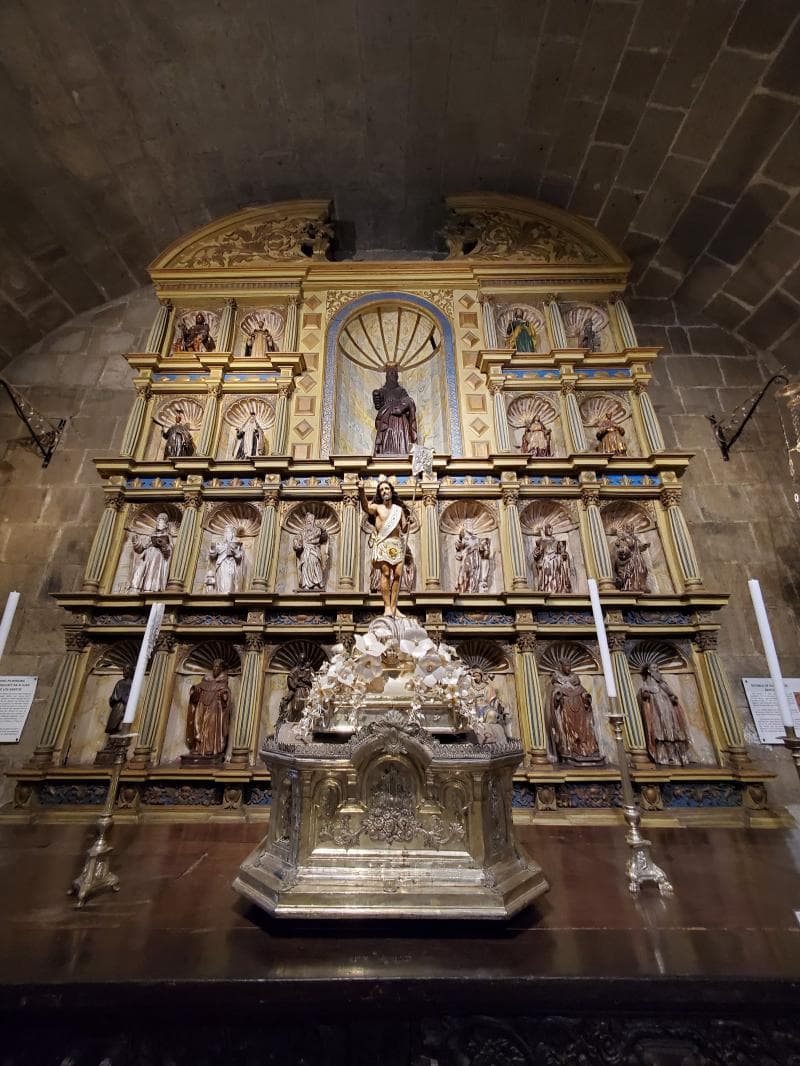
Stepping inside, visitors are greeted by a breathtaking interior featuring stunning trompe-l'œil ceilings that create an illusion of depth and grandeur, ornate Baroque altars, and a vast collection of religious artifacts housed in the adjacent San Agustin Museum. The surviving bell tower, though no longer an active belfry, serves as a powerful visual cue, prompting reflection on the church's extraordinary endurance and its central role in Philippine history and culture. It's a place where one can truly feel the weight of centuries, appreciating not just the architecture, but the unyielding spirit that allowed this magnificent structure to stand for over 400 years.
Coordinates: 120.97528, 14.58889
View on Google Maps💬 How Travelers Describe This Place
Based on community votes
Beautiful
958Must See
794Interesting
565Unique
157Photogenic
28
Traveler Stories
Discover memorable experiences shared by travelers who have visited this place.
No traveler stories yet.
Be the first traveler to share what made this place memorable.

Tour
By
Spot
Discover amazing places around the world. Your journey starts here.
Explore
© 2026 TourBySpot. All rights reserved.