Bell Tower
Sofia, Bulgaria
Explore the ancient Saint Sofia Church in Sofia, Bulgaria, its deep history, unique architecture, and the fascinating archaeological complex beneath, from which the city itself took its name.
Overview
The Saint Sofia Church, nestled in the heart of Sofia, Bulgaria, is not merely a religious edifice but a profound historical landmark from which the very city derives its name. This ancient basilica is a testament to centuries of change, resilience, and spiritual significance. While often associated with grand bell towers, the Saint Sofia Church features structural towers and a tower-cupola that are integral to its early Christian basilica design, rather than a separate, prominent bell tower with traditional ringing bells like some other prominent churches in the city. Visitors come to admire its austere beauty, delve into its deep history, and explore the fascinating archaeological layers beneath its foundations.
History & Cultural Background
The story of the Saint Sofia Church stretches back to the 4th century CE, making it one of the oldest churches in Sofia. It stands on a site with an even older past, originally a necropolis of the Roman town of Serdica. Over the centuries, several earlier churches were built and destroyed on this spot, with the current basilica believed to be the fifth structure. Its construction, a cross-basilica with two east towers and one tower-cupola, is often attributed to the reign of Byzantine Emperor Justinian I (527–565 CE), making it a contemporary of Constantinople's Hagia Sophia.
A pivotal moment in its history occurred in the 16th century during Ottoman rule, when the church was converted into a mosque. During this period, its original 12th-century frescoes were destroyed, and minarets were added to its structure. The mosque was eventually abandoned in the 19th century after two earthquakes damaged one of its minarets. The church underwent significant restoration during the 19th and 20th centuries, returning it to its basilica form. Remarkably, the city of Serdica was renamed Sofia in the 14th century, taking its name from this very church, highlighting its enduring cultural impact.
What Makes It Special
What makes Saint Sofia Church truly special is its profound connection to history and its architectural uniqueness. It is considered one of the most valuable pieces of Early Christian architecture in south-eastern Europe. The present building is a cross basilica with three altars, characterized by a clean and strict design typical of early Christian architecture. Its interior, now largely whitewashed, emphasizes the solemnity and grandeur of its ancient structure. The church's design, including its two towers and a central tower-cupola, presents a rare combination of a cross-shaped three-nave basilica with a dome, showcasing elements from both Eastern and Western church architecture.
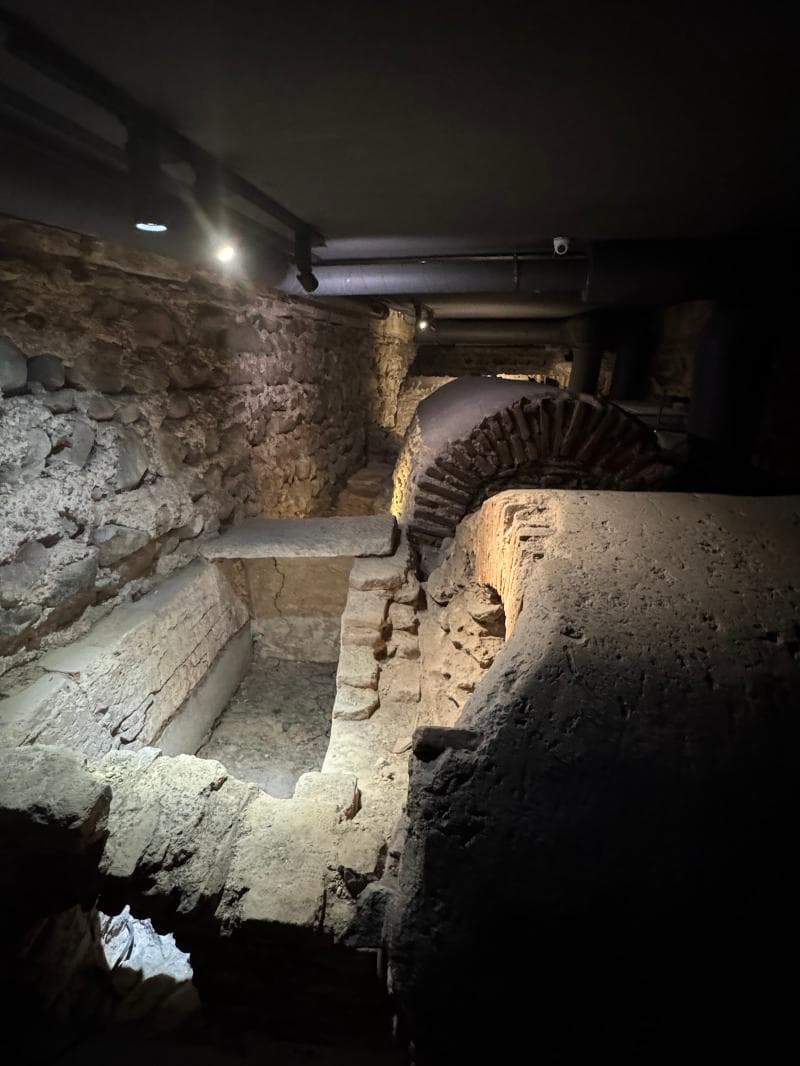
Beneath the church lies an extensive archaeological complex, revealing layers of history stretching back to the 3rd and 4th centuries. Visitors can explore a labyrinth of ancient tombs, including stone sarcophagi and masonry brick tombs, offering a tangible connection to the past inhabitants of Serdica. These catacombs provide a unique insight into early Christian burial practices and the evolution of the site over millennia.
Stories, Fun Facts & Local Details
The Saint Sofia Church is steeped in local lore and fascinating details. According to popular belief, Saint Sophia's miraculous powers have protected the building through centuries of invasions and natural disasters. Its survival and repeated reconstruction are a testament to its spiritual significance for the people of Sofia. The church stands as a symbol of 'Holy Wisdom,' to which it is dedicated.
Adjacent to the church, visitors will find the Monument of the Unknown Soldier, a tribute to those who sacrificed their lives for Bulgaria. Also nearby is the tomb of Ivan Vazov, one of Bulgaria's most revered poets and novelists. These surrounding memorials underscore the church's central role not just in religious life, but also in the national memory and identity of Bulgaria. Unlike the more visually dramatic Alexander Nevsky Cathedral nearby, Saint Sofia Church offers a quieter, more introspective experience, focusing on ancient history and architectural purity rather than ornate splendor. While the church possesses structural towers, it is not primarily known for a traditional bell tower experience with ringing bells, distinguishing it from other Sofia landmarks.
Visitor Perspective
For a curious traveler, visiting the Saint Sofia Church offers a journey back in time. Entry to the main church is generally free, and it provides a serene space for contemplation and appreciation of its ancient architecture. The true highlight for many is the archaeological level beneath the basilica, accessible for a modest fee. This underground exploration allows visitors to walk among Roman streets and ancient tombs, witnessing the layers of history directly.
The church's central location makes it easily accessible, situated close to other major attractions like the Alexander Nevsky Cathedral. It is an essential stop for anyone wishing to understand the historical and cultural foundations of Sofia. Allow ample time to explore both the main church and the catacombs to fully grasp the profound antiquity and significance of this remarkable site. It is a place that speaks volumes about resilience and the enduring spirit of a city named after it.
Coordinates: 23.331425, 42.6965083
View on Google Maps💬 How Travelers Describe This Place
Based on community votes
Beautiful
981Unique
617Interesting
357Photogenic
147Must See
28
Traveler Stories
Discover memorable experiences shared by travelers who have visited this place.
No traveler stories yet.
Be the first traveler to share what made this place memorable.

Tour
By
Spot
Discover amazing places around the world. Your journey starts here.
Explore
© 2026 TourBySpot. All rights reserved.