Bell Pavilions
Yangon, Myanmar
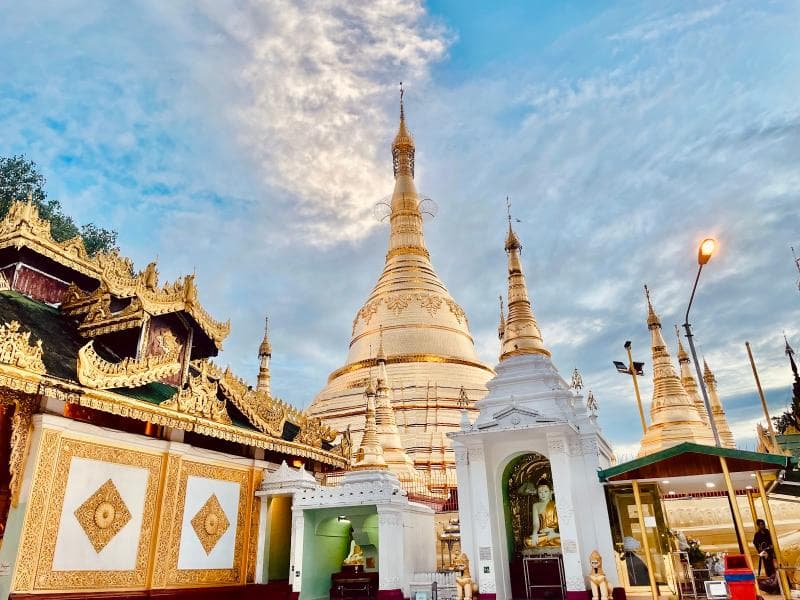
Explore the Bell Pavilions at Shwedagon Pagoda, Yangon, Myanmar. Discover the history and cultural significance of these sacred bells.
Overview
Within the breathtaking expanse of the Shwedagon Pagoda in Yangon, Myanmar, lie the serene and deeply resonant Bell Pavilions. These structures are not merely architectural adornments; they are integral parts of the pagoda's spiritual landscape, housing magnificent bells that reverberate with centuries of devotion. The Shwedagon Pagoda itself stands as Myanmar's most sacred Buddhist site, a resplendent golden stupa believed to enshrine relics of four previous Buddhas, including eight strands of Gautama Buddha's hair. Perched atop Singuttara Hill, the pagoda complex is a vibrant hub of Buddhist practice and cultural heritage, where the sounds of chiming bells often punctuate the air, inviting reflection and offering blessings.
The Bell Pavilions, scattered around the main stupa's platform, serve as shelters for several grand bronze bells. Each bell possesses its own unique history and significance, drawing pilgrims and curious travelers alike. The act of striking these bells is a cherished tradition, believed to bring good merit and to announce one's good deeds to the heavens. These pavilions offer a quiet contrast to the glittering gold of the central stupa, providing shaded spaces where visitors can engage directly with a tactile and auditory aspect of Burmese Buddhist worship.
History & Cultural Background
The history of bells at Shwedagon Pagoda is as rich and ancient as the pagoda itself, which legends claim dates back over 2,500 years. From early times, bells have played a crucial role in Buddhist practices across Myanmar, signifying merit-making and serving as tools for spiritual expression. The pagoda has been rebuilt and adorned by successive monarchs and devotees, each era adding layers to its profound cultural tapestry, including donations of significant bells.
Among the most famous, though now lost, is the legendary Great Bell of Dhammazedi. Cast in 1484 by King Dhammazedi of Hanthawaddy, it was an immense bronze bell, reportedly weighing nearly 300 tons (294 tonnes) and incorporating gold and silver into its composition. This colossal bell was presented to the Shwedagon Pagoda, where it remained for over a century. However, in 1608, a Portuguese mercenary named Filipe de Brito e Nicote attempted to steal the bell, intending to melt it down for cannons. The raft carrying the bell tragically sank in the Yangon River, where it is believed to rest to this day, a testament to its historical weight.
Despite this loss, other significant bells grace the pagoda. The Maha Ganda Bell, also known as the Singu Min Bell, was donated by King Singu in 1779. Weighing approximately 23-25 tons, this bell also faced peril when British forces attempted to remove it in 1825, only to have it sink into the river. It was famously recovered by the local Burmese people using ingenious methods involving bamboo rafts, returning it to its rightful place at the pagoda. Another notable bell is the Maha Tissada Gandha Bell, a 42-ton bell donated by King Tharrawaddy in 1841.
What Makes It Special
The Bell Pavilions at Shwedagon Pagoda are special due to the sheer size, artistic craftsmanship, and deep spiritual significance of the bells they house. These aren't merely decorative elements; they are active instruments of faith. The surviving bells, such as the 23-ton Maha Ganda Bell and the 42-ton Maha Tissada Gandha Bell, are impressive feats of ancient metallurgy and engineering.
Beyond their physical grandeur, what truly distinguishes these bells is their role in the daily life of the pagoda. Pilgrims and visitors gently strike the bells with wooden mallets, a practice that produces a reverberating sound echoing across the sacred grounds. This act is a form of devotion, a way to accumulate merit, and a means of sharing one's good deeds and prayers with the world. The unique, deep tones of these bells create an immersive soundscape that is both meditative and uplifting, contributing significantly to the pagoda's spiritual ambiance. The design of the pavilions themselves, often featuring intricate traditional Burmese architecture, provides a harmonious setting for these revered artifacts.
Stories, Fun Facts & Local Details
The story of the lost Great Bell of Dhammazedi continues to fascinate, a tale of ambition, loss, and enduring cultural pride. It serves as a reminder of the pagoda's tumultuous past and the resilience of its people. Many attempts have been made over the centuries to locate and recover this immense bell from the depths of the Yangon River, reflecting its profound importance to Burmese heritage and Buddhist faith.
Locally, visitors are encouraged to participate in the tradition of striking the bells. It's common to see individuals, young and old, approach a bell, offer a brief prayer, and then gently tap it with a provided mallet. This simple yet profound act is deeply ingrained in the spiritual customs of Myanmar. Fun fact: The custom of striking a bell is often followed by a moment of quiet reflection, allowing the resonant sound to symbolize the spread of good karma and blessings. The pavilions are also places where people connect with their planetary posts, which correspond to the day of the week they were born, adding another layer of personalized spiritual practice within the grand complex.
Visitor Perspective
For a curious traveler, stepping into the Bell Pavilions is an intimate encounter with Burmese Buddhist culture. After navigating the golden splendor of the main stupa, these pavilions offer a moment of grounding. The atmosphere inside is typically one of quiet reverence, punctuated by the deep, resonant chimes of the bells. Visitors observe locals performing their rituals, often striking a bell a specific number of times or in a particular rhythm.
The tactile experience of gently striking a bell yourself, feeling the vibration, and hearing its sound echo, connects you to a timeless tradition. It's a privilege to witness and partake in such a meaningful aspect of the pagoda's living spiritual practice. These pavilions are often cooler and more shaded than the open platform, providing a peaceful respite for contemplation amidst the grandeur of the Shwedagon Pagoda. Remember to always walk barefoot within the pagoda grounds and dress respectfully to honor the sacredness of this extraordinary site.
Coordinates: 96.149705, 16.798354
View on Google Maps💬 How Travelers Describe This Place
Based on community votes
Photogenic
879Must See
723Unique
482Interesting
396Beautiful
274
Traveler Stories
Discover memorable experiences shared by travelers who have visited this place.
No traveler stories yet.
Be the first traveler to share what made this place memorable.

Tour
By
Spot
Discover amazing places around the world. Your journey starts here.
Explore
© 2026 TourBySpot. All rights reserved.