Basilica of the Sacré-Cœur
Paris, France
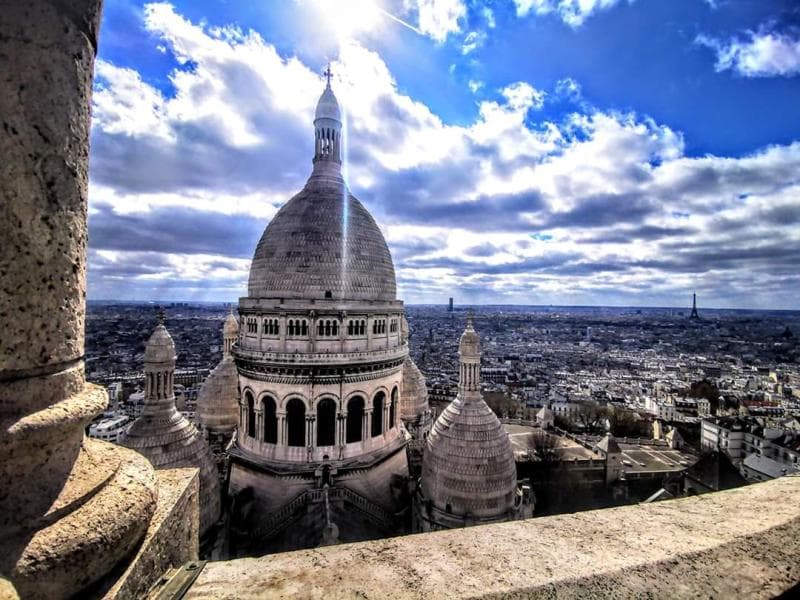
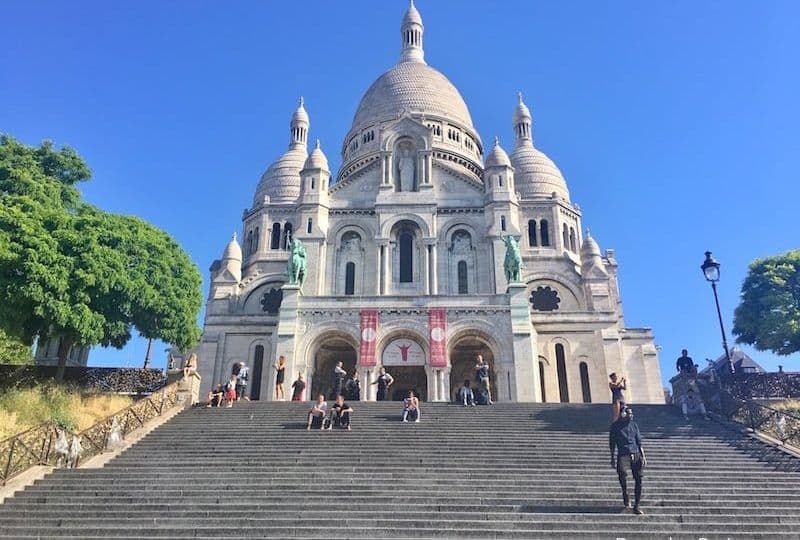
Discover the stunning Basilica of the Sacré-Cœur in Montmartre, Paris, France. Explore its rich history, unique Romanesque-Byzantine architecture, and panoramic city views.
Overview
Perched majestically atop the Butte Montmartre, the Basilica of the Sacré-Cœur stands as a radiant white landmark overlooking the vibrant city of Paris, France. This iconic Roman Catholic church, officially known as the Basilique du Sacré-Cœur de Montmartre, is a prominent symbol of both spiritual devotion and architectural grandeur. Its distinctive domes and pristine facade are instantly recognizable, making it one of the most visited religious monuments in the capital.
As a minor basilica dedicated to the Sacred Heart of Jesus, it serves as an active place of worship and a significant pilgrimage site. From its elevated position, visitors are treated to breathtaking panoramic views that stretch across the Parisian cityscape, solidifying its status as a must-see destination within the charming Montmartre district.
History & Cultural Background
The genesis of the Sacré-Cœur is deeply rooted in a period of profound upheaval in French history. The idea for its construction emerged in the aftermath of France's defeat in the Franco-Prussian War (1870-1871) and the subsequent civil unrest of the Paris Commune. French Catholics saw these tragic events as a sign of moral decline and envisioned the basilica as an act of national penance and spiritual resurgence, aiming for reconciliation and unity.
The cornerstone was laid in 1875, marking the beginning of a monumental undertaking. Designed primarily by architect Paul Abadie, the basilica's construction spanned nearly 40 years, officially completing in 1914, just before World War I, and was consecrated in 1919. The project was largely funded by small offerings and generous donations from millions of French faithful, whose names are often engraved on the church's walls. However, its construction was not without controversy; some left-wing critics viewed it as a symbol of the repression of the Communards and an affront to emerging republican and secular ideals.
What Makes It Special
The Sacré-Cœur stands out vividly against the Parisian skyline, thanks to its striking Romanesque-Byzantine architectural style, which contrasts sharply with the Gothic structures more common in Paris, like Notre-Dame. Its most distinctive feature is its brilliant white facade, constructed from Château-Landon travertine stone. This remarkable stone continuously bleaches and whitens when exposed to rain, ensuring the basilica maintains its luminous appearance despite pollution.
Inside, the basilica is equally awe-inspiring. The central dome rises impressively, and the apse houses one of France's largest mosaics, depicting 'Christ in Majesty' with outstretched arms, symbolizing divine love and mercy. A profound spiritual tradition observed here since 1885 is that of Perpetual Adoration, where continuous prayer is offered day and night. The basilica is also home to the 'Savoyarde,' a colossal 19-ton bell, which is one of the largest in France, its chimes echoing across Montmartre.
Stories, Fun Facts & Local Details
Montmartre, the 'Mountain of Martyrs,' has a rich and storied past that predates the basilica. It was a site of pagan worship and later, Christian martyrdom, including that of Saint Denis, Paris's first bishop, who legend says walked with his head in his hands after his execution. During the 19th century, before the basilica's completion, Montmartre was a bohemian village that became a hub for renowned artists like Van Gogh, Picasso, and Toulouse-Lautrec, who found inspiration in its unique atmosphere.
Locally, the Sacré-Cœur has affectionately earned nicknames such as 'the big meringue,' a playful reference to its white, almost whipped-cream-like appearance. Its construction also involved an extraordinary feat of engineering, with 83 wells dug 38 meters deep to stabilize the foundations on the gypsum-rich hill. This massive undertaking ensures the basilica's stability on what was once considered a geologically weak hill.
Visitor Perspective
Visiting the Basilica of the Sacré-Cœur offers an experience that combines spiritual reflection with cultural immersion. While entry to the basilica itself is free, there is a fee to access the dome and the crypt, which offer even more expansive views and historical insights. The basilica is generally open daily from early morning until late evening, typically from 6 AM to 10:30 PM.
Travelers can ascend to the basilica's lofty perch via a scenic walk up the many stairs from Square Louise Michel, or opt for the convenient Montmartre Funicular, which offers a quick ride to the top. Beyond the basilica, the surrounding cobbled streets of Montmartre invite exploration, offering a glimpse into its artistic heritage with quaint cafes, artisan shops, and the famous Place du Tertre where artists still gather. The Sacré-Cœur truly provides a unique vantage point from which to appreciate both the beauty of Paris and a significant piece of its spiritual and historical tapestry.
Coordinates: 2.34303, 48.8868
View on Google Maps💬 How Travelers Describe This Place
Based on community votes
Beautiful
728Unique
481Must See
382Interesting
183Photogenic
28
Traveler Stories
Discover memorable experiences shared by travelers who have visited this place.
No traveler stories yet.
Be the first traveler to share what made this place memorable.

Tour
By
Spot
Discover amazing places around the world. Your journey starts here.
Explore
© 2026 TourBySpot. All rights reserved.