Basement Bunker
Ho Chi Minh City, Vietnam
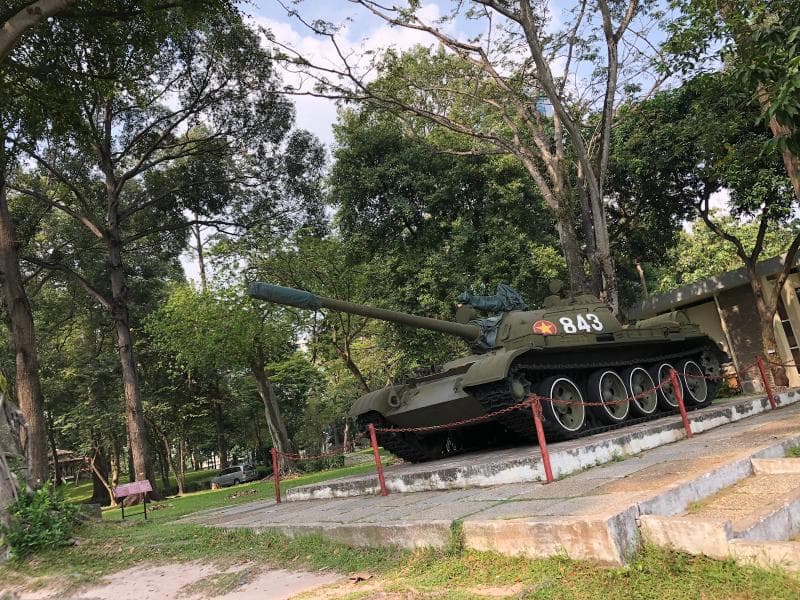
Explore the historic Basement Bunker within Independence Palace in Ho Chi Minh City, Vietnam, a preserved war command center from the Vietnam War.
Overview
Deep beneath the elegant facade of Independence Palace, known locally as Reunification Palace, in Ho Chi Minh City, Vietnam, lies a stark and functional sub-spot: the Basement Bunker. This subterranean complex served as the fortified nerve center and command post for the South Vietnamese government during the intense years of the Vietnam War. Stepping into this underground labyrinth offers a palpable journey back in time, revealing the grim realities of wartime leadership and decision-making, in stark contrast to the opulent reception rooms and presidential offices above. Visitors can explore the preserved spaces that once buzzed with strategic planning and urgent communications, a testament to a pivotal era in Vietnamese history.
History & Cultural Background
The history of the Basement Bunker is intrinsically linked to the tumultuous period of the Vietnam War. The current Independence Palace, designed by architect Ngo Viet Thu, was completed in 1966, replacing an earlier structure that had been bombed in 1962. The reconstruction incorporated a robust underground bunker, a critical addition designed to withstand heavy bombing and potential chemical attacks, emphasizing the ever-present threat of conflict. From the mid-1960s until the fall of Saigon in 1975, the Independence Palace, and particularly its bunker, became the epicenter for the South Vietnamese government's political and military operations. It was here that critical decisions regarding national security and war strategies were formulated, and diplomatic meetings were held. The bunker symbolized the South Vietnamese leadership's attempts to maintain command and control amidst intense pressure and vulnerability, especially during moments of direct attack.
What Makes It Special
What sets the Basement Bunker apart is its remarkable state of preservation and its unflinching portrayal of wartime conditions. Unlike the ceremonial grandeur of the upper floors, this concrete world was built purely for resilience and function. Its reinforced concrete walls, up to two meters thick, were engineered to provide maximum protection. Visitors encounter narrow, cold hallways, dimly lit passages, and a pervasive metallic scent, creating an immediate sense of gravity and historical immersion. The bunker houses a comprehensive command center, secure communication rooms, and a network of corridors designed for rapid movement during emergencies. This authentic environment, largely untouched since 1975, stands as a 'frozen-in-time' capsule, offering a raw and powerful glimpse into a government under siege.
Stories, Fun Facts & Local Details
The Basement Bunker holds numerous silent stories from a critical juncture in Vietnam's past. Within its walls are communication rooms still equipped with antiquated radios and large maps on display, some illustrating troop movements from the 1970s, providing a tangible connection to the past. It's said that even the president's private bunker bedroom remains intact, serving as a chilling reminder of the constant uncertainty and urgency faced by those in power. Former President Thieu reportedly utilized this very space during critical attacks, including the bombing of the palace in April 1975, when his family also sought shelter here. The design included an emergency stairwell connecting directly from the second floor of the palace to this underground refuge, underscoring its vital role in government continuity. The sheer scale and meticulous detail of the preserved equipment, from rotary phones to strategic battle maps, vividly convey the immense pressure that once filled these subterranean rooms.
Visitor Perspective
A visit to the Basement Bunker is a profoundly affecting experience for many travelers. Descending into its depths, one can almost feel the weight of history and the gravity of the decisions once made there. The intentionally sparse and utilitarian design, a sharp contrast to the lavishness found on the floors above, elicits a sobering reflection on the human cost of conflict. It's a place that transcends a mere museum exhibit, transforming into an immersive encounter with the strategic realities of the Vietnam War. For history enthusiasts, it is considered one of the most powerful and thought-provoking sites in Ho Chi Minh City, offering invaluable insights into the vulnerabilities, pressures, and defining moments that shaped a nation. The authentic atmosphere makes it an essential stop for anyone seeking a deeper understanding of Vietnam's modern history.
Coordinates: 106.6954, 10.77702
View on Google Maps💬 How Travelers Describe This Place
Based on community votes
Photogenic
980Unique
712Must See
482Interesting
288Beautiful
62
Traveler Stories
Discover memorable experiences shared by travelers who have visited this place.
No traveler stories yet.
Be the first traveler to share what made this place memorable.

Tour
By
Spot
Discover amazing places around the world. Your journey starts here.
Explore
© 2026 TourBySpot. All rights reserved.