Barracks
Copenhagen, Denmark
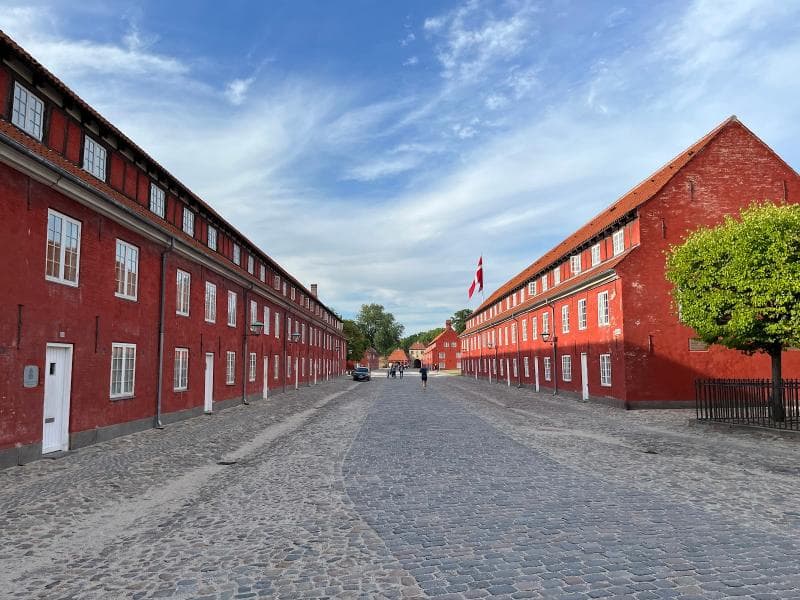
Explore the historic Barracks (The Rows) at Kastellet in Copenhagen, Denmark. Discover the former military quarters, their history, and present-day use.
Overview
Nestled within the iconic star-shaped fortress of Kastellet in Copenhagen, Denmark, lies a fascinating collection of historical structures known collectively as the Barracks, or in Danish, 'The Rows' (Stokkene). These long, red, two-storey buildings are an integral part of Kastellet's architectural and historical tapestry, immediately visible upon entering the fortress gates. While Kastellet itself serves as both an active military area and a beloved public park, the Barracks offer a tangible connection to its military past, providing a glimpse into the daily lives of soldiers and officers who once called this formidable citadel home. Today, these venerable buildings continue to serve a practical purpose, housing offices for various branches of the Danish Defence, including the Home Guard and the Judge Advocate Corps.
Walking along the cobbled streets of Kastellet, visitors can admire the exteriors of these historic barracks, their red-tiled roofs and sturdy facades evoking centuries of military history. Though their interiors are generally not accessible to the public due to their ongoing military function, their presence profoundly shapes the atmosphere of Kastellet, reminding visitors that this tranquil green space was once a bustling and vital defensive stronghold.
History & Cultural Background
The history of the Barracks is inextricably linked with that of Kastellet itself, a masterpiece of 17th-century fortification designed by the Dutch military engineer Henrik Rüse. Construction of the star-shaped citadel, originally known as Citadel Frederikshavn, commenced between 1662 and 1665 under the reign of King Frederik III. The Barracks, or 'The Rows', were among the earliest structures erected within the fortress walls, specifically built to house the soldiers and officers stationed there.
Throughout the 18th and 19th centuries, the Barracks remained a principal living quarter for the Danish army. Imagine the steady rhythm of military life echoing through these buildings: the sound of boots on cobblestones, the chatter of soldiers, and the routines of a garrison preparing for defense or maintaining order. Details from the past paint a picture of rudimentary living conditions in the early dorms, which were modest at just four by four meters, furnished with two triple beds, a small table, and two benches for their inhabitants. These structures were not merely shelters; they were the heart of a self-sufficient military community, designed to withstand sieges and ensure the continuous operation of the fortress.
What Makes It Special
What truly sets the Barracks of Kastellet apart is their remarkable preservation and their continued functional role within an active military base that is also openly accessible to the public. Unlike many historical military sites that have been converted entirely into museums, Kastellet's Barracks maintain a living connection to their original purpose. They stand as a testament to Danish military heritage, having witnessed nearly four centuries of history, from their construction to their occupation by German forces during World War II, and their present-day use.
The architectural integrity of these two-storey, red-tiled terraces is striking. They form part of a meticulously planned defensive complex, with some of them historically named according to their roles, such as 'Artillery Stock' and 'General Stock'. Their continued use by the Danish Defence ensures that Kastellet remains a vibrant, evolving historical site rather than a static relic. This duality—a functional military facility and a publicly cherished historical landmark—gives the Barracks a unique significance, allowing visitors to feel the tangible presence of history woven into the fabric of contemporary life.
Stories, Fun Facts & Local Details
The Barracks, as part of Kastellet, are imbued with countless stories from Denmark's past. Consider the annual celebration on October 28th, marking the date in 1664 when the first soldiers marched into Kastellet—a tradition that links current military personnel to their predecessors who once occupied these very barracks.
An interesting design element of Kastellet, which would have directly impacted the residents of the Barracks, was its aim for self-sufficiency during a siege. The presence of a windmill within the fortress walls, dating back to 1847 (replacing an earlier one from 1718), highlights this, ensuring a steady supply of flour for the garrison. The daily life within these barracks would have been a blend of strict military discipline and communal living, a microcosm of Danish society at the time.
Although the Barracks primarily housed soldiers, other significant buildings nearby, like the Citadel Church and the former prison, provided spiritual and correctional facilities for the community. The unique detail of holes in the prison wall allowing inmates to listen to church services offers a poignant insight into the era's social and religious considerations, indirectly impacting those living in the barracks. The Barracks are not just buildings; they are silent witnesses to pivotal moments in Danish history, from royal decrees to sieges and occupations, forming an indelible part of the nation's military and cultural identity.
Visitor Perspective
For the curious traveler researching Copenhagen, visiting the Barracks within Kastellet offers a profoundly immersive experience. As you stroll past the distinctive red buildings, you're not just seeing old architecture; you're tracing the footsteps of countless soldiers who lived, trained, and served within these walls for centuries. The experience encourages reflection on the passage of time and the enduring nature of military heritage. While you cannot enter the active military offices inside the Barracks, their external grandeur and the historical context provided by the surrounding fortress are compelling enough.
The open-air setting of Kastellet, with its well-maintained ramparts and peaceful atmosphere, makes for a thoughtful walk. Imagining the soldiers' lives, their drills on the parade ground, and their rest in these very barracks adds a layer of depth to your visit. It’s a place where history breathes quietly alongside modern life, offering a unique opportunity to connect with Copenhagen's past in a way that is both educational and emotionally resonant. The Barracks stand as a stoic reminder of the human element behind Kastellet's formidable defenses, inviting visitors to ponder the stories etched into their venerable red walls.
Coordinates: 12.59389, 55.69111
View on Google Maps💬 How Travelers Describe This Place
Based on community votes
Must See
963Beautiful
723Interesting
482Photogenic
396Unique
274
Traveler Stories
Discover memorable experiences shared by travelers who have visited this place.
No traveler stories yet.
Be the first traveler to share what made this place memorable.

Tour
By
Spot
Discover amazing places around the world. Your journey starts here.
Explore
© 2026 TourBySpot. All rights reserved.