Baroque Hall
Ljubljana, Slovenia
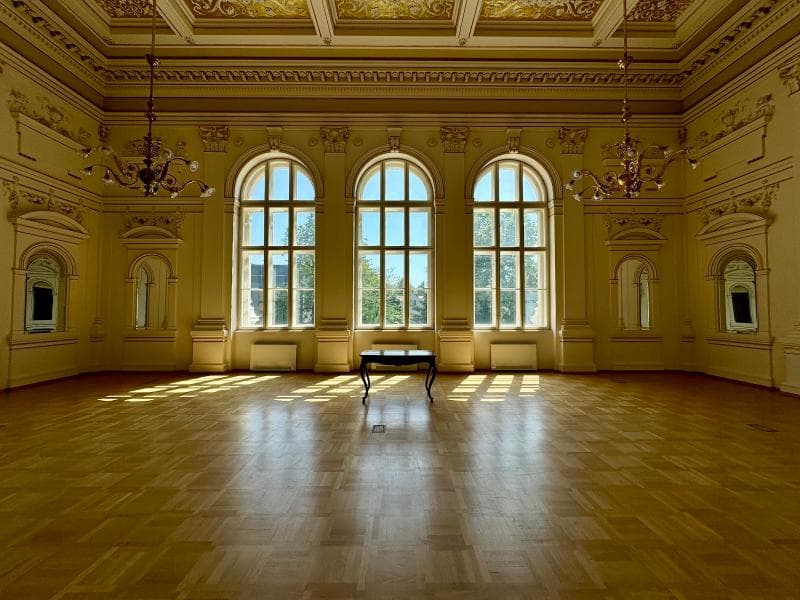
Explore the Baroque Hall at the National Gallery of Slovenia in Ljubljana, discovering opulent 17th and 18th-century art, including the original Robba Fountain.
Overview
Nestled in the heart of Ljubljana, the National Gallery of Slovenia stands as a proud custodian of the nation's artistic heritage. Within its grand walls, a dedicated space known as the Baroque Hall invites visitors on a captivating journey through the 17th and 18th centuries. This section of the gallery is more than just an exhibition; it’s a meticulously curated environment showcasing the opulence, drama, and profound artistic expression that defined the Baroque era in Slovenia and wider Europe. It provides a unique opportunity to immerse oneself in the artistic and cultural vibrancy of a transformative period in Slovenian history.
The National Gallery, housed in the impressive Neo-Renaissance Narodni Dom palace, serves as Slovenia’s principal institution for fine art, collecting works from the High Middle Ages up to the early 20th century. The Baroque Hall is a highlight for those keen to understand the intricate details and emotional depth characteristic of this artistic movement, offering a comprehensive look at painting and sculpture that flourished under both Habsburg and Venetian influences.
History & Cultural Background
The Baroque period profoundly shaped the architectural and artistic landscape of present-day Slovenia, particularly in Ljubljana. Emerging in the early 17th century from Rome, the Baroque style rapidly spread across Europe, finding fertile ground in the Slovenian lands which were then divided between the Habsburg and Venetian domains. This dual influence fostered a unique blend of Central European and Mediterranean artistic currents, creating a distinctively Slovenian Baroque expression.
The National Gallery itself is housed in the Narodni Dom building, a structure built between 1894 and 1896 and designed by Czech architect František Škabrout. Originally intended as a Slovenian cultural center, it became the home of the National Gallery in 1926. The museum's collection of Baroque art reflects this rich historical backdrop, featuring works commissioned by both ambitious patrons and talented artists, some local, others who immigrated from broader European art centers like Venice.
What Makes It Special
What sets the Baroque Hall apart is its ability to transport visitors directly into the aesthetic and spiritual world of 17th and 18th-century Slovenia. Here, the defining characteristics of Baroque art—luxury, dynamism, dramatic contrasts between light and shadow, and a pronounced emotional charge—are vividly displayed. The collection includes monumental altarpieces, richly polychromed wooden statues, and representative portraits, offering insights into both ecclesiastical and secular life of the era.
A notable highlight within the National Gallery, and a testament to the Baroque era, is the original Robba Fountain. Created by the Venetian-born sculptor Francesco Robba between 1743 and 1751, this significant Baroque monument was moved to the central glass gallery of the National Gallery after extensive restoration in 2008. Its intricate sculptural details exemplify the mastery of Baroque artistry and serve as a centerpiece of the gallery's historical collection.
Stories, Fun Facts & Local Details
The Baroque Hall showcases the work of key artists who defined the period in Slovenia. Among them are painters such as Valentin Metzinger, Fortunat Bergant, Anton Cebej, and Franc Jelovšek, whose works capture the spiritual depth and artistic daring of the era. The presence of artists like Giulio Quaglio, originally from Lombardy, and Francesco Robba from Venice, underscores the strong Italian influence that blended with local traditions.
A fascinating detail is that the Baroque style initially derived its name from the Portuguese word 'barocco,' meaning a pearl with an irregular shape, and was at first used with a negative connotation, describing anything 'twisted' or 'unusual.' However, it evolved to represent an era of immense creativity and emotional resonance. The relocation of Robba's Fountain to the gallery was a significant cultural event, ensuring the preservation of this masterpiece while still allowing a replica to grace Ljubljana's Town Square.
Visitor Perspective
Stepping into the Baroque Hall provides a contemplative and enriching experience. Visitors can wander through a collection where each artwork tells a story of faith, power, and human emotion. The arrangement allows for an appreciation of the stylistic evolution from the late-Renaissance influences to the full flourish of Baroque, and even hints of the emerging Neoclassicism. The ambiance encourages a slower pace, inviting guests to delve into the intricate details of paintings and the expressive forms of sculptures. This dedicated space offers a profound connection to Slovenia's past, revealing how art was used to convey dramatic narratives and spiritual intensity, making it a must-see for anyone interested in European art history and Slovenian cultural identity.
Coordinates: 14.5002511, 46.0540619
View on Google Maps💬 How Travelers Describe This Place
Based on community votes
Interesting
869Must See
445Beautiful
416Photogenic
309Unique
33
Traveler Stories
Discover memorable experiences shared by travelers who have visited this place.
No traveler stories yet.
Be the first traveler to share what made this place memorable.

Tour
By
Spot
Discover amazing places around the world. Your journey starts here.
Explore
© 2026 TourBySpot. All rights reserved.