Baptismal Font
Salzburg, Austria
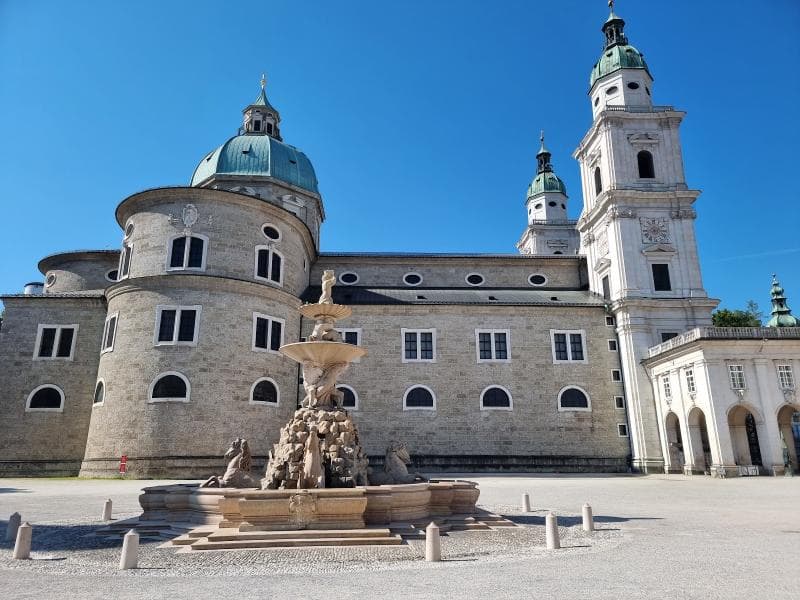
Explore the historic Baptismal Font in Salzburg Cathedral, Austria, where Mozart and 'Silent Night' lyricist Joseph Mohr were baptized.
Overview
Nestled within the grand Baroque architecture of the Salzburg Cathedral in Salzburg, Austria, lies a remarkable piece of history: the Baptismal Font. This ancient bronze font, a true relic of medieval craftsmanship, stands as a testament to centuries of faith and tradition. It is not merely an object of religious significance but a silent witness to pivotal moments in the lives of some of Austria's most celebrated figures. Located in the first side chapel on the left upon entering the magnificent cathedral, the font invites contemplation and offers a tangible link to the past.
Its unique construction, featuring a 14th-century bronze basin resting upon 12th-century lion sculptures, makes it a fascinating blend of different artistic periods, predating the current Baroque edifice of the cathedral itself. Visitors are often drawn to its rich history and the profound stories it holds, particularly its connection to Wolfgang Amadeus Mozart.
History & Cultural Background
The Baptismal Font's origins trace back to the early 1300s, with sources citing its creation around 1311 or 1321. This makes it considerably older than the 17th-century Baroque Salzburg Cathedral that houses it today, consecrated in 1628. The font's enduring presence is remarkable, having survived the various rebuildings and redesigns of the cathedral over the centuries. Its base, comprised of four majestic bronze lion figures, dates even further back to the 12th century, showcasing Romanesque artistry. These lions, depicted with a distinctive style, reflect a time when artists often portrayed such creatures without having seen them firsthand, adding a layer of imaginative interpretation to their work.
The cathedral itself, dedicated to Saints Rupert and Virgil, has been a spiritual heart of Salzburg since the 8th century, undergoing multiple transformations due to fires and ambitious architectural visions. Through all these changes, the ancient baptismal font has remained, serving its sacred purpose and accumulating layers of historical and cultural importance.
What Makes It Special
What truly sets the Salzburg Cathedral's Baptismal Font apart is its unparalleled historical pedigree and the luminaries who received the sacrament of baptism within its ancient basin. Most famously, it is the very font where Wolfgang Amadeus Mozart was baptized on January 28, 1756, just a day after his birth. This fact alone imbues the font with immense cultural significance, connecting it directly to one of the greatest musical geniuses the world has ever known. Imagine the small hands of the infant Mozart being touched by the waters held within this very vessel, setting him on a path that would change the course of music history.
Beyond Mozart, the font also holds the distinction of being the baptismal site for Joseph Mohr, the lyricist of the beloved Christmas carol 'Silent Night'. These connections highlight the font not just as an artistic artifact but as a living piece of history, where the spiritual journeys of iconic figures began.
Stories, Fun Facts & Local Details
One of the most captivating features of the font is an inscription etched along its upper edge, offering a glimpse into its original purpose and the beliefs of its time. It reads: 'I am a vessel made of all. I redeem sins. True purification in the holy water happens through me. All that is washed in baptism undergoes complete purification. Master Heinrich made me in the Year of Our Lord 1321.' This inscription not only dates the font but also articulates the profound theological understanding of baptism as a rite of cleansing and new beginnings.
The artistic detail of the font, with its circular shape adorned with quatrefoils and floral motifs, topped by a beautifully crafted metal cover, showcases the intricate craftsmanship of the medieval period. The juxtaposition of the 14th-century bronze basin with its earlier 12th-century lion supports creates a unique visual dialogue between different eras of artistry. Visitors are encouraged to observe the lion faces closely; they possess a distinct, almost human-like quality, characteristic of Romanesque artistic interpretations of exotic animals.
Visitor Perspective
For any curious traveler visiting Salzburg Cathedral, seeking out the Baptismal Font is a deeply rewarding experience. It is located prominently in the first side chapel to the left of the main entrance, making it easily accessible for visitors. Standing before this ancient artifact, one can feel a tangible connection to the centuries of history and the countless lives touched by its waters. It offers a quiet moment of reflection amidst the grandeur of the cathedral, prompting thoughts about legacy, faith, and the passage of time.
The font is a focal point for those interested in the life of Mozart, offering a personal touchpoint to his early life. It serves as a powerful reminder that even the most monumental figures began their journeys in humble yet sacred ways. Taking a moment to appreciate the detailed craftsmanship, read the ancient inscription, and ponder its historical significance enriches the overall experience of visiting the Salzburg Cathedral, providing a meaningful cultural immersion beyond mere sightseeing.
Coordinates: 13.04694, 47.79778
View on Google Maps💬 How Travelers Describe This Place
Based on community votes
Must See
913Photogenic
748Interesting
499Beautiful
337Unique
94
Traveler Stories
Discover memorable experiences shared by travelers who have visited this place.
No traveler stories yet.
Be the first traveler to share what made this place memorable.

Tour
By
Spot
Discover amazing places around the world. Your journey starts here.
Explore
© 2026 TourBySpot. All rights reserved.