Banquet Hall
Ho Chi Minh City, Vietnam
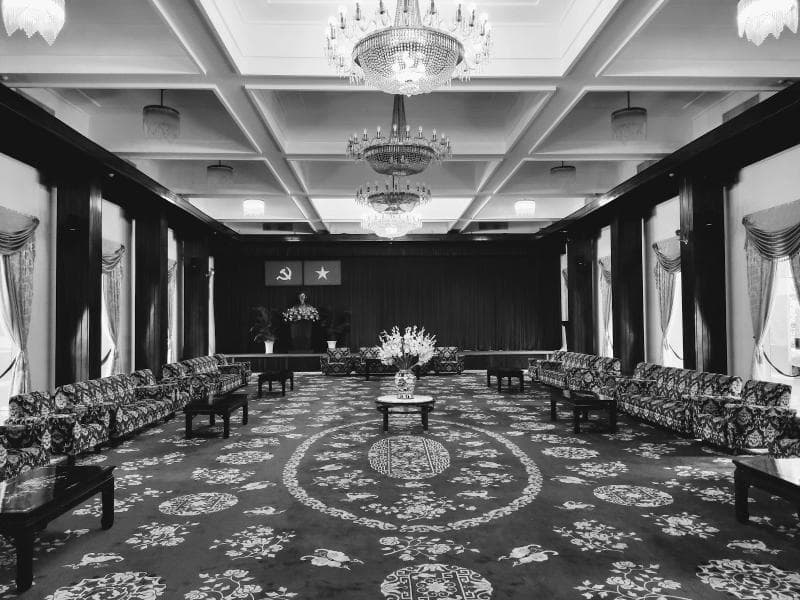
Explore the historic Banquet Hall inside Independence Palace, Ho Chi Minh City, Vietnam. Discover its role in state events and Vietnam's rich history.
Overview
Stepping into the Banquet Hall of Independence Palace in Ho Chi Minh City, Vietnam, is like walking onto a stage where pivotal moments in modern Vietnamese history unfolded. Located on the first floor of this iconic landmark, the hall served as a prestigious setting for state dinners, formal receptions, and significant gatherings during the era of the Republic of Vietnam. Also known as the State Banqueting Hall or Ambassador Chamber, this elegant space was designed to impress and host distinguished guests from around the world.
With a capacity to accommodate over a hundred guests, the Banquet Hall's layout and decor were meticulously planned to convey grandeur and political gravitas. It remains a remarkably preserved example of mid-20th-century governmental architecture, offering visitors a tangible connection to the past. The room's warm golden tones, often highlighted in descriptions, were chosen to symbolize hospitality and elegance, reflecting the cultural values embedded within its functional design.
History & Cultural Background
The Independence Palace itself carries a rich and complex history. Originally built as Norodom Palace in 1868 during French colonial rule, it underwent several transformations before being renamed Independence Palace in 1954.
A devastating bombing in 1962 necessitated its complete reconstruction. The current edifice, designed by the acclaimed Vietnamese architect Ngô Viết Thụ, was completed and inaugurated on October 31, 1966. Thụ's design masterfully blends traditional Vietnamese architectural elements with modernist principles, creating a distinctive structure that embodies both national identity and contemporary flair.
The Banquet Hall, as part of this new palace, immediately became a focal point for official state functions. It bore witness to numerous historic occasions, including the inauguration banquet for President Nguyễn Văn Thiệu in 1967. This event, among many others, solidified the hall's status as a symbol of South Vietnamese sovereignty and diplomatic engagement. The architectural design of the palace, including the Banquet Hall, incorporates auspicious symbolism, such as the overall layout resembling the Vietnamese character 'Cát' (吉), signifying good fortune and prosperity.
What Makes It Special
The Banquet Hall's unique appeal lies in its exceptional preservation and its profound historical resonance. Unlike many historical sites that have undergone extensive modernization, the Independence Palace, and particularly its ceremonial rooms like the Banquet Hall, have been maintained in their original state. This allows visitors to experience the atmosphere exactly as it was during its operational years, offering an authentic glimpse into the past.
The meticulous attention to detail in its furnishings and decor speaks volumes about the era's aesthetic and diplomatic protocols. The warm golden color palette and the presence of significant artworks, such as early 20th-century Chinese porcelain urns, underscore the hall's role as a space of formality and cultural representation.
Beyond its aesthetic qualities, the hall is special because it embodies the political and social aspirations of a nation striving for identity amidst conflict. It was a place where alliances were forged, policies were discussed, and the future of South Vietnam was continuously deliberated. Its very existence and design reflect the blend of Eastern and Western influences that characterized Vietnam during that turbulent period.
Stories, Fun Facts & Local Details
One of the most compelling aspects of the Banquet Hall is the stories it silently tells. Imagine the hushed conversations among diplomats, the clinking of glasses during state dinners, and the strategic discussions that shaped national policies. The chosen decor was far from arbitrary; the use of warm golden tones in the State Banqueting Hall was deliberate, intended to evoke a sense of welcome and sophisticated elegance for international guests.
Another fascinating detail is the inclusion of specific artifacts within the hall, such as the aforementioned porcelain urns, which add layers of cultural depth to the space. These items are not merely decorative but often carry historical and artistic significance, contributing to the hall's opulent and formal ambiance.
While the larger Palace encompasses various rooms, each with its own story, the Banquet Hall's role in hosting formal events made it a key venue for projecting an image of stability and sophistication to the world. It was a place where culinary diplomacy played a role, and where the rich tapestry of Vietnamese culture was subtly showcased to foreign dignitaries through its setting and ceremonies. The very air within its walls seems to hum with echoes of past grand celebrations and critical political engagements.
Visitor Perspective
For the curious traveler, visiting the Banquet Hall offers a unique opportunity for introspection and education. It allows one to step back in time and gain an intimate understanding of the political landscape and social customs of a bygone era. As you walk through the hall, it's easy to visualize the historical figures who once gathered there, making decisions that impacted millions.
The experience is not just about observing artifacts; it's about feeling the weight of history that permeates the room. The preserved decor and period-specific aesthetics offer an immersive journey, unlike simply reading about events in a textbook. It's a chance to connect with Vietnam's complex past on a deeply personal level, appreciating the country's resilience and enduring spirit. The Banquet Hall, along with the rest of Independence Palace, is a must-visit for anyone seeking a deeper understanding of Ho Chi Minh City's and Vietnam's modern history.
Coordinates: 106.6953, 10.7784
View on Google Maps💬 How Travelers Describe This Place
Based on community votes
Must See
982Unique
876Photogenic
875Interesting
648Beautiful
235
Traveler Stories
Discover memorable experiences shared by travelers who have visited this place.
No traveler stories yet.
Be the first traveler to share what made this place memorable.

Tour
By
Spot
Discover amazing places around the world. Your journey starts here.
Explore
© 2026 TourBySpot. All rights reserved.