Balcony Seating
Hanoi, Vietnam
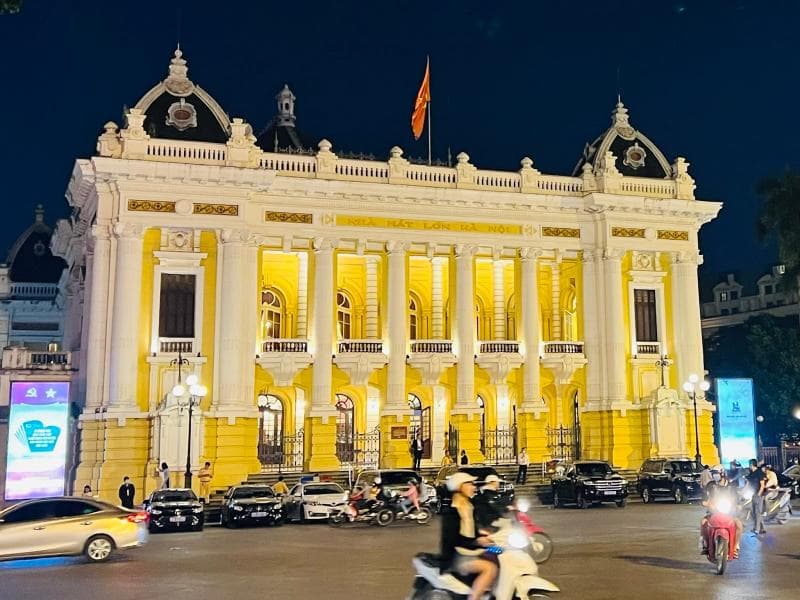
Discover the historic Balcony Seating at Hanoi Opera House, Vietnam. Experience stunning panoramic views and rich colonial history.
Overview
Stepping into the Hanoi Opera House, one immediately feels transported to a bygone era of grandeur and artistic splendor. Within this majestic French colonial edifice, the 'Balcony Seating' offers more than just a place to watch a performance; it provides a unique perspective, a bird's-eye view of history unfolding on stage and within the opulent hall. It's a vantage point from which to absorb the architectural magnificence and the echoes of cultural moments that have shaped Vietnam's capital.
History & Cultural Background
The Hanoi Opera House, or Nhà hát Lớn Hà Nội, is a striking testament to French colonial architecture, built between 1901 and 1911. Inspired by the lavish Palais Garnier in Paris, its design brought a piece of European elegance to the heart of Indochina. This theatrical masterpiece, featuring neoclassical style with Gothic, Roman Ionic, Baroque, and Art Nouveau influences, was initially conceived as a cultural hub for the French elite and upper-class Vietnamese. The tiered seating arrangements, including the distinguished balcony sections, mirrored the social stratification of its early audiences, offering varying perspectives and experiences within the same grand space. Beyond its architectural beauty, the Opera House became a pivotal site in Vietnamese history. It famously hosted the mass meeting that ignited the August Revolution in 1945 and the first session of the National Assembly of the Democratic Republic of Vietnam in 1946, transforming it from a colonial monument into a symbol of national significance. The very structure of the auditorium, with its multiple levels of seating, including the prominent balconies, facilitated these large gatherings, allowing many to witness the nation's pivotal moments.
What Makes It Special
The Balcony Seating at the Hanoi Opera House is distinguished by its unique blend of architectural immersion and panoramic stage views. From these elevated positions, visitors can fully appreciate the intricate details of the opera house's interior: the rich red velvet seats filling the main floor, the elaborate Corinthian columns, the ornate domed ceiling, and the sparkling crystal chandeliers. Sources describe the balcony seats as offering 'stunning panoramic views' and a 'refined viewing experience'. This elevated perspective enhances the sensory experience, allowing for an appreciation of the entire spectacle, from the performers on stage to the reactions of the audience below. The design ensures excellent sightlines, complementing the venue's renowned acoustics, which were meticulously planned to carry every note and spoken word throughout the hall. Sitting in the balcony, one gains a holistic appreciation of the performance hall's harmonious blend of sound, light, and colors. The second floor, for instance, offers elegantly arranged balcony seats and features the Mirror Room, which itself boasts a balcony overlooking the August Revolution Square, providing a unique 'panoramic view of the city' outside the performance hall.
Stories, Fun Facts & Local Details
While specific anecdotes directly tied to the balcony seating are subtle, their historical role is undeniable. In its early days, these elevated tiers likely hosted many significant figures – colonial officials, wealthy merchants, and later, Vietnamese leaders – all witnessing momentous cultural performances or political speeches. Imagine the hushed anticipation in the upper balconies as the curtain rose on a French opera, or the fervent energy as revolutionaries gathered within its walls. The Opera House, with its total capacity of around 598 seats spread across three levels, creates an intimate yet grand atmosphere. The balconies, including the third floor, contribute to this intimate feeling while offering a broader perspective, often favored by those who prefer to observe the entire theatrical tableau. It is said that in the performance hall, there's even a designated balcony for 'VIP guests and the press,' highlighting the prestige associated with these elevated positions. The ongoing legacy means that contemporary artists, from symphony orchestras to ballet troupes, continue to grace this historic stage, and the balcony seats remain a sought-after experience for discerning audiences.
Visitor Perspective
For a curious traveler, experiencing the Hanoi Opera House from its Balcony Seating is an unparalleled opportunity to connect with both art and history. From this vantage point, you don't just watch a performance; you witness it as generations before you have, enveloped by the grandeur of a French colonial masterpiece. The elevated position allows for an appreciation of the stage's full breadth and depth, as well as the intricate details of the hall's architecture that might be missed from the ground floor. While currently undergoing a significant two-year renovation that began in January 2026, the Opera House, upon its reopening, promises an even more splendid experience. Planning a visit will require checking performance schedules in advance, and booking balcony seats can be a rewarding choice for their 'stunning panoramic views' and the unique sense of perspective they offer. It's a chance to immerse yourself in the cultural heart of Hanoi, surrounded by the echoes of a rich past and the vibrant pulse of contemporary Vietnamese artistry.
Coordinates: 105.8547, 21.0212
View on Google Maps💬 How Travelers Describe This Place
Based on community votes
Beautiful
847Must See
685Unique
513Interesting
482Photogenic
62
Traveler Stories
Discover memorable experiences shared by travelers who have visited this place.
No traveler stories yet.
Be the first traveler to share what made this place memorable.

Tour
By
Spot
Discover amazing places around the world. Your journey starts here.
Explore
© 2026 TourBySpot. All rights reserved.