Auxiliary shrines
Osaka, Japan
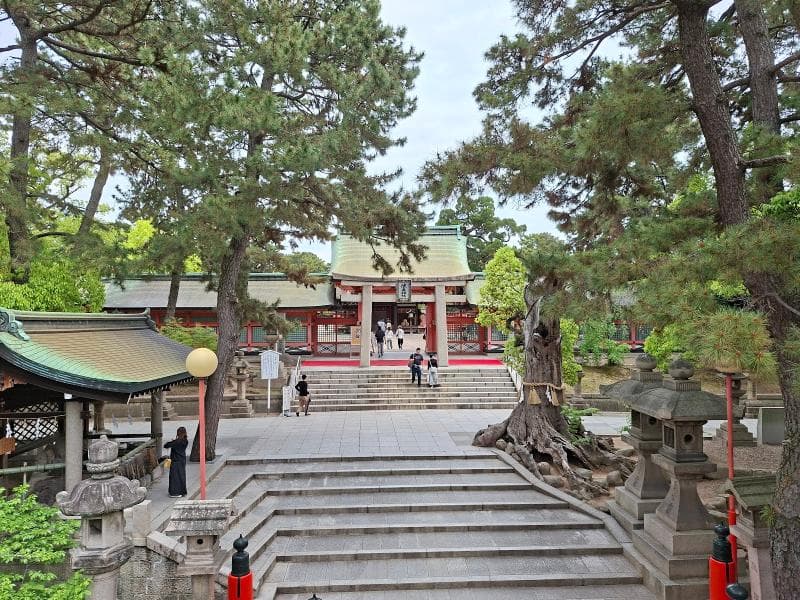
Explore the serene auxiliary shrines of Sumiyoshi Taisha in Osaka, Japan. Discover their ancient history, unique deities, and cultural significance.
Overview
Nestled within the sprawling and ancient grounds of Sumiyoshi Taisha in Osaka, Japan, are numerous auxiliary shrines, known in Japanese as *sessha* (摂社) and *massha* (末社). While the four main halls of Sumiyoshi Taisha are dedicated to the powerful Sumiyoshi Sanjin and Empress Jingu, these smaller, often more intimate, shrines play a crucial role in the spiritual ecosystem of the complex. They are not mere footnotes but integral parts of the shrine's devotional landscape, each dedicated to various local deities or figures closely associated with the main shrine's history and mythology. Exploring these auxiliary shrines offers a deeper, more nuanced understanding of Shinto beliefs and the rich tapestry of Japan's spiritual heritage. There are approximately 27 auxiliary and subordinate shrines scattered across the expansive grounds, each inviting a moment of quiet contemplation.
History & Cultural Background
The history of Sumiyoshi Taisha itself dates back to the 3rd century, making it one of Japan's oldest shrines and predating the introduction of Buddhism to the country. It was founded by Empress Jingu, who, after a successful naval campaign, credited her safe return to the protection of the Sumiyoshi kami, and thus ordered the construction of the shrine in their honor. This deep connection to maritime safety and the sea deities forms the bedrock of the entire complex, extending to many of its auxiliary shrines. Over centuries, as the shrine's influence grew and its spiritual protections expanded beyond the sea to include poetry, agriculture, martial arts, and even love and business, so too did the number and variety of its auxiliary shrines. These smaller sanctuaries often commemorate specific events, enshrine ancestral deities of clans connected to Sumiyoshi Taisha, or are dedicated to kami (deities) with particular blessings, complementing the overarching protective power of the main gods. They are a testament to the layered and evolving nature of Shinto worship, preserving ancient traditions and beliefs within a larger, revered institution.
One particularly notable auxiliary shrine is Daikai Jinja. Intriguingly, Daikai Jinja is believed to predate Sumiyoshi Taisha itself. It originally enshrined Watatsumi, a powerful god of the sea, offering spiritual protection to seafarers. When Empress Jingu commissioned the construction of Sumiyoshi Taisha, she entrusted the project to Tamomi no Sukune, the head priest of Daikai Jinja. Today, Daikai Jinja enshrines Toyotamahiko no Mikoto and Toyotamahime no Mikoto, both deities strongly associated with the sea and maritime protection, maintaining its ancient connection to the ocean. This historical lineage highlights the deep roots of maritime reverence within the Sumiyoshi area, even before the formal establishment of the Grand Shrine.
What Makes It Special
What makes the auxiliary shrines at Sumiyoshi Taisha truly special is their collective ability to offer a comprehensive spiritual experience, each shrine catering to specific prayers and intentions. While the main halls draw visitors seeking broad blessings for maritime safety and national prosperity, the smaller shrines provide focused spiritual support. For instance, some may offer prayers for childbirth, agricultural success, or local prosperity, adding layers of meaning to a visit. The sheer number – approximately 27 individual auxiliary and subordinate shrines – creates a spiritual pathway through the extensive grounds, each with its own story and purpose. This network of smaller shrines reflects the intricate nature of Shinto, where myriad kami are worshipped for their diverse influences on daily life and the natural world.
The architecture of these smaller shrines often adheres to the traditional Sumiyoshi-zukuri style, characterized by its straight, uncurved roofs and simple, elegant design, reflecting a pre-Buddhist Japanese aesthetic. While simpler than the grand main halls, this architectural consistency ties them intrinsically to the historical identity of Sumiyoshi Taisha. The tranquil atmosphere surrounding many of these shrines, often nestled amidst sacred trees and stone lanterns, provides a peaceful counterpoint to the more bustling main precinct, allowing for personal moments of reflection and connection with the deities.
Stories, Fun Facts & Local Details
Among the many auxiliary shrines, Wakamiya Hachimangu stands out with its distinctive torii gate. Unlike the more common rounded pillars, the torii of Wakamiya Hachimangu features unique square pillars with a flush crossbeam, a style that is an important cultural property. This architectural detail is a subtle nod to the shrine's individual heritage within the larger complex. Another fascinating aspect is the 'Hatsutatsu Mairi', a monthly ritual where a particular subsidiary shrine is the focal point. On the first 'rabbit day' (*hatsutatsu*) of each month, worshippers visit a specific subsidiary shrine (believed to be a central shrine for this ritual) to pray for success in business, attracting many locals seeking good fortune. This tradition underscores the vibrant, living nature of the shrine's spirituality, where ancient beliefs are actively practiced in contemporary life.
The extensive presence of stone lanterns throughout the grounds, many donated by individuals and companies involved in the shipping industry, speaks to the enduring legacy of Sumiyoshi Taisha's role as a protector of seafarers. These lanterns light the pathways leading to both major and minor shrines, symbolizing the continuous devotion and gratitude of those who rely on the sea. The feeling of stepping into a sacred grove, with older *setsumatsusha* interspersed among trees often marked with *shimenawa* (sacred ropes), evokes a sense of deep reverence for nature and its spirits, known as *kodama*. These details transform a simple visit into an immersive cultural experience, where every stone and tree whispers tales of centuries past.
Visitor Perspective
For the curious traveler, exploring the auxiliary shrines at Sumiyoshi Taisha offers a unique opportunity to delve deeper into Japanese spiritual practices beyond the grandeur of the main halls. Moving from the expansive central area to the quieter, more secluded auxiliary shrines, you'll encounter a sense of intimacy and reverence. These smaller sanctuaries are often less crowded, allowing for a more personal and contemplative experience. The diverse range of deities honored across these shrines means there is a blessing or prayer for almost every aspect of life, making a visit profoundly personal. Walking through the pathways dotted with these historical structures, surrounded by lush greenery and the gentle glow of stone lanterns, one feels transported to a different era. It's an invitation to connect with the local spiritual traditions, to understand the subtle nuances of Shinto, and to appreciate the enduring faith that has sustained this sacred site for nearly two millennia. The auxiliary shrines collectively tell a story of a community's evolving spiritual needs, all harmoniously integrated within one of Japan's most significant Shinto complexes. They are a reminder that sometimes, the most profound experiences are found in the details, in the quiet corners dedicated to the myriad of gods that shape everyday life.
Coordinates: 135.4929417, 34.6127972
View on Google Maps💬 How Travelers Describe This Place
Based on community votes
Photogenic
551Interesting
547Unique
336Beautiful
219Must See
186
Traveler Stories
Discover memorable experiences shared by travelers who have visited this place.
No traveler stories yet.
Be the first traveler to share what made this place memorable.

Tour
By
Spot
Discover amazing places around the world. Your journey starts here.
Explore
© 2026 TourBySpot. All rights reserved.