Auditorium
Warsaw, Poland
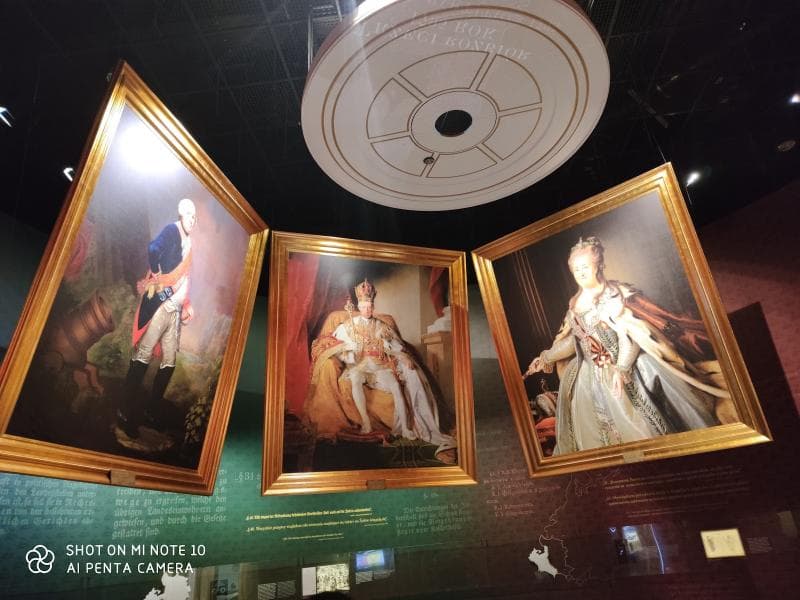
Explore the Auditorium at POLIN Museum Of The History Of Polish Jews in Warsaw, Poland. A versatile venue for cultural events, conferences, and dialogue.
Overview
Deep within the architecturally striking POLIN Museum of the History of Polish Jews in Warsaw, Poland, lies its state-of-the-art Auditorium. More than just a venue, this space is an integral part of the museum's vibrant cultural and educational mission, serving as a dynamic hub for dialogue, learning, and artistic expression. Situated within the lower levels of the museum, the Auditorium complements the main exhibitions by hosting a diverse array of events, from international conferences and academic lectures to film screenings and concerts. With a capacity to accommodate approximately 480 people, it is a significant facility designed to support a wide range of public engagements.
The Auditorium is a crucial component of POLIN Museum's broader aim: to tell the thousand-year story of Jewish life in Poland, moving beyond solely the period of the Holocaust, and fostering understanding and respect. Its modern facilities and strategic location within the museum make it a central point for contemporary discussions and cultural presentations related to this rich history and its ongoing relevance.
History & Cultural Background
The POLIN Museum itself stands on hallowed ground, in what was once the heart of the Warsaw Ghetto, directly facing the Monument to the Ghetto Heroes. This powerful location informs the entire museum's ethos, including its Auditorium. The building, designed by acclaimed Finnish architects Rainer Mahlamäki and Ilmari Lahdelma, is a masterpiece of contemporary architecture that opened its doors in 2013, with the core exhibition following in 2014.
The architectural philosophy of the museum is profound, characterized by a minimalist exterior and a breathtaking, cavernous entrance hall with undulating, dynamic walls. This central fissure is often interpreted as a symbol of the fractured history of Polish Jews or the parting of the Red Sea. Within this thoughtfully designed structure, spaces like the Auditorium were conceived to facilitate the museum's mission of recalling and preserving memory, while also building bridges between cultures and combating xenophobia. The entire building is meant to be a 'museum of life,' emphasizing the continuity and richness of Jewish heritage rather than solely focusing on tragedy.
What Makes It Special
The Auditorium's distinction lies in its multipurpose design and its role in actualizing the museum's forward-looking mission. It is equipped with elaborate sound systems, digital projectors, and professional stage lighting, making it adaptable for various types of events. This versatility allows the POLIN Museum to host a continuous program of inspiring educational and cultural activities, from scholarly conferences exploring Jewish languages and history to public discussions on contemporary issues.
Unlike many museum spaces, the Auditorium at POLIN actively promotes public discourse and engagement, becoming a venue where diverse perspectives can be shared and stereotypes confronted. It underscores the museum's commitment to being a modern cultural institution that not only educates about the past but also fosters understanding in the present and shapes the future. Its design ensures accessibility, with dedicated seating for wheelchair users, reflecting the museum's dedication to inclusivity for all visitors.
Stories, Fun Facts & Local Details
One fascinating aspect of the museum's design, which extends to how its internal spaces like the Auditorium function, is the contrast between the quiet reverence evoked by its location and the dynamic, almost organic flow of its interior. The building's seemingly simple exterior gives way to a complex internal landscape, where the Auditorium is thoughtfully integrated into the lower level, providing a dedicated space for focused gatherings apart from the main exhibition flow.
The very name 'POLIN,' derived from Hebrew, means 'Poland' or 'rest here,' stemming from a legend about the arrival of the first Jews to Poland. This theme of welcome and rootedness is subtly echoed in how the Auditorium provides a space for community and connection within the museum. The numerous international conferences and forums held here, such as those confronting Holocaust distortion or exploring Jewish languages, highlight the Auditorium's role in global scholarly exchange and the museum's commitment to cutting-edge research.
Visitor Perspective
For a visitor, attending an event in the POLIN Museum's Auditorium offers a unique experience. It's an opportunity to engage with the museum's themes on a deeper, more interactive level, beyond the compelling core exhibition. Whether it's a concert of Jewish music, a lecture by a renowned historian, or a film screening, the atmosphere is one of focused attention and intellectual curiosity.
The Auditorium provides a comfortable and conducive environment for learning and reflection, enabling attendees to absorb complex narratives and participate in meaningful dialogue. It allows visitors to witness firsthand the museum's active role as a 'place for meetings and conversations' for all those eager to understand past and present Jewish culture, confront prejudices, and engage with global challenges. Experiencing an event in this space truly enhances the understanding of POLIN Museum not just as a repository of history, but as a living, breathing institution dedicated to tolerance and mutual respect.
Coordinates: 20.9934833, 52.2491839
View on Google Maps💬 How Travelers Describe This Place
Based on community votes
Unique
853Photogenic
639Beautiful
190Interesting
93Must See
32
Traveler Stories
Discover memorable experiences shared by travelers who have visited this place.
No traveler stories yet.
Be the first traveler to share what made this place memorable.

Tour
By
Spot
Discover amazing places around the world. Your journey starts here.
Explore
© 2026 TourBySpot. All rights reserved.