Audio Tour Stations
Phnom Penh, Cambodia
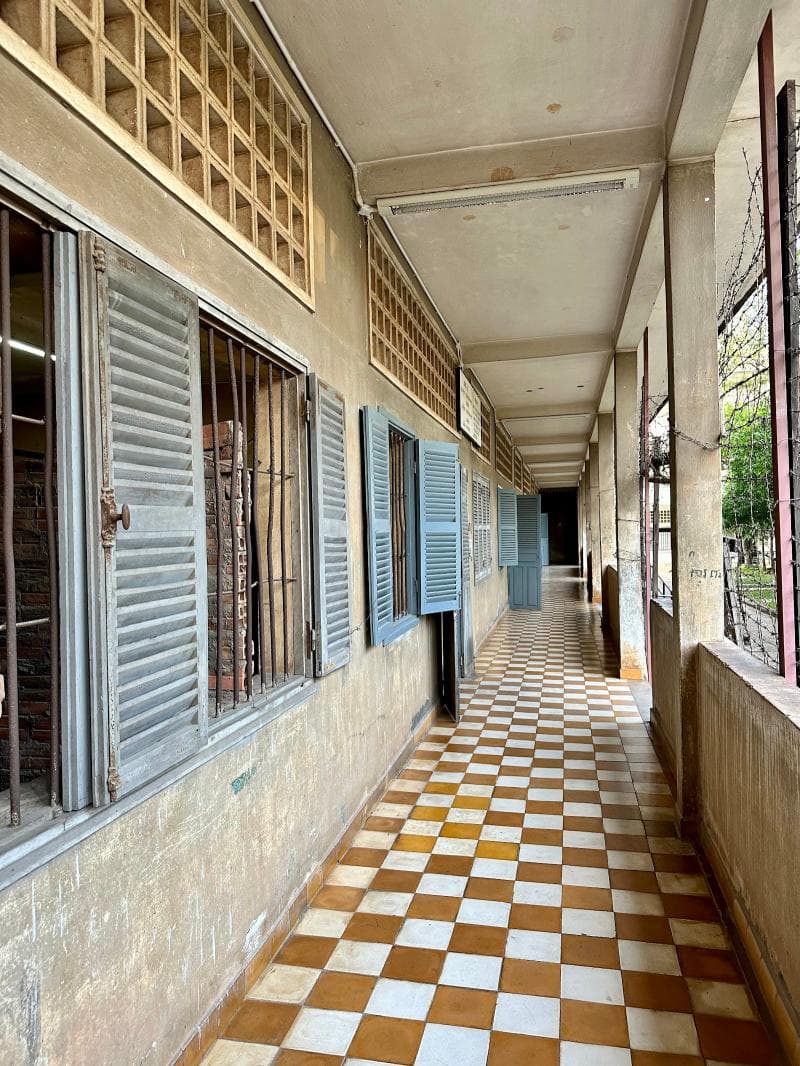
Explore Tuol Sleng Genocide Museum's Audio Tour Stations in Phnom Penh, Cambodia, for a deeply emotional and informative journey through Khmer Rouge history.
Overview
The Audio Tour Stations at the Tuol Sleng Genocide Museum in Phnom Penh, Cambodia, offer an indispensable and deeply affecting journey through one of humanity's darkest chapters. Located within the former Security Prison 21 (S-21), once a high school, these audio guides transform a visit from a passive viewing into an immersive, personal encounter with history. The tour provides a meticulously curated narrative that guides visitors through the repurposed classrooms and detention cells, allowing for a self-paced, contemplative exploration of the site.
Available in numerous languages, including English, French, German, Chinese, and Spanish, the audio tour is widely recommended as the primary means of engaging with the museum's profound exhibits. For a modest fee, visitors receive an MP3 player and headphones, which become their portal to understanding the systematic brutality and individual suffering that occurred here under the Khmer Rouge regime.
History & Cultural Background
The Tuol Sleng Genocide Museum stands as a chilling memorial to the victims of the Khmer Rouge. What began as the Tuol Svay Prey High School was brutally transformed into Security Prison 21 (S-21) between 1975 and 1979. Under Pol Pot's regime, S-21 became the central and most notorious of 189 interrogation centers across Cambodia, designed for the detention, interrogation, torture, and extermination of those deemed 'political enemies'. An estimated 14,000 to 20,000 people were imprisoned at S-21, with only a handful surviving its horrors.
The museum itself was established shortly after the liberation of Phnom Penh in 1979, opening in 1980 to preserve the evidence of these atrocities and serve as a poignant reminder to the world. The audio tour significantly enriches this historical context, explaining the broader framework of the Khmer Rouge regime, the daily life within their labor camps, and the systematic nature of the genocide.
What Makes It Special
What truly sets the Tuol Sleng audio tour apart is its profound emotional resonance and the intimate connection it fosters between the visitor and the past. Unlike a traditional guided tour, the self-paced audio experience, developed by Narrowcastors since 2015, allows for deep reflection without the distractions of a group.
The narration is delivered by Ros Kosal, a Cambodian survivor who tragically lost five siblings during the Khmer Rouge period. His personal connection to the events imbues the tour with an authenticity and poignancy that a purely academic presentation could not achieve. This personal testimony guides visitors through the former prison, making the stark reality of the site profoundly palpable. The tour explicitly directs attention to the thousands of prisoner photographs, humanizing the anonymous faces by sharing their stories and the arbitrary reasons for their arrests, such as their education, nationality, or family ties.
Stories, Fun Facts & Local Details
While 'fun facts' may seem incongruous with the somber subject matter, the audio tour excels at providing meaningful and impactful details. It creates an 'affective atmosphere' that transcends mere cognitive understanding, inviting visitors into an embodied and emotional engagement with the spaces and objects. For instance, the tour delineates between the photos of prison staff and their victims, shedding light on the roles of individuals in the regime's machinery.
The audio guide is structured with approximately 32 major stops, offering additional 'layers' for extended listening at some points and even 'anytime stops' for moments of quiet contemplation or to listen to atmospheric music. Visitors are encouraged to pause the audio between buildings, allowing for personal reflection as they move from the grim interrogation rooms of Building A to the cell blocks of B, C, and D. Importantly, some segments of the audio tour carry warnings, preparing listeners for particularly disturbing information.
Visitor Perspective
For many travelers, the audio tour is considered essential for a comprehensive and sensitive understanding of Tuol Sleng. It creates an insular experience, with headphones muffling external noise, allowing for an intimate encounter with the narration that is both solemn and deeply personal.
Visitors consistently describe the experience as intensely emotional, sobering, and heartbreaking. It's a challenging visit, but one that is crucial for understanding Cambodia's recent history and the resilience of its people. The audio tour helps visitors process the overwhelming evidence of suffering, providing context and individual narratives that make the historical facts resonate on a deeply human level. It ensures that the lessons of Tuol Sleng are not forgotten and that the memories of those who perished are honored.
Coordinates: 104.91778, 11.54944
View on Google Maps💬 How Travelers Describe This Place
Based on community votes
Unique
894Interesting
862Photogenic
443Beautiful
304Must See
35
Traveler Stories
Discover memorable experiences shared by travelers who have visited this place.
No traveler stories yet.
Be the first traveler to share what made this place memorable.

Tour
By
Spot
Discover amazing places around the world. Your journey starts here.
Explore
© 2026 TourBySpot. All rights reserved.