Atrium
Astana, Kazakhstan
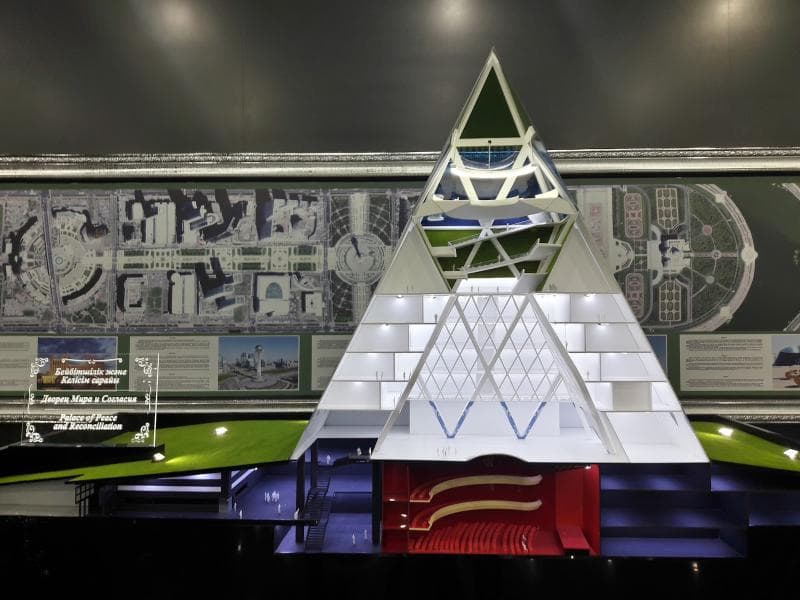
Explore the Atrium, the light-filled heart of the Palace of Peace and Reconciliation in Astana, Kazakhstan, a symbol of unity and interfaith harmony.
Overview
The Atrium, sometimes referred to as the 'Cheops Atrium', stands as the magnificent heart of the Palace of Peace and Reconciliation in Astana, Kazakhstan. This grand, central space is bathed in natural light, serving as a pivotal point that unites the various symbolic and functional areas within the pyramid-shaped structure. It is designed to evoke a sense of openness and tranquility, perfectly embodying the Palace's overarching message of unity and interfaith harmony. As visitors step inside the Palace, the sheer scale and architectural elegance of the Atrium immediately capture attention, drawing the eye upward towards the iconic stained-glass apex.
History & Cultural Background
The Palace of Peace and Reconciliation, housing the Atrium, was the visionary project of Kazakhstan's First President, Nursultan Nazarbayev, conceived to host the triennial Congress of Leaders of World and Traditional Religions. The renowned British architect Norman Foster designed this unique pyramid, which opened in 2006. The Atrium's design is intrinsically linked to the Palace's purpose: to create a neutral, non-denominational space where diverse cultures and faiths can converge for dialogue and cooperation. Its expansive nature and central location within the pyramid underscore the idea of bringing all people together under one roof, fostering mutual understanding and promoting peace.
What Makes It Special
What truly distinguishes the Atrium is its ingenious architectural design and profound symbolism. As a vast open area, it is continually illuminated by natural daylight filtering through the pyramid's glass panels, creating a dynamic interplay of light and shadow throughout the day. The Atrium connects the lower, granite-clad sections of the Palace with the upper, glass-clad levels, leading eventually to the apex conference chamber. It is often surrounded by exhibition spaces, including displays on Kazakhstan's diverse peoples, and features lush green zones or 'hanging gardens' that add an unexpected element of natural beauty within the modern structure. Diagonal elevators within the pyramid offer a unique ascent experience, providing panoramic views of these interior terraces as visitors journey upwards. Above the Atrium, the stunning stained-glass artwork by Brian Clarke, depicting 130 white doves, symbolizes the various nationalities residing peacefully in Kazakhstan, further enhancing the Atrium's message of unity.
Stories, Fun Facts & Local Details
The Atrium's impressive scale has earned it the nickname 'Cheops Atrium,' drawing a playful comparison to the ancient Egyptian pyramid. The entire Palace, including the Atrium, was constructed to withstand the extreme temperature variations of Astana, which can swing by over 80 degrees Celsius, requiring engineers to innovate with bridge bearings for structural integrity. This speaks to the remarkable engineering prowess behind its seemingly simple form. The presence of the Atrium, with its soaring emptiness and deliberate lack of specific religious iconography, ensures that it remains a welcoming space for all, regardless of belief. It serves as a reminder of Kazakhstan's commitment to multiculturalism and interfaith dialogue, a core tenet of the nation's identity. The concept of 'ascending' through the building, physically and symbolically, starts within this central Atrium, guiding visitors on a journey of discovery and reflection.
Visitor Perspective
For a curious traveler, stepping into the Atrium is an awe-inspiring experience. The immense volume of space, the soft murmur of visitors, and the ever-changing patterns of light create a serene yet powerful atmosphere. Many find themselves looking up, tracing the geometric lines of the pyramid towards the distant stained-glass doves, feeling a sense of wonder and calm. Guided tours often begin or highlight this central area, explaining its significance and the architectural marvels it represents. Whether you are exploring the exhibitions flanking its perimeter, enjoying the greenery, or simply soaking in the ambiance, the Atrium offers a profound introduction to the Palace's mission. It’s a place for quiet contemplation, architectural appreciation, and an understanding of the profound cultural messages it conveys, making it a truly memorable stop in Astana.
Coordinates: 71.46361, 51.12306
View on Google Maps💬 How Travelers Describe This Place
Based on community votes
Photogenic
547Interesting
336Unique
219Beautiful
186Must See
80
Traveler Stories
Discover memorable experiences shared by travelers who have visited this place.
No traveler stories yet.
Be the first traveler to share what made this place memorable.

Tour
By
Spot
Discover amazing places around the world. Your journey starts here.
Explore
© 2026 TourBySpot. All rights reserved.