Astronomical Clock
Lyon, France
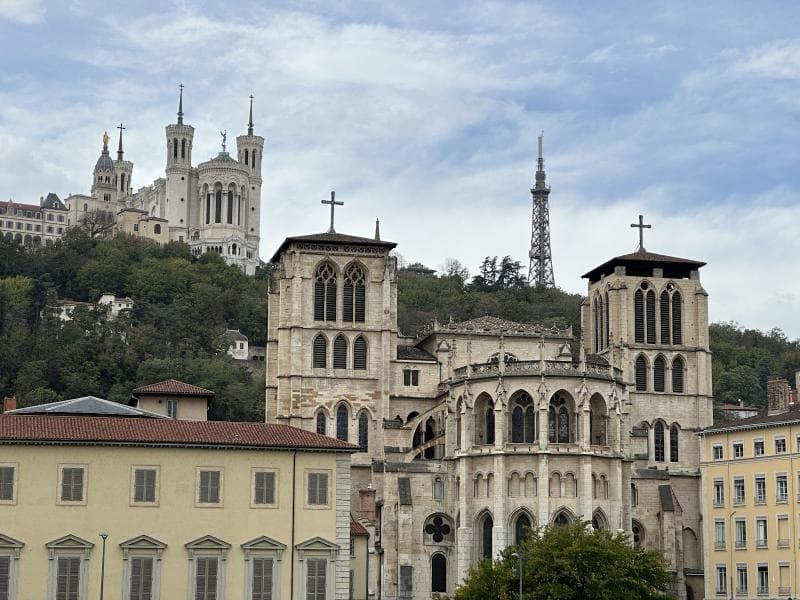
Discover Lyon's magnificent Astronomical Clock in Cathédrale Saint-Jean-Baptiste, France. A medieval marvel blending time, astronomy, and faith.
Overview
Deep within the venerable Cathédrale Saint-Jean-Baptiste de Lyon, in the historic heart of Lyon, France, lies a marvel of medieval engineering and artistry: the Astronomical Clock. This towering timepiece, nearly 9 meters (30 feet) high, is far more than a simple clock; it is a complex mechanism that tracks not only the hours and minutes but also celestial movements and religious feast days. For centuries, it has captivated visitors with its intricate dials, automated figures, and the remarkable blend of science, theology, and craftsmanship it embodies. The clock is an enduring symbol of Lyon's rich historical and cultural tapestry, offering a glimpse into the scientific understanding and spiritual devotion of past eras.
History & Cultural Background
The story of Lyon's Astronomical Clock is as long and intricate as its mechanisms. The first documented evidence of an astronomical clock within the cathedral dates back to 1383. However, this early version was largely destroyed in 1562 during the destructive Wars of Religion, a tumultuous period that saw many religious symbols vandalized across France. The clock we see today is primarily a reconstruction completed in 1661 or 1662 by master clockmaker Guillaume Nourrisson. Subsequent centuries brought further changes; during the French Revolution, any royal insignia or ornamentation was removed from its facade. The clock underwent a significant restoration in 1954, which reset its perpetual calendar to be accurate until 2019. More recently, in 2013, the clock suffered vandalism but has since undergone extensive repairs, ensuring its continued legacy. The Cathédrale Saint-Jean-Baptiste itself, where the clock resides, began construction around 1180 and was completed in 1476, showcasing a fascinating blend of Romanesque and Gothic architectural styles.
What Makes It Special
What sets Lyon's Astronomical Clock apart is its extraordinary complexity and the breadth of information it conveys. It is one of the oldest astronomical clocks in Europe and is notable for retaining much of its original wrought-iron inner workings. Its main features include an astrolabe dial that indicates the date, the precise positions of the Moon, Sun, and Earth, and even the stars as seen from Lyon, all depicted within a geocentric model that reflects pre-Copernican scientific understanding. Below this, a sophisticated perpetual calendar not only displays the day, month, and year but also tracks religious holidays. While the clock's general mechanism may require periodic updates, its perpetual calendar is engineered to function far into the future, with some elements designed to remain accurate until the year 3008. Above the main dials, a central tower hosts a series of enchanting automatons that come to life at specific hours, adding a theatrical dimension to its timekeeping function.
Stories, Fun Facts & Local Details
The automatons of the Astronomical Clock are where its storytelling truly shines. The spectacle begins with an angel turning an hourglass, while another angel marks the time. Three angels then strike bells to sound a hymn dedicated to Saint Jean-Baptiste. Perhaps the most moving part of the display involves the Virgin Mary, who kneels in a small chapel. As the Angel Gabriel opens the chapel door, a dove, symbolizing the Holy Spirit, descends, completing a celestial tableau. A Swiss Guard also rotates around the dome, offering a salute. Intriguingly, a statue in a western niche rotates at midnight, changing its depiction each day of the week: Jesus resurrected on Sunday, death on Monday, St. John the Baptist on Tuesday, St. Stephen on Wednesday, a child with a chalice and host on Thursday, a child with symbols of crucifixion on Friday, and the Virgin Mary on Saturday. The 2013 vandalism, where a man attacked the clock, stemmed from his belief that its 'magnificence' distracted the faithful from prayer, a testament to its powerful presence.
Visitor Perspective
For any traveler exploring Lyon, a visit to the Astronomical Clock within Cathédrale Saint-Jean-Baptiste is an absolute highlight. The clock's automatons typically perform their full spectacle several times a day, specifically at noon, 2 p.m., 3 p.m., and 4 p.m., though short spectacles may also occur on the hour. Timing your visit to coincide with one of these performances allows you to witness the intricate dance of its figures and hear its unique chimes. The cathedral itself is nestled in the Vieux Lyon (Old Lyon) district, a UNESCO World Heritage site known for its charming cobblestone streets and Renaissance architecture. Its proximity to other key attractions, such as the funicular leading to the Basilica of Notre-Dame de Fourvière, makes it an easily accessible and rewarding stop. Following recent repairs, the clock has been restored to its former glory and continues to enchant visitors with its blend of historical significance, mechanical genius, and spiritual symbolism.
Coordinates: 4.827216, 45.760775
View on Google Maps💬 How Travelers Describe This Place
Based on community votes
Interesting
869Must See
445Beautiful
416Photogenic
309Unique
33
Traveler Stories
Discover memorable experiences shared by travelers who have visited this place.
No traveler stories yet.
Be the first traveler to share what made this place memorable.

Tour
By
Spot
Discover amazing places around the world. Your journey starts here.
Explore
© 2026 TourBySpot. All rights reserved.