Assembly Hall
Geneva, Switzerland
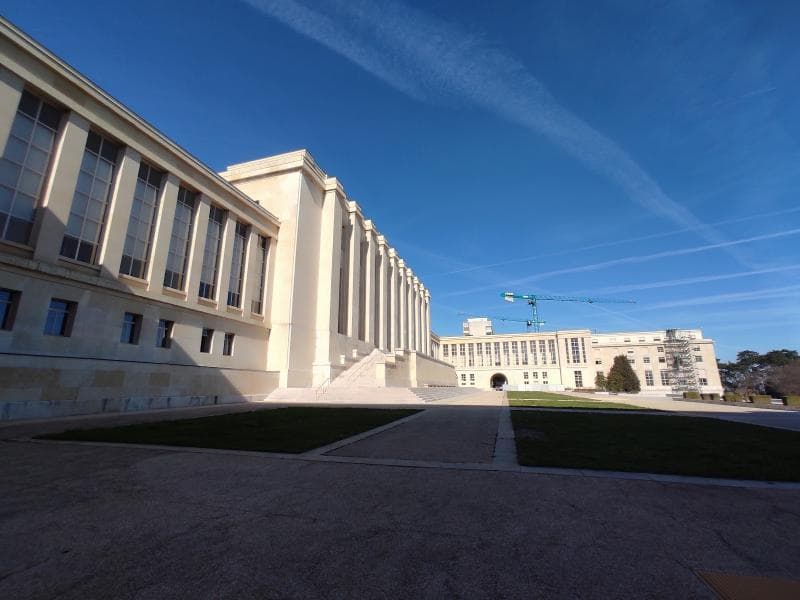
Discover the historic Assembly Hall inside Geneva's Palais des Nations, Switzerland. Explore its diplomatic history, unique architecture, and global significance.
Overview
Nestled within the vast and historic Palais des Nations in Geneva, Switzerland, the Assembly Hall stands as a monumental center of global diplomacy. As the largest room within the Palais, it has served as a pivotal stage for international discussions and decisions for nearly a century. This impressive space is part of the United Nations Office at Geneva (UNOG), which ranks as the second-largest UN center worldwide, following only the UN Headquarters in New York.
The Palais des Nations, with its grand scale and architectural significance, is an outstanding testament to 20th-century design. Annually, the complex hosts thousands of intergovernmental meetings, cementing Geneva's role as a vital hub for international relations. The Assembly Hall itself can accommodate approximately 2,000 people, reflecting its importance as a venue for significant gatherings, including assemblies of international organizations like the World Health Organization and the International Labour Organization.
History & Cultural Background
The story of the Assembly Hall is intrinsically linked to the creation of the Palais des Nations, which was constructed between 1929 and 1938 to be the headquarters of the League of Nations, the predecessor to the United Nations. The journey to its construction began with an international architectural competition in the late 1920s, drawing 377 entries. Ultimately, a collaborative team of five architects—Julien Flegenheimer of Switzerland, Camille Lefèvre and Henri-Paul Nénot of France, Carlo Broggi of Italy, and József Vágó of Hungary—was chosen to bring the vision to life.
The Assembly Hall itself was completed in November 1933 and officially inaugurated on September 25, 1937, during the 18th session of the League of Nations Assembly. Notably, it was one of the first meeting rooms in the world to be equipped with a simultaneous interpretation system, a groundbreaking innovation for its time that facilitated multilingual communication on a global scale. Following the dissolution of the League of Nations in 1946, the Palais des Nations, including its iconic Assembly Hall, was handed over to the newly formed United Nations Organization, becoming its European headquarters.
What Makes It Special
The Assembly Hall is more than just a large conference room; it is a powerful symbol of international cooperation and the enduring quest for peace. Its very existence represents a tangible commitment to diplomacy and multilateralism. As the principal venue for major assemblies and conferences within the Palais, it has been the setting for countless debates, negotiations, and resolutions that have shaped global policy and international law.
Its pioneering integration of simultaneous interpretation technology underscores its role in advancing inclusive international dialogue, allowing delegates from diverse linguistic backgrounds to communicate effectively. The architectural grandeur of the hall, characterized by its imposing facade and internal design, reflects the solemnity and importance of the work conducted within its walls. The hall's capacity to seat 2,000 individuals highlights its function as a truly global forum.
Stories, Fun Facts & Local Details
The creation of the Assembly Hall was a complex undertaking. One of the principal architects, Broggi, faced significant challenges in balancing the need for ceremonial grandeur with optimal acoustics. Extensive studies, including some conducted in a laboratory at Hampton Court near London, were dedicated to perfecting the hall's shape. The hall also features notable artistic contributions; the Presidential Podium, for instance, was a donation from Australia, while the cutting-edge simultaneous interpretation system was a gift from the United States of America.
The hall has undergone several renovations throughout its history to adapt to the growing number of UN member states and to improve its technical capabilities. A significant renovation in 1996 shaped its current appearance. During one refurbishment in the 1970s, the original bronze entrance doors, depicting 'War' and 'Peace' and donated by France, were carefully removed and are now preserved nearby. The entire Palais des Nations is situated within the beautiful Ariana Park, a substantial green space bequeathed to the City of Geneva with the condition that it remain accessible to the public. The Palais itself is currently undergoing a major renovation program, known as the Strategic Heritage Plan, which is expected to be completed by 2028.
Visitor Perspective
For curious travelers, visiting the Assembly Hall offers a unique glimpse into the heart of international diplomacy. Access to this historic space is primarily through guided tours offered by the United Nations Office at Geneva. These tours, available in numerous languages, provide an invaluable opportunity to learn about the UN's mission, its daily operations, and the historical significance of the Palais des Nations.
During a tour, visitors can explore not only the Assembly Hall but often other significant rooms and art collections within the Palais. It's important to note that due to ongoing renovation work and the active schedule of conferences, the tour route may vary, and certain areas might have limited access. Security is a priority, so visitors should be prepared for security screenings and are generally not permitted to bring large bags. The tour involves a fair amount of walking, approximately 2 kilometers, which might be a consideration for those with mobility concerns. Nonetheless, the experience offers a profound connection to global history and the ongoing efforts for peace and cooperation.
Coordinates: 6.14056, 46.22667
View on Google Maps💬 How Travelers Describe This Place
Based on community votes
Interesting
981Photogenic
617Beautiful
565Must See
157Unique
28
Traveler Stories
Discover memorable experiences shared by travelers who have visited this place.
No traveler stories yet.
Be the first traveler to share what made this place memorable.

Tour
By
Spot
Discover amazing places around the world. Your journey starts here.
Explore
© 2026 TourBySpot. All rights reserved.