Assembly Hall
Hong Kong, China
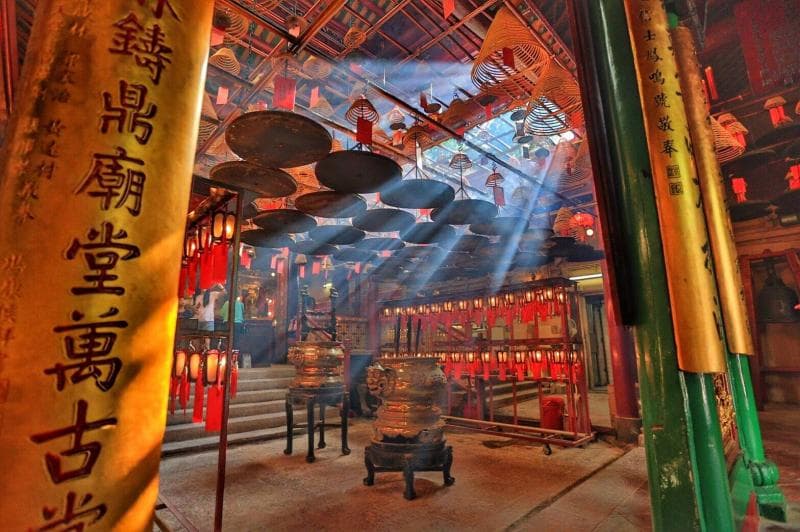

Explore Kung Sor, the historic Assembly Hall within Man Mo Temple in Hong Kong, China, where community disputes were once settled. Discover its unique cultural legacy.
Overview
Nestled amidst the bustling streets of Sheung Wan in Hong Kong, China, the Man Mo Temple complex stands as a profound testament to the city's rich cultural and spiritual heritage. Within this revered compound lies the 'Assembly Hall', historically known as Kung Sor, a space that once held immense civic importance for the Chinese community. While the main temple is dedicated to the Gods of Literature (Man Tai) and Martial Arts (Mo Tai), Kung Sor played a unique role, acting as a crucial civic center where disputes were resolved and community affairs were addressed.
Today, the Assembly Hall offers a quiet glimpse into the past, contrasting with the vibrant religious rituals observed in the main temple. Visitors can still feel the echoes of its former significance, understanding that this compound was far more than just a place of worship; it was a cornerstone of early Chinese society in colonial Hong Kong.
History & Cultural Background
The Man Mo Temple complex, including the Assembly Hall (Kung Sor), was constructed between 1847 and 1862, during the early years of British colonial rule in Hong Kong. Built by wealthy Chinese merchants, the temple was established to serve the spiritual and social needs of the growing Chinese community, particularly Cantonese immigrants.
During a time when the British legal system was not readily accessible or understood by many Chinese residents, Kung Sor emerged as an indispensable alternative. It functioned as an informal court and meeting place where local leaders and community members could mediate conflicts, settle disputes, and manage local matters. This role highlights the temple's profound influence beyond religious practice, cementing its position as a vital social and cultural institution in old Hong Kong.
What Makes It Special
What truly sets the Assembly Hall apart is its historical function as a 'court of arbitration' rooted in traditional Chinese customs. Here, sworn statements and oaths were not merely ceremonial but were considered legally binding within the community. A fascinating practice involved writing sworn agreements on yellow paper, which was then sometimes burned after a rooster sacrifice, with its blood smeared on the document to sanctify the decision before the gods. These agreements were rarely broken due to the profound respect for divine retribution.
While today Kung Sor serves a more passive role—some sources indicate its conversion into a souvenir shop or an ancestral hall—its legacy as a center of justice and community governance remains powerful. It represents a unique blend of spiritual belief and practical legal function that shaped early Hong Kong society.
Stories, Fun Facts & Local Details
Imagine a time when the towering skyscrapers of modern Hong Kong were but a distant dream, and instead, community disputes were settled not in formal courthouses, but in the quiet reverence of a temple hall. This was the reality for Kung Sor. The oaths taken within its walls were held with such gravity that even the British authorities often respected the outcomes, acknowledging the deep-seated trust the Chinese community placed in their traditional methods of justice.
Another intriguing aspect is the belief surrounding the deities. Man Cheong, the God of Literature, was worshipped by scholars and students seeking success in imperial examinations, while Mo Tai, the God of Martial Arts, symbolized loyalty and righteousness, appealing to a broad spectrum of society, including merchants and even law enforcement. The entire Man Mo Temple complex is managed by the Tung Wah Group of Hospitals, an organization with a long history of community service in Hong Kong, further underscoring the temple's enduring connection to societal welfare.
Visitor Perspective
Stepping into the Man Mo Temple complex, and by extension, the area that once housed the Assembly Hall, transports visitors away from the city's frantic pace into a realm of peace and historical reflection. The air, often thick with the aromatic smoke from large, spiral incense coils hanging from the ceiling, creates a mystical and immersive atmosphere. While the main temple area with its grand altars is more visually striking, a visit to where Kung Sor once stood allows for a deeper appreciation of the complex's multifaceted past.
Observing locals light incense, offer prayers, or practice 'kau cim' (fortune-stick divination) offers a glimpse into living traditions. Even if the original Assembly Hall space is repurposed, understanding its historical significance enriches the entire temple experience, providing context to the temple's role as a historical and spiritual anchor for the Hong Kong community. It's a place not just to see, but to feel and contemplate the layers of history that shaped this vibrant city.
Coordinates: 114.1506, 22.2839
View on Google Maps💬 How Travelers Describe This Place
Based on community votes
Photogenic
836Must See
287Interesting
255Beautiful
231Unique
86
Traveler Stories
Discover memorable experiences shared by travelers who have visited this place.
No traveler stories yet.
Be the first traveler to share what made this place memorable.

Tour
By
Spot
Discover amazing places around the world. Your journey starts here.
Explore
© 2026 TourBySpot. All rights reserved.