Aryabal Meditation Temple
Ulaanbaatar, Mongolia
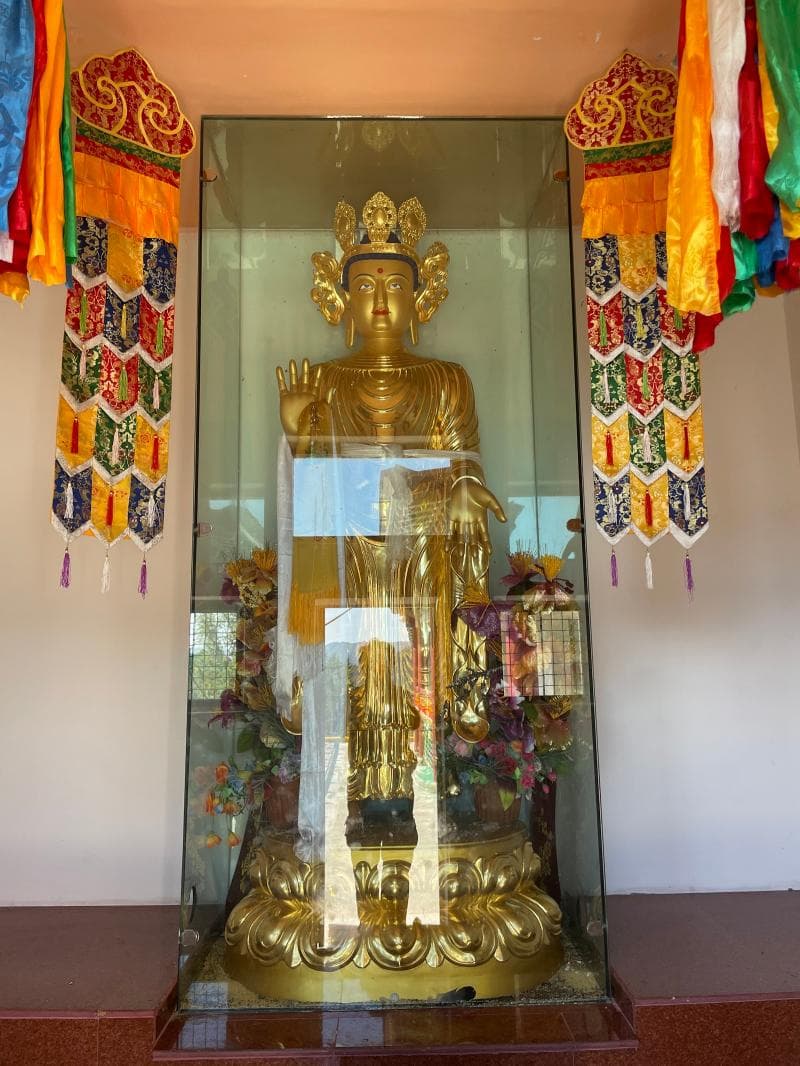
Discover Aryabal Meditation Temple in Gorkhi-Terelj National Park, Ulaanbaatar, Mongolia. A serene Buddhist sanctuary offering peace and panoramic views.
Overview
Nestled within the breathtaking landscapes of Gorkhi-Terelj National Park, just a short journey northeast of Ulaanbaatar, Mongolia, lies the serene Aryabal Meditation Temple. This sacred Buddhist sanctuary, dedicated to Avalokiteshvara – known locally as Aryabal, the Bodhisattva of Compassion – offers travelers a unique blend of spiritual tranquility and natural beauty. Perched high on granite cliffs amidst pine-covered hills, the temple is renowned for its distinctive architecture, profound spiritual atmosphere, and the sweeping panoramic views it provides of the surrounding national park. It serves not only as a place of worship and meditation for Buddhist practitioners but also as a peaceful retreat for curious visitors seeking quiet contemplation and cultural insight.
History & Cultural Background
The history of the Aryabal Meditation Temple is a testament to Mongolia's enduring Buddhist traditions and its spiritual revival. While the current structure is relatively modern, the site itself has deeper roots. An original meditation retreat was established here around the 1810s by Mongolian and Tibetan artists, serving as a sanctuary where monks from the Manzushir Monastery would come to meditate. However, during the tumultuous period of communist purges between 1937 and 1939, this original temple, like many other religious sites across Mongolia, was tragically destroyed, and some monks were killed.
Following Mongolia's democratic transition and the restoration of religious freedom, a new chapter began for Aryabal. In the early 2000s, Buddhist monks from Ulaanbaatar's Lamiran Temple initiated a project to rebuild the temple, completing its restoration between 2004 and 2007. Some sources indicate construction of the complex between 1998 and 2004, with operations beginning in 2004, marking it as a significant symbol of Mongolia's modern spiritual rebirth. The temple adheres to the Kalachakra sect of Buddhism and is dedicated to Aryabal, the deity believed to listen to all human prayers and release suffering.
What Makes It Special
The Aryabal Meditation Temple stands out not just for its spiritual significance but also for its remarkable design and stunning location. The temple's architecture is said to be inspired by the shape of an elephant's head, symbolizing strength, wisdom, and spiritual endurance. The ascent to the main temple building is a journey in itself, involving a climb of 108 steps, often augmented by an additional eight steps, making it 108+8. These 108 steps are deeply symbolic in Buddhism, representing the 108 human sins or defilements that one aims to overcome. Along the winding path, visitors will discover wooden frames and plaques inscribed with 144 Buddhist teachings and mantras in both English and Mongolian, encouraging mindful reflection with each step. Surrounding the temple, 108 small stupas and prayer wheels are placed, the latter believed to grant spiritual merit when spun clockwise while reciting prayers. The white and gold tones of the temple create a striking contrast with the rugged granite formations and lush forests, ensuring it harmonizes beautifully with its dramatic natural setting on Mount Maanit.
Stories, Fun Facts & Local Details
The number 108 holds profound significance in Buddhist philosophy, representing auspiciousness and completeness, which is reflected throughout the temple's design. Historically, the secluded caves in the surrounding cliffs were used by monks for extended meditation retreats, sometimes lasting for months or even years. For visitors today, a meaningful practice is to chant the sacred mantra 'Om Mani Padme Hum' with each step ascended, believed to help purify negative karma. The atmosphere at Aryabal Temple is notably peaceful and often uncrowded, particularly on weekdays, allowing for a truly immersive and reflective experience without distraction. Interestingly, there can be some confusion on navigation apps like Google Maps, where the main temple is sometimes listed as 'Aryapala Temple Meditation Center' or 'Aryabal Temple', although these sites are in close proximity, sometimes just 150 meters apart. This quiet sanctuary embodies Mongolia's spiritual resilience, demonstrating how ancient traditions are being revitalized and cherished by new generations.
Visitor Perspective
A visit to the Aryabal Meditation Temple is an enriching experience that begins with a gentle, yet rewarding, hike from the valley floor. The climb up the 108 steps is manageable for most visitors, providing not only a physical journey but also a spiritual ascent as one pauses to read the inspirational Buddhist teachings along the way. Comfortable walking shoes are highly recommended to fully enjoy the path. Upon reaching the temple, travelers are greeted with breathtaking panoramic views across the valleys and rocky ridges of Gorkhi-Terelj National Park, offering exceptional opportunities for photography, especially during the soft light of early morning or late afternoon. Inside, the temple's simple yet powerful interior encourages quiet reflection and stillness. Visitors are encouraged to maintain silence and respect the contemplative atmosphere. Spinning the prayer wheels outside the temple is a common practice, connecting visitors to centuries-old traditions. Many travelers choose to combine their trip to Aryabal with visits to other nearby attractions within the national park, such as the famous Turtle Rock, making for a memorable and culturally insightful day trip from Ulaanbaatar.
Coordinates: 107.427437, 47.935531
View on Google Maps💬 How Travelers Describe This Place
Based on community votes
Beautiful
873Interesting
477Unique
422Photogenic
157Must See
53
Traveler Stories
Discover memorable experiences shared by travelers who have visited this place.
No traveler stories yet.
Be the first traveler to share what made this place memorable.

Tour
By
Spot
Discover amazing places around the world. Your journey starts here.
Explore
© 2026 TourBySpot. All rights reserved.