Art galleries
Milan, Italy
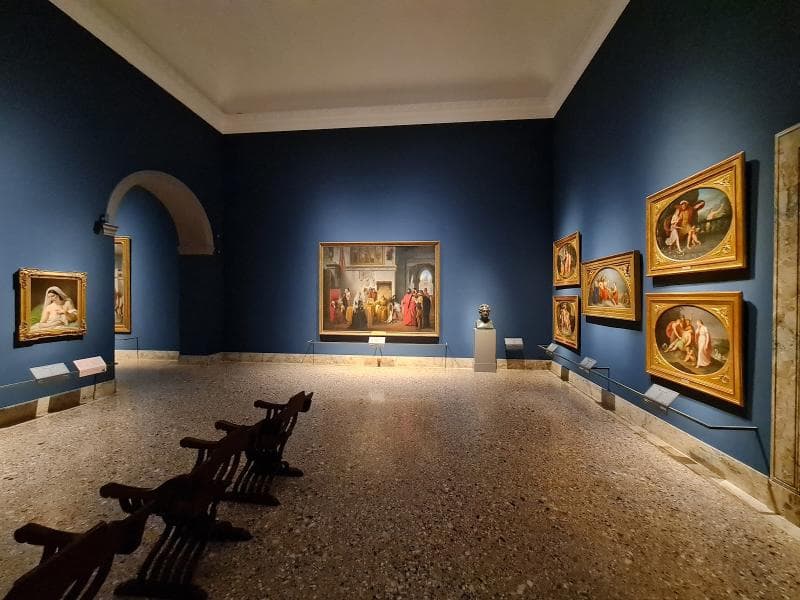
Explore the art galleries of Milan's Brera District, home to the Pinacoteca di Brera and its Italian masterpieces. Discover this bohemian cultural heart.
Overview
Nestled in the heart of Milan, Italy, the Brera District stands as a vibrant testament to the city's artistic soul. Renowned for its captivating blend of bohemian charm and cultural richness, Brera is often affectionately dubbed the 'Milanese Montmartre'. At its core, the district's art galleries offer an unparalleled journey through centuries of artistic expression, making it an essential destination for any discerning traveler. While the district itself is dotted with smaller galleries and artist studios, the undeniable jewel in its crown is the Pinacoteca di Brera, a world-class institution housing an extraordinary collection of Italian masterpieces. This venerable art gallery is more than just a museum; it's a living part of the district's fabric, attracting art enthusiasts, students, and curious visitors alike to its historic halls.
History & Cultural Background
The name 'Brera' itself offers a clue to its past, deriving from the Old Lombardic word 'brayda,' meaning a cleared land expanse, as this area once lay just outside Milan's city walls. The artistic legacy of Brera is deeply intertwined with the Palazzo Brera, a grand complex that began its life in the 14th century as a monastery before becoming a Jesuit college. A pivotal moment arrived in 1776 when Empress Maria Theresa of Austria established the Accademia di Belle Arti (Academy of Fine Arts) within the palazzo, commissioning an initial collection of art for educational purposes. However, it was Napoleon I who truly transformed this collection into a public treasure. In 1809, he officially founded the Pinacoteca di Brera with the explicit aim of exhibiting the most significant artworks from territories conquered by the French army, particularly those confiscated from churches and convents throughout Lombardy. This deliberate state-driven acquisition policy meant the Pinacoteca, unlike many other Italian museums, was not born from a private noble collection but rather from a public and political mandate. This unique origin has profoundly shaped its collection, featuring a notable prevalence of religious subjects, often in large formats, which contribute to its distinctive atmosphere.
What Makes It Special
The Pinacoteca di Brera is celebrated for holding one of Italy's foremost collections of Italian paintings, spanning from the 13th to the 20th century, with particularly strong holdings in Renaissance and Baroque art. Visitors can marvel at masterpieces by renowned artists such as Raphael, Caravaggio, Mantegna, Piero della Francesca, and Francesco Hayez. Raphael's 'The Marriage of the Virgin' and Caravaggio's 'Supper at Emmaus' are among the iconic works that draw crowds. Beyond the Pinacoteca, the Palazzo Brera is a cultural hub in itself, housing not only the art gallery and the Academy of Fine Arts, but also the Braidense National Library (one of Italy's largest), an astronomical observatory, and a botanical garden. This concentration of institutions underscores Brera's role as a vital center for learning and culture. The recent 'Grande Brera' project, which includes the expansion into Palazzo Citterio in 2024, further enriches the district's offerings by integrating ancient, modern, and contemporary art, solidifying its status as an international cultural benchmark.
Stories, Fun Facts & Local Details
Wandering through Brera's cobblestone streets, it's easy to feel the enduring artistic spirit that earned it the moniker 'Milanese Montmartre'. The district's bohemian air, cultivated by artists and intellectuals in the 19th and early 20th centuries, still permeates the area, with numerous small art galleries, antique shops, and studios alongside charming cafes and restaurants. Inside the central courtyard of the Palazzo Brera, visitors are greeted by an imposing bronze statue of Napoleon Bonaparte depicted as Mars the Peacemaker, sculpted by Antonio Canova in 1809. This statue serves as a striking reminder of the gallery's Napoleonic origins. The Pinacoteca's collection also holds a fascinating story in its very formation: many of the large altarpieces and religious works found within its walls were originally confiscated from churches and religious orders, contributing to the gallery's unique character and historical narrative.
Visitor Perspective
A visit to the art galleries in Brera, particularly the Pinacoteca di Brera, is designed to be an enriching experience. The museum is well-organized, typically laid out in a chronological flow across its numerous rooms, making it easy to navigate through Italian art history. Most visitors find that exploring the main highlights takes between 1.5 to 3 hours. Expert-led guided tours are available, offering deeper insights into the symbolism and techniques behind the masterpieces. Beyond the Pinacoteca's walls, the Brera district itself invites exploration. Its picturesque streets are perfect for a leisurely stroll, allowing travelers to soak in the artistic atmosphere, discover hidden courtyards, and browse the unique boutiques and artisan workshops that continue the district's creative legacy. The seamless blend of a world-class art institution with the charming, artistic ambiance of its surroundings makes Brera's art galleries a truly memorable cultural highlight in Milan.
Coordinates: 9.187408192393892, 45.47100158669917
View on Google Maps💬 How Travelers Describe This Place
Based on community votes
Interesting
826Beautiful
800Unique
387Photogenic
242Must See
90
Traveler Stories
Discover memorable experiences shared by travelers who have visited this place.
No traveler stories yet.
Be the first traveler to share what made this place memorable.

Tour
By
Spot
Discover amazing places around the world. Your journey starts here.
Explore
© 2026 TourBySpot. All rights reserved.