Arnolfo Tower
Florence, Italy
Discover the iconic Arnolfo Tower in Florence, Italy, a 95-meter medieval symbol of civic power within Palazzo Vecchio. Explore its history, unique architecture, and breathtaking panoramic views of the city.
Overview
Soaring majestically above Florence's Piazza della Signoria, the Arnolfo Tower is an iconic and unmistakable landmark, an integral part of the historic Palazzo Vecchio. This magnificent tower, also known as the Torre di Arnolfo, stands as a profound symbol of civic power and Florentine history. Rising to an impressive height of 95 meters (312 feet), it was once the tallest structure in Florence until the completion of Brunelleschi's Dome. Climbing its ancient stone steps offers more than just a physical ascent; it is a journey through centuries of Florentine life, culminating in unparalleled panoramic views of the city's terracotta rooftops, the Arno River, and the rolling Tuscan hills beyond.
Designed by the celebrated architect Arnolfo di Cambio, who also contributed to Florence's Duomo and Santa Croce Church, the tower's construction began in the late 13th century and was completed around 1310. Its distinctive silhouette, with its crenellated battlements and proud clock, is a constant presence in the Florentine skyline, beckoning curious travelers to discover the stories held within its ancient walls. The tower is not perfectly centered on the Palazzo Vecchio's facade, a unique architectural detail resulting from its incorporation of a pre-existing tower, locally known as 'La Vacca'.
History & Cultural Background
The Arnolfo Tower's history is deeply intertwined with that of Florence itself. Commissioned in 1299, along with the Palazzo Vecchio (then known as Palazzo della Signoria), it was conceived as the seat of the Florentine Republic's government. Its imposing structure was a deliberate statement of the Republic's strength, designed to be both a defensive watchtower and a beacon of civic authority. From its formidable height, guards could spot approaching enemies, and its bells could summon citizens, reinforcing its role as a central civic and political landmark.
During its long existence, the tower served multiple crucial functions beyond mere observation. It housed the 'bell of the people', which until 1530, called Florentines to arms. More grimly, it contained a small, high-security prison cell known as the 'Alberghetto', meaning 'The Little Hotel'. This infamous cell held notable figures who fell out of political favor, such as Cosimo the Elder before his exile in 1433, and the fiery Dominican friar Girolamo Savonarola, who was imprisoned and tortured here before his execution in Piazza della Signoria in 1498.
What Makes It Special
What truly sets the Arnolfo Tower apart is its multifaceted significance. Architecturally, it is a marvel of medieval engineering, notable for its 'shifted' position on the Palazzo Vecchio facade, built upon the foundations of an older tower. Its swallow-tailed battlements, known as Ghibelline crenellations, speak to the political allegiances of its builders. The tower's 95-meter height made it the tallest civic structure in Florence for centuries, a commanding presence that symbolized the city's republican ideals.
For visitors today, the tower offers a unique perspective on Florence's urban tapestry. While other towers like Giotto's Bell Tower or Brunelleschi's Dome provide stunning views, the Arnolfo Tower’s vantage point allows for an intimate, eye-level gaze at these very landmarks, offering a complete overview of the city's architectural layout. It’s a physical embodiment of Florence's robust past and enduring spirit.
Stories, Fun Facts & Local Details
The Arnolfo Tower is rich with fascinating stories and quirky details. The clock on its facade holds a special place in Florentine history: it was the first public clock in the city, installed in 1353 by Niccolò di Bernardo. Unusually, this historic clock still functions with a single hand, a feature that connects it directly to its medieval origins.
Another charming local detail concerns the tower's weathervane, which is crowned with a gilded lion, a symbol of Florence. An old Florentine saying, 'Quando il leone piscia in Arno, è acqua' (When the lion pees in the Arno, there will be rain), humorously refers to the lion's orientation, predicting the weather. The tower's incorporation of the older 'La Vacca' tower also contributes to its unique, slightly off-center appearance, making it a visible testament to the layers of history built into Florence's urban fabric.
Visitor Perspective
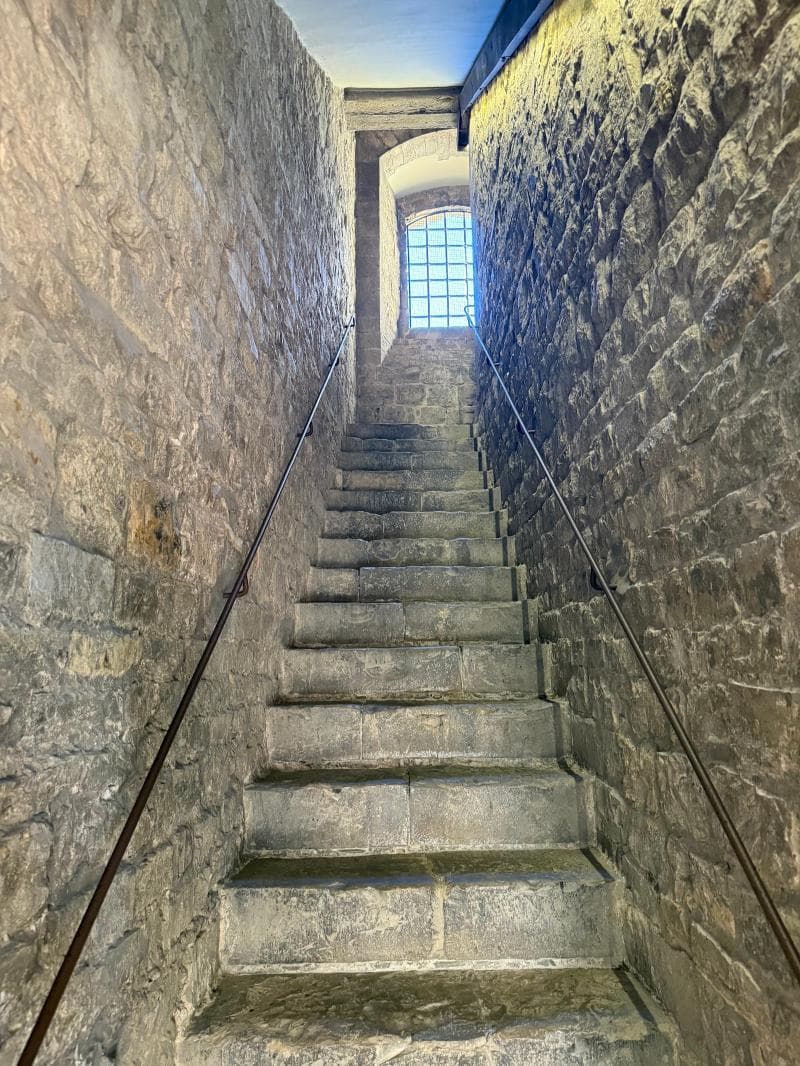
Ascending the Arnolfo Tower is an essential experience for any curious traveler in Florence. The climb involves navigating 233 stone steps, forming a spiral staircase that narrows as you approach the belfry. While there are no elevators, the journey itself is part of the adventure, offering glimpses of the tower's interior architecture and historical details.
Before reaching the very top, visitors traverse the crenelated battlements, often referred to as the 'walk of the guards', which once served defensive purposes. From this vantage point, you are rewarded with a breathtaking 360-degree panorama. You can clearly see the Florence Cathedral (Duomo), Giotto's Bell Tower, the Uffizi Gallery, Ponte Vecchio, and the picturesque surrounding landscape. It's a profound moment to stand where countless Florentines, from magistrates to prisoners, once stood, gazing upon the timeless beauty of this incredible city. Remember that the tower may close in adverse weather conditions like rain for safety.
Coordinates: 11.2562, 43.7693
View on Google Maps💬 How Travelers Describe This Place
Based on community votes
Must See
951Beautiful
491Unique
414Photogenic
310Interesting
277
Traveler Stories
Discover memorable experiences shared by travelers who have visited this place.
No traveler stories yet.
Be the first traveler to share what made this place memorable.

Tour
By
Spot
Discover amazing places around the world. Your journey starts here.
Explore
© 2026 TourBySpot. All rights reserved.