Archives
Geneva, Switzerland
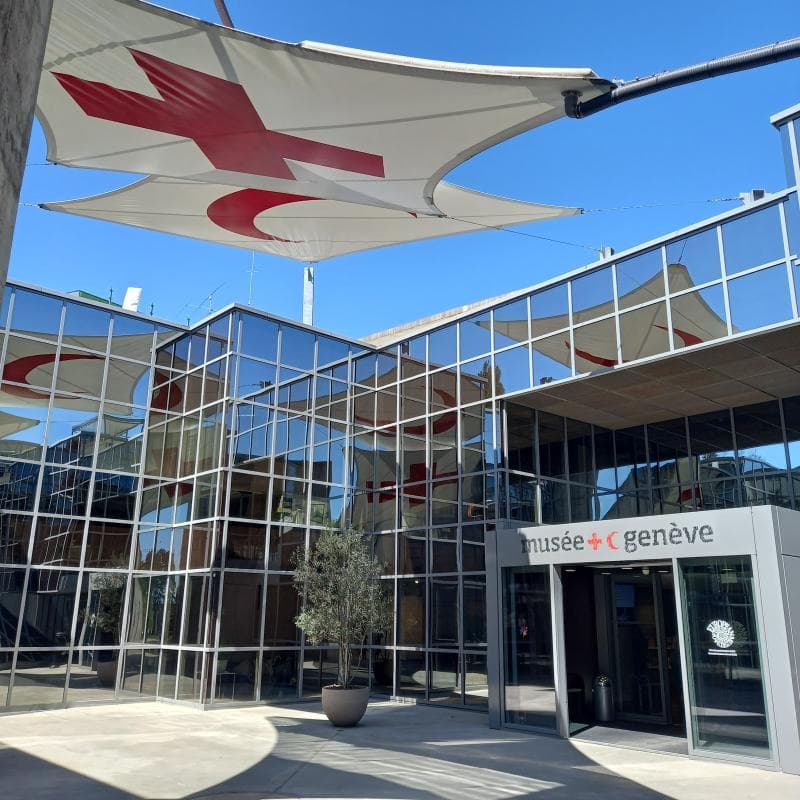
Explore the poignant Archives within the International Red Cross and Red Crescent Museum in Geneva, Switzerland, revealing compelling stories of humanitarian action.
Overview
Within the compelling narratives of humanitarian action presented at the International Red Cross and Red Crescent Museum in Geneva lies a poignant sub-spot known simply as 'Archives'. These are not merely dusty shelves of old documents, but a carefully curated collection that embodies the historical memory and enduring mission of the Red Cross and Red Crescent Movement. While the broader International Committee of the Red Cross (ICRC) maintains extensive research archives at its nearby headquarters, the museum's 'Archives' offer visitors a tangible and emotionally resonant glimpse into humanity's collective past, particularly focusing on the lives affected by armed conflict and other crises.
The centerpiece of this section is often the awe-inspiring archives of the International Prisoners-of-War Agency. This invaluable collection serves as a direct link to millions of individuals touched by war, illustrating the immense human cost and the tireless efforts made to reconnect families and provide solace during some of history's darkest chapters.
History & Cultural Background
The commitment to documentation and tracing dates back to the very origins of the International Red Cross. Founded in 1863, the ICRC recognized early on the critical need to record the fates of individuals caught in the maelstrom of conflict.
During the First World War, this need became acutely evident, leading to the establishment of the International Prisoners-of-War Agency in 1914. Its monumental task was to collect and centralize information about prisoners of war and interned civilians. This pioneering effort laid the foundation for the extensive archival practices that continue to define the Red Cross Movement's humanitarian work.
These archives represent a continuous thread of empathy and meticulous record-keeping, ensuring that individual stories are not lost amidst the grand sweep of history. They underscore a fundamental principle of humanitarian action: recognizing and upholding the dignity of every person, even in the most dire circumstances.
What Makes It Special
What truly sets the museum's 'Archives' apart is their profound human dimension and their universal recognition. The archives of the International Prisoners-of-War Agency, specifically covering the period 1914-1923, hold immense historical value. Comprising six million index cards detailing the fates of two million prisoners of war and interned civilians, these records were inscribed in UNESCO's Memory of the World Register in 2007.
This prestigious recognition highlights their undeniable significance as a documentary heritage of humankind, standing alongside other iconic documents like the Gutenberg Bible.
The archives are a testament to the power of meticulous record-keeping in providing accountability and transparency in times of conflict. They are not merely historical relics but active instruments that inform contemporary humanitarian law and practice, ensuring lessons learned from the past can guide future actions.
Stories, Fun Facts & Local Details
Imagine six million index cards, each one representing a person, a family, a life disrupted by war. These cards, diligently typed and updated by volunteers, provided crucial information about prisoners' movements, medical care, and ultimate fates.
For families desperately seeking news of loved ones, these simple cards were lifelines. They enabled the Red Cross to restore contact and facilitate the exchange of news, alleviating the immense moral suffering caused by separation. The Swiss writer Nicolas Bouvier famously dubbed the ICRC's archives the 'storehouses of sorrow,' a poignant description that perfectly captures the weight of human experiences contained within these records.
Visitors can grasp the immense effort involved, knowing that even prominent figures like former French President Charles De Gaulle and singer Maurice Chevalier had their details recorded within these meticulous systems during their time as prisoners.
Visitor Perspective
Stepping into the 'Archives' within the International Red Cross and Red Crescent Museum offers a uniquely contemplative experience. The display of the International Prisoners-of-War Agency filing system, often found in the 'Restoring family links' section of the museum's permanent exhibition, is powerful in its simplicity and scale.
Visitors encounter not abstract concepts, but tangible evidence of human suffering and the unwavering commitment to mitigate it. The rows of index cards and archival materials invite reflection on the profound impact of conflict on individual lives and the enduring power of humanitarian efforts to connect and heal. It is a space designed to evoke empathy and encourage visitors to consider how humanitarian action remains relevant 'here and now'.
Coordinates: 6.13694, 46.22722
View on Google Maps💬 How Travelers Describe This Place
Based on community votes
Beautiful
791Photogenic
613Unique
514Must See
457Interesting
207
Traveler Stories
Discover memorable experiences shared by travelers who have visited this place.
No traveler stories yet.
Be the first traveler to share what made this place memorable.

Tour
By
Spot
Discover amazing places around the world. Your journey starts here.
Explore
© 2026 TourBySpot. All rights reserved.