Archaeology Galleries
Ashgabat, Turkmenistan
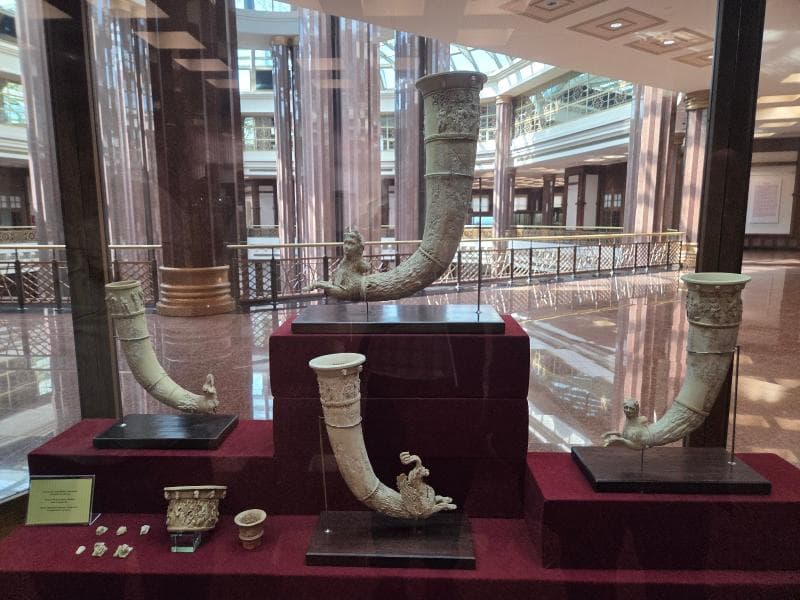
Explore the Archaeology Galleries at the National Museum of Turkmenistan in Ashgabat, featuring ancient artifacts from Mesolithic to Parthian eras, including ivory rhytons from Old Nisa and treasures from Margiana.
Overview
Stepping into the Archaeology Galleries of the National Museum of Turkmenistan in Ashgabat is akin to embarking on a profound journey through time. This esteemed institution, one of the largest in Central Asia, meticulously preserves and presents the rich tapestry of Turkmenistan's ancient past. It serves as a vital custodian of the nation's heritage, offering an unparalleled glimpse into civilizations that once flourished on this historic land.
Housed within the impressive National Museum complex, the Archaeology Galleries, often referred to as the Hall of Ancient History or Antiquity Hall, showcase a diverse collection of artifacts spanning millennia. From the earliest human settlements to the grandeur of ancient empires, these exhibits tell a compelling story of human ingenuity, cultural development, and the enduring spirit of a region often considered the 'crossroads of civilizations'.
History & Cultural Background
The historical narrative presented in these galleries begins deep in prehistory. Visitors encounter flint tools from the Mesolithic era, dating back approximately 50,000 years BCE, used by the earliest inhabitants of Western Turkmenistan. The journey continues through the Neolithic period, displaying sophisticated ceramics and ornaments from early agricultural settlements nestled along the northern slopes of the Kopet-Dag Mountains.
Significant attention is given to the flourishing early agricultural civilizations such as Jeytun, Altyn-depe, Namazga-depe, and Anau-depe. The exhibits from these sites feature intricate clay and metal artifacts, semi-precious stones, and objects that reveal a high level of societal development and craftsmanship. A place of honor is reserved for findings from Margiana, a unique Bronze Age civilization that thrived around 3000 BCE in the Kara-Kum desert. Here, ceramic dishes, ritual vessels, bronze seals, and gold jewelry paint a vivid picture of a highly advanced culture, often compared to the ancient civilizations of Egypt, China, and Mesopotamia.
The galleries further explore the momentous Parthian era, specifically highlighting discoveries from Old Nisa, a UNESCO World Heritage site and an ancient residence of the Parthian Arsacid kings. This section vividly portrays the artistic and architectural prowess of the Hellenistic period, demonstrating the profound connections between local traditions and broader influences.
What Makes It Special
What truly distinguishes the Archaeology Galleries are the rare and exceptionally preserved artifacts that illuminate Turkmenistan's pivotal role in ancient world history. Among the most iconic exhibits are the ivory rhytons unearthed from Old Nisa. These exquisite horn-shaped vessels, dating back to the 2nd century BCE, are adorned with finely carved scenes from Greek mythology, floral patterns, and images of mythical beings. Their detailed artistry and historical context offer a tangible link to the Parthian Empire's grandeur and its Hellenistic influences.
Beyond the rhytons, the galleries boast a collection of marble statues and intricate silver items also discovered at Old Nisa, further exemplifying the rich artistic traditions of the time. From Margiana, visitors can marvel at the delicate gold and silver vessels, intricate bronze seals, and semi-precious stone beads, some as small as 1 millimeter in diameter, testifying to the astonishing skill of ancient jewelers. The sheer volume and diversity of archaeological finds, representing various civilizations and eras, offer a comprehensive narrative of continuous human settlement and cultural evolution in the region.
Stories, Fun Facts & Local Details
Imagine the ancient rituals where the ivory rhytons, now displayed under careful lighting, once held precious liquids, perhaps used in Zoroastrian ceremonies or state occasions by Parthian kings. Each carving on these vessels whispers tales of a bygone era, connecting visitors to the spiritual and political life of ancient Nisa.
A fascinating detail is the continuity observed in the geometric ornaments on a restored Chalcolithic-era ceramic vessel from the Anau culture. Scholars note that these ancient patterns resonate strongly with contemporary Turkmen applied art, creating an unbroken thread of aesthetic canons spanning five millennia. This illustrates how the artistic heritage of Turkmenistan is not merely confined to museums but lives on in the cultural expressions of today. Moreover, a silver drachma depicting Alexander the Great, found in the Serakhs district, offers a tantalizing hint at the legendary commander's campaigns in the region, adding a touch of epic history to the collection.
The museum also proudly displays an extensive collection of artifacts from world-famous sites like Merv and Gonur-depe, including evidence of their sophisticated urban planning, such as the discovery of an ancient sewage system at Dandanakan, offering a glimpse into the daily lives of these early communities.
Visitor Perspective
A visit to the Archaeology Galleries is a truly immersive experience, inviting contemplation and wonder. The thoughtfully arranged exhibits guide you chronologically through Turkmenistan's past, providing clear explanations and context for each display. The sheer scale of artifacts—ranging from humble tools to opulent treasures—ensures there is something to captivate every curious mind. The museum is generally open daily from 10:00 AM to 5:00 PM, with Tuesday being its usual closing day. It's advisable to allocate several hours to fully appreciate the depth and breadth of this remarkable collection, allowing yourself to be transported by the stories etched into these ancient relics. The quiet reverence of the galleries provides a perfect setting to connect with the profound history that shaped this unique Central Asian nation.
Coordinates: 58.34911, 37.88515
View on Google Maps💬 How Travelers Describe This Place
Based on community votes
Must See
910Unique
658Interesting
589Beautiful
374Photogenic
90
Traveler Stories
Discover memorable experiences shared by travelers who have visited this place.
No traveler stories yet.
Be the first traveler to share what made this place memorable.

Tour
By
Spot
Discover amazing places around the world. Your journey starts here.
Explore
© 2026 TourBySpot. All rights reserved.