Archaeological Site
Hanoi, Vietnam
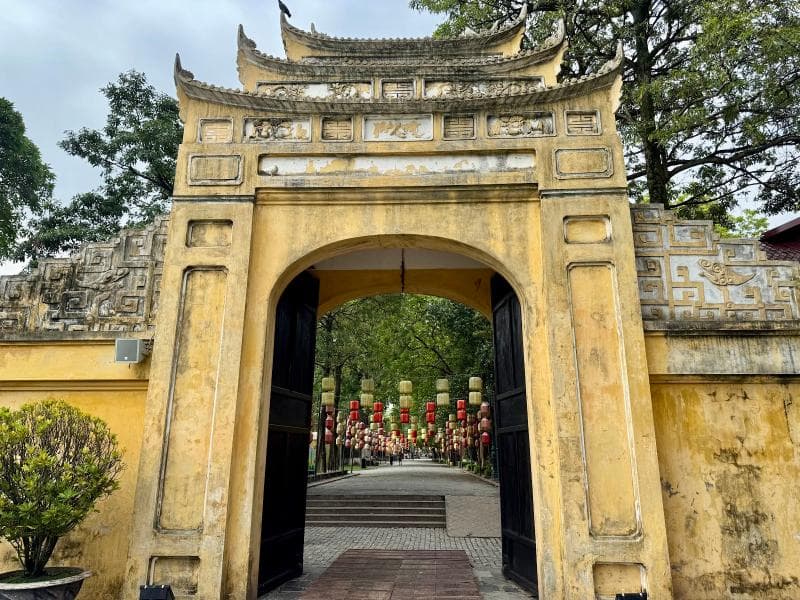
Explore the Archaeological Site at Thang Long Imperial Citadel in Hanoi, Vietnam, a UNESCO World Heritage site revealing over a millennium of imperial history and artifacts.
Overview
Deep within the bustling heart of Hanoi, Vietnam, lies a profound testament to the nation's enduring history: the Archaeological Site of the Thang Long Imperial Citadel. This extraordinary sub-spot, nestled within the larger UNESCO World Heritage Site, is not merely a collection of ruins, but a meticulously preserved canvas illustrating over a millennium of Vietnamese civilization. It reveals successive layers of imperial dynasties, each building upon the foundations of its predecessors, offering a tangible journey through time.
Discovered primarily through extensive excavations beginning in 2002, particularly at 18 Hoang Dieu Street, this site brought to light the physical remnants of imperial palaces, ancient roads, and countless artifacts. It provides an unparalleled look into the continuous role of Thang Long, and later Hanoi, as Vietnam's political and cultural heart for nearly 13 centuries.
History & Cultural Background
The history of the Thang Long Imperial Citadel, and specifically its archaeological core, dates back to the 7th century when a fortress stood on this very ground. It was upon these ancient foundations that Emperor Ly Thai To established the Imperial Citadel in 1010, marking the independence of the Dai Viet kingdom and naming his new capital Thang Long, meaning 'Rising Dragon'.
For centuries, the citadel served as the center of power for numerous dynasties, including the Ly, Tran, Le, and Nguyen. Each ruling family left its architectural and cultural imprint, often constructing new palaces and administrative buildings directly over the remains of earlier structures. This continuous occupation resulted in a unique archaeological stratigraphy, where layers of history are stacked one upon the other, revealing an unbroken narrative of human activity and cultural evolution.
The critical large-scale excavation in 2002-2003 uncovered this wealth of buried heritage, leading to its recognition as a UNESCO World Heritage Site in 2010. These discoveries have provided invaluable insights into the distinct South-East Asian culture of the lower Red River Valley, showcasing influences from both Chinese traditions to the north and the ancient Kingdom of Champa to the south.
What Makes It Special
What truly sets the Archaeological Site apart is its remarkable demonstration of layered history. Visitors can literally peer into excavated pits to see the foundations of palaces from different dynasties – Ly, Tran, and Le – built sequentially on the same spot over hundreds of years. This cross-section of time offers a rare educational experience, illustrating how power, architecture, and daily life evolved in imperial Vietnam.
Among the most striking finds are the massive stone foundations of the Kinh Thien Palace, once the spiritual and political heart of the citadel where emperors conducted ceremonies and state affairs. Though the original palace structure was largely destroyed, its remaining stone platform and intricately carved dragon steps, dating back to the 15th-century Le Dynasty, offer a glimpse into its former grandeur and the sophisticated artistry of the time. Beyond these grand structures, excavations have revealed ancient wells, remnants of roads, and countless artifacts like ceramic tiles, pottery, and bronze coins, each telling a story of past inhabitants and their cultural exchanges.
Stories, Fun Facts & Local Details
- The name 'Thang Long' (昇龍) means 'Rising Dragon', a name bestowed by King Ly Thai To after he reportedly saw a golden dragon ascending from the Red River when he decided to move the capital here in 1010. This mythical origin highlights the site's deep cultural and spiritual significance.
- The 2002 excavation at 18 Hoang Dieu Street was one of Vietnam's largest archaeological projects, unexpectedly uncovering millions of artifacts and structural remains, which were originally planned for a new parliament building.
- The majestic dragon-carved steps at the Kinh Thien Palace foundation are masterpieces of 15th-century Vietnamese stone carving. These dragons are not merely decorative; they symbolize imperial power and divine authority, serving as a powerful reminder of the emperors who once walked these grounds.
- The continuous archaeological work at the site, with findings announced regularly, means that the story of Thang Long is still being written and revealed, making each visit potentially unique. Recent excavations, for instance, have uncovered six meters of stratigraphic layers, providing even more detailed information about the capital's long history.
Visitor Perspective
Visiting the Archaeological Site of Thang Long Imperial Citadel is an immersive journey into Vietnam's rich past. It is an opportunity to walk where emperors once reigned and to touch stones laid by ancient hands. The site is spacious and offers a sense of tranquility, allowing for thoughtful contemplation amidst the historical relics. Travelers can explore the open excavation areas, observe displayed artifacts in adjacent exhibition halls, and witness the ongoing efforts to preserve and understand this invaluable heritage.
For those eager to connect with the deep roots of Hanoi and understand its evolution, this site is indispensable. It's an experience that transcends mere sightseeing, offering a profound insight into Vietnamese national identity and resilience. The site's central location in Hanoi also makes it easily accessible, positioning it as an essential stop for anyone seeking to unravel the captivating narratives etched into the landscape of Vietnam's capital.
Coordinates: 105.83409, 21.03753
View on Google Maps💬 How Travelers Describe This Place
Based on community votes
Beautiful
921Interesting
831Unique
232Photogenic
211Must See
147
Traveler Stories
Discover memorable experiences shared by travelers who have visited this place.
No traveler stories yet.
Be the first traveler to share what made this place memorable.

Tour
By
Spot
Discover amazing places around the world. Your journey starts here.
Explore
© 2026 TourBySpot. All rights reserved.