Archaeological Site
Geneva, Switzerland
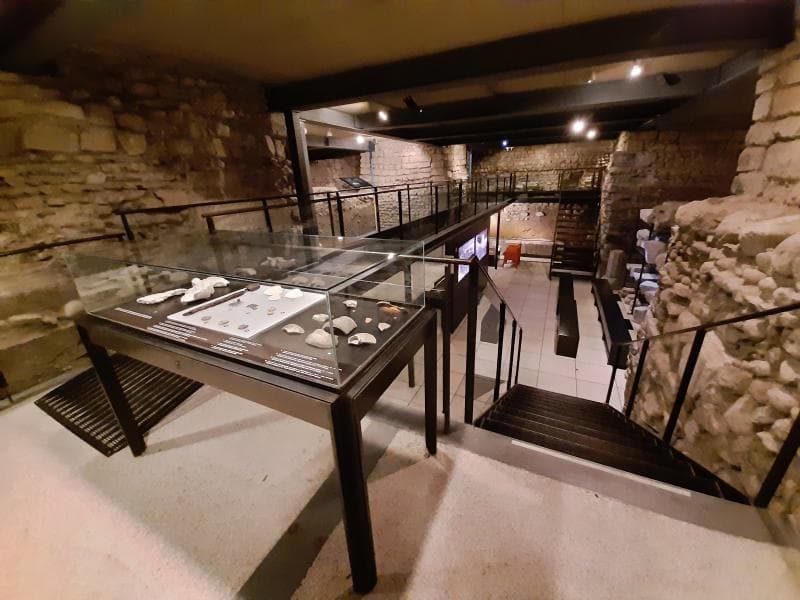
Explore 2,000+ years of history at the Archaeological Site beneath St. Pierre Cathedral in Geneva, Switzerland. Discover Roman foundations, early Christian churches, and an Allobrogian chieftain's tomb.
Overview
Beneath the imposing Gothic façade of St. Pierre Cathedral in Geneva, Switzerland, lies a subterranean world of immense historical significance: the Archaeological Site. This unique museum offers a profound journey through more than 2,000 years of urban history, revealing the layered foundations upon which modern Geneva stands. It is a true 'time capsule', inviting curious travelers to peel back the epochs and discover the city's ancient roots.
Discovered during excavations in the 1970s, the site showcases a continuous narrative of human occupation and architectural evolution, from pre-Christian settlements to the early medieval period. It's an immersive experience, thoughtfully preserved and presented, that provides a vital understanding of Geneva's pivotal role in European history and the development of Christianity.
History & Cultural Background
The history embedded within the Archaeological Site begins long before the cathedral itself. The earliest traces date back to the Neolithic era, with evidence of human settlement near Lake Geneva. By the 1st century BC, the area was a fortified settlement of the Gallic Allobrogian tribe. Remnants of a Celtic-Roman cult area and the well-preserved tomb of an Allobrogian chieftain from around 100 BC highlight Geneva's early importance as a center.
As the Roman Empire expanded, Geneva became part of Roman Transalpine Gaul, with Roman structures and an important military and commercial presence. The city gained episcopal status by the 3rd century AD. The 4th century marked a significant transition with the construction of the first Christian complexes. Excavations have uncovered not one, but three early cathedrals, alongside baptisteries and monks' cells, illustrating Geneva's emergence as a crucial center of early Christianity north of the Alps.
Throughout the 5th and 6th centuries, these structures underwent expansions and modifications. By the 11th century, a single, larger Romanesque cathedral replaced the earlier buildings, which then evolved into the grand Gothic cathedral we see today, largely constructed between the 12th and 13th centuries.
What Makes It Special
What makes the Archaeological Site truly special is its incredible depth and the sheer volume of history it preserves. It is recognized as one of the largest and most significant archaeological complexes of its kind in Europe. The site offers a unique perspective on urban archaeology, presenting more than 2,000 years of continuous development beneath a single, iconic landmark.
The meticulous, 30-year excavation project, which commenced in 1976 and opened to the public in 2006, revealed an intricate tapestry of foundations. Visitors can literally walk through layers of time, guided by illuminated walkways and enhanced by detailed interpretive displays, 3D animations, and interactive digital tools that bring ancient Geneva vividly to life.
The site's ability to showcase the evolution of religious spaces, from pre-Christian cult areas to early Christian basilicas and eventually the Protestant cathedral, provides an unparalleled lesson in historical continuity.
Stories, Fun Facts & Local Details
- The Allobrogian Chieftain: One of the most compelling discoveries is the grave of an Allobrogian chieftain, dating to around 100 BC. This pre-Roman burial provides a tangible link to the area's earliest inhabitants and their societal structures.
- Discovery by Chance: The extensive archaeological findings were largely thanks to the installation of a new heating system for the cathedral in the 1970s, which necessitated the removal of the cathedral floor and exposed the rich layers beneath.
- Three Cathedrals and Baptisteries: Before the current edifice, the site hosted a complex of episcopal buildings, including not just one, but a northern, southern, and eastern cathedral, each with baptisteries. One remarkably preserved early baptismal font highlights the importance of full-immersion baptism in early Christian practices.
- Roman Mosaics: Among the fascinating details are Roman mosaics and elaborate plumbing systems, offering glimpses into the daily lives and artistic sensibilities of past eras.
- 'Protestant Rome': While Geneva is often referred to as the 'Protestant Rome' due to John Calvin's influence, the archaeological site reveals that its religious significance spans far beyond the Reformation, dating back to early Christian times and even pre-Christian worship.
- Connected History: An underground passageway links the Archaeological Site to the International Museum of the Reformation, creating a comprehensive cultural offering known as 'Espace Saint-Pierre'.
Visitor Perspective
A visit to the Archaeological Site is an extraordinary step back in time. Upon entering, travelers are guided along carefully designed pathways that wind through the ancient foundations. You'll encounter the robust remains of Roman walls and structures, the distinct outlines of multiple early Christian churches, and the elaborate details of their baptisteries.
The journey allows you to observe decorative elements like intricate mosaics and carved stucco, and even explore the cells where monks once resided. The presentation is designed to be highly engaging, with explanatory panels and multimedia that contextualize each discovery, making the historical narrative accessible and compelling. It's a journey that stimulates the imagination, connecting visitors directly to the countless lives that shaped Geneva over millennia.
Coordinates: 6.14861, 46.20111
View on Google Maps💬 How Travelers Describe This Place
Based on community votes
Must See
981Photogenic
921Beautiful
617Unique
357Interesting
147
Traveler Stories
Discover memorable experiences shared by travelers who have visited this place.
No traveler stories yet.
Be the first traveler to share what made this place memorable.

Tour
By
Spot
Discover amazing places around the world. Your journey starts here.
Explore
© 2026 TourBySpot. All rights reserved.