Archaeological Remains
Athens, Greece
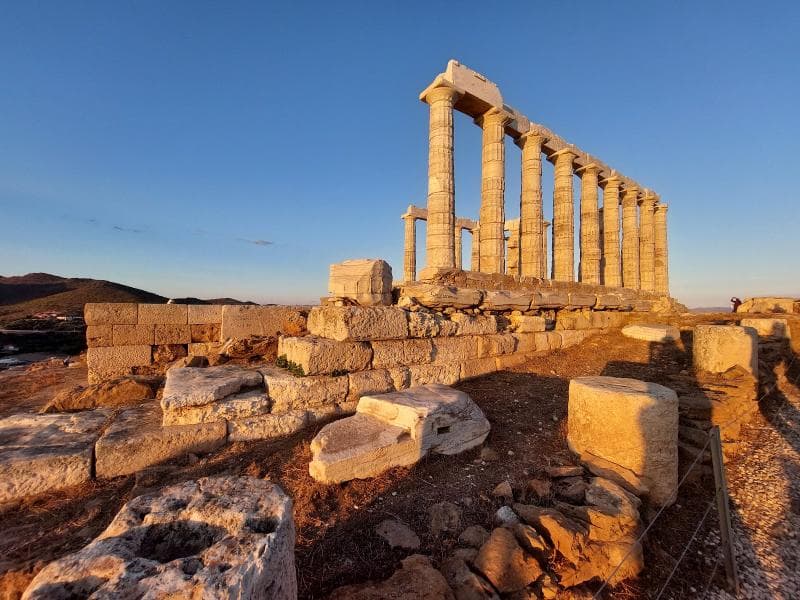
Discover the ancient Archaeological Remains at the Temple of Poseidon in Athens, Greece. Explore Doric columns, mythological tales, and stunning Aegean views.
Overview
Perched majestically on the southernmost tip of the Attica peninsula, the Archaeological Remains at the Temple of Poseidon in Cape Sounion offer a captivating glimpse into ancient Greek civilization. This iconic site, dedicated to Poseidon, the mighty god of the sea, stands proudly atop a dramatic 60-meter cliff, offering unparalleled panoramic views of the Aegean Sea. Constructed during the glorious Golden Age of Athens, specifically between 444 and 440 BCE, the temple is a prime example of Doric architectural style. While much of the original structure has yielded to the passage of time, 15 of its original 34 elegant Doric columns still stand tall, serving as enduring sentinels over the azure waters. Visiting these ruins provides a unique opportunity to connect with history and appreciate the strategic and spiritual significance this location held for the Athenians. The site is particularly renowned for its breathtaking sunset views, which paint the sky and the marble ruins in spectacular hues.
History & Cultural Background
The history of Sounion as a sacred place stretches back much further than the extant temple. Archaeological evidence suggests that the site was active with sanctuaries from as early as the 11th century BC, indicating its importance even in Mycenaean times. The earliest known temple on this very spot, dating to around 500 BC, met a tragic end when it was razed by Persian troops in 480 BCE during the invasion led by Xerxes I. Following their victory in the Persian Wars, and as part of Pericles’ ambitious building program that also included the Parthenon, the Athenians rebuilt a more magnificent temple to Poseidon. This grand reconstruction underscored Athens' resilience and its profound reliance on naval power. The Temple of Poseidon served multiple crucial roles: it was a vital navigational landmark, guiding sailors returning to Athens' harbors, and a strategic border post and lookout, guarding against potential seaborne threats. For a civilization that depended heavily on the sea for trade, defense, and sustenance, the worship of Poseidon was paramount. Athenians both revered and feared the god, making offerings and seeking his favor to ensure safe voyages and prosperous maritime endeavors.
What Makes It Special
The Temple of Poseidon's allure lies in its harmonious blend of architectural brilliance and a dramatic natural setting. Its construction, using local white marble from the Agrilesa quarries, allowed the temple to almost glow against the deep blue of the sea. A unique feature of its Doric columns is their 16 flutes, fewer than the typical 20, a design choice possibly intended to enhance their resilience against the constant sea winds and harsh weather conditions of the cape. Ancient Greek architects also employed sophisticated visual corrections, known as entasis, which give the columns a subtle bulge to make them appear perfectly straight from a distance. Inside the temple, a colossal bronze statue of Poseidon once stood, a powerful symbol of the god's presence. Though heavily eroded, fragments of its friezes hint at elaborate mythological scenes, including the Amazonomachy, Gigantomachy, and the heroic deeds of Theseus, allegories of Greek triumph and Athenian democracy. Beyond the main temple, the archaeological site encompasses the remnants of a Temple of Athena and ancient fortifications, providing a broader narrative of the area's historical significance.
Stories, Fun Facts & Local Details
The Temple of Poseidon is steeped in rich mythology and fascinating historical anecdotes. Perhaps the most famous legend associated with Cape Sounion is that of King Aegeus. Expecting the return of his son Theseus from Crete, who was on a quest to slay the Minotaur, Aegeus instructed him to hoist white sails if successful, and black if he had perished. When Theseus, in his jubilation, forgot to change the black sails, the grief-stricken king, believing his son dead, flung himself from the cliffs into the sea below. This tragic tale gave the Aegean Sea its enduring name. Another ancient reference to Sounion appears in Homer's 'Odyssey,' which mentions the cape as the burial place of Phrontis, the helmsman of Menelaus. Historically, after the Athenians' triumph over the Persians in the Battle of Salamis, an entire captured Persian trireme (warship) was placed at Sounion as a dedicated trophy to Poseidon, showcasing the city's gratitude and naval supremacy. A more modern, yet equally charming, anecdote involves the Romantic poet Lord Byron. During his visit in 1810, so captivated was he by the site's beauty, that he carved his name into one of the temple's columns – a practice strictly prohibited today, but his inscription remains a testament to the enduring allure of these ancient ruins.
Visitor Perspective
A visit to the Archaeological Remains at the Temple of Poseidon is an experience that resonates deeply. As you wander among the ancient marble columns, you are not just observing ruins, but stepping into a living story of gods, heroes, and a civilization's profound connection to the sea. The vantage point from Cape Sounion is simply spectacular, offering uninterrupted panoramic views across the sparkling Aegean, with glimpses of distant islands like Kea and Kythnos on a clear day. The highlight for many visitors is witnessing the sunset from this historic promontory. As the sun dips below the horizon, the sky explodes in a riot of colors, casting a golden glow upon the ancient stones and creating an atmosphere of serene grandeur that is truly unforgettable. The site is well-maintained, providing accessible pathways that allow you to explore the remnants of the temple and its surrounding fortifications. For those wishing to extend their visit, the nearby Sounio Beach offers a refreshing opportunity for a swim in crystal-clear waters, with the majestic temple still visible in the distance, completing a perfect blend of historical exploration and natural beauty.
Coordinates: 24.024969, 37.649736
View on Google Maps💬 How Travelers Describe This Place
Based on community votes
Unique
953Must See
695Interesting
658Photogenic
69Beautiful
22
Traveler Stories
Discover memorable experiences shared by travelers who have visited this place.
No traveler stories yet.
Be the first traveler to share what made this place memorable.

Tour
By
Spot
Discover amazing places around the world. Your journey starts here.
Explore
© 2026 TourBySpot. All rights reserved.