Archaeological Excavations
Yerevan, Armenia
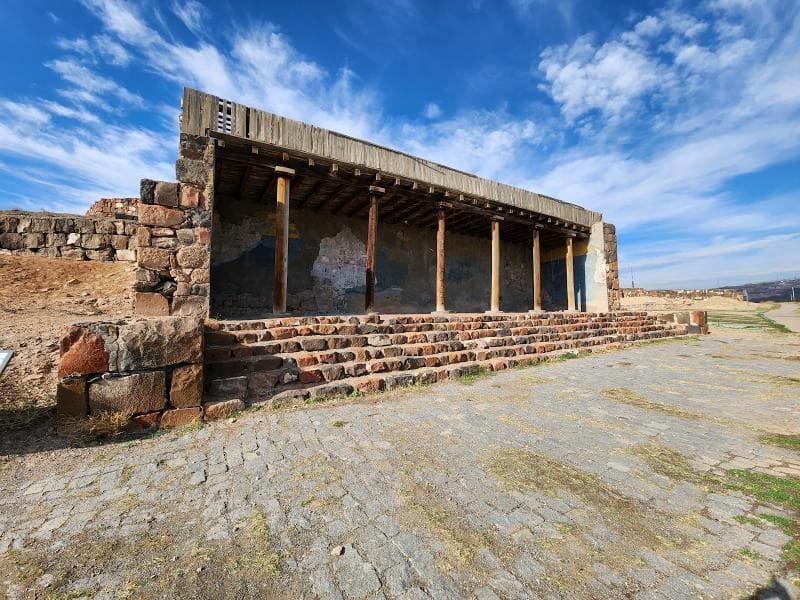
Explore the ancient Archaeological Excavations at Erebuni Fortress in Yerevan, Armenia, tracing the origins of the city to the mighty Urartian Kingdom.
Overview
Perched majestically atop Arin Berd hill in Yerevan, Armenia, the Archaeological Excavations at Erebuni Fortress offer a profound journey into the ancient Kingdom of Urartu. This historically rich site is not merely a collection of ruins, but the very birthplace of Armenia's vibrant capital, Yerevan, with its origins dating back to 782 BCE. The ongoing archaeological work here has unearthed a wealth of treasures, providing invaluable insights into a powerful Iron Age civilization that once dominated the Near East. Visitors to Erebuni can walk among the ancient foundations, where dedicated teams of archaeologists continue to peel back layers of time, revealing the grandeur of a bygone era.
History & Cultural Background
Erebuni Fortress was founded by the Urartian King Argishti I in 782 BCE, a date meticulously recorded in cuneiform inscriptions discovered on the site. Its primary purpose was to serve as a military stronghold, protecting the northern borders of the expansive Urartian Kingdom, also known as Biainili. Beyond its defensive role, Erebuni quickly evolved into a significant administrative, economic, and religious center, a true royal capital. The Urartians were renowned for their sophisticated engineering and architectural prowess, reflected in the fortress's design, which included massive walls, impressive palace complexes, and intricate water systems. After the collapse of the Urartian state in the early 6th century BCE, Erebuni continued its importance, becoming a vital center under the succeeding Achaemenid Empire, demonstrating the strategic and cultural enduring significance of this location.
What Makes It Special
The Archaeological Excavations at Erebuni are particularly special due to the exceptional preservation of Urartian architecture and artifacts. Among the most remarkable finds are numerous cuneiform inscriptions, including the foundational decree of King Argishti I, which is considered Yerevan's 'birth certificate'. The site boasts the remains of the majestic Khaldi temple, dedicated to the supreme Urartian god, with its unique wooden floors contrasting with the clay-coated adobe found elsewhere. Furthermore, Erebuni is celebrated for its surprisingly well-preserved frescoes, depicting religious ceremonies and secular scenes, with vibrant blue and red pigments that offer a rare glimpse into Urartian artistic traditions. Advanced stone water pipes, some originating from as far as Garni, attest to the Urartians' sophisticated hydraulic engineering, a marvel of the ancient world.
Stories, Fun Facts & Local Details
The name 'Yerevan' itself is directly derived from 'Erebuni', making the fortress a living testament to the city's continuous history spanning over 2,800 years. Legend has it that King Argishti I utilized 6,600 captives from conquered territories to help construct the fortress, a testament to the immense scale of this ancient project. Modern archaeological efforts, including a joint Franco-Armenian expedition active since 2008, continue to yield exciting discoveries. Recently, the foundations of a new temple were unearthed, bringing the total number of identified temples to three, and 'fantastically beautiful' gravel ground mosaics in front of the Iyubsa temple have been found. A polychrome mural fragment, dating back over 2,600 years and retaining vivid colors, was also uncovered, offering unprecedented insights into Urartian art. The Erebuni Museum, located at the foot of Arin Berd hill, proudly displays many of these incredible finds, such as silver antler bowls, pottery, weapons, and bronze artifacts, painting a comprehensive picture of daily life and religious practices in ancient Urartu.
Visitor Perspective
Visiting the Archaeological Excavations at Erebuni Fortress is an immersive experience, inviting travelers to step back in time. As you ascend Arin Berd hill, you're greeted by panoramic vistas of modern-day Yerevan and the majestic Ararat Plain. Walking through the site, visitors can trace the outlines of ancient defensive walls made from basalt, explore the reconstructed foundations of the royal palace, and envision the grand columned halls where Urartian kings once held court. Interpretive signs scattered across the site provide context to the ruins, allowing for a self-guided exploration that connects the physical remnants with their rich historical narratives. The adjacent Erebuni Museum complements the outdoor experience, housing a vast collection of over 12,000 artifacts that bring the Urartian civilization to life. The combination of the open-air archaeological site and the comprehensive museum makes Erebuni a compelling destination for anyone seeking to understand the deep historical roots of Armenia.
Coordinates: 44.5381, 40.1406
View on Google Maps💬 How Travelers Describe This Place
Based on community votes
Photogenic
998Unique
817Interesting
711Must See
299Beautiful
19
Traveler Stories
Discover memorable experiences shared by travelers who have visited this place.
No traveler stories yet.
Be the first traveler to share what made this place memorable.

Tour
By
Spot
Discover amazing places around the world. Your journey starts here.
Explore
© 2026 TourBySpot. All rights reserved.