Archaeological Courtyard
Split, Croatia
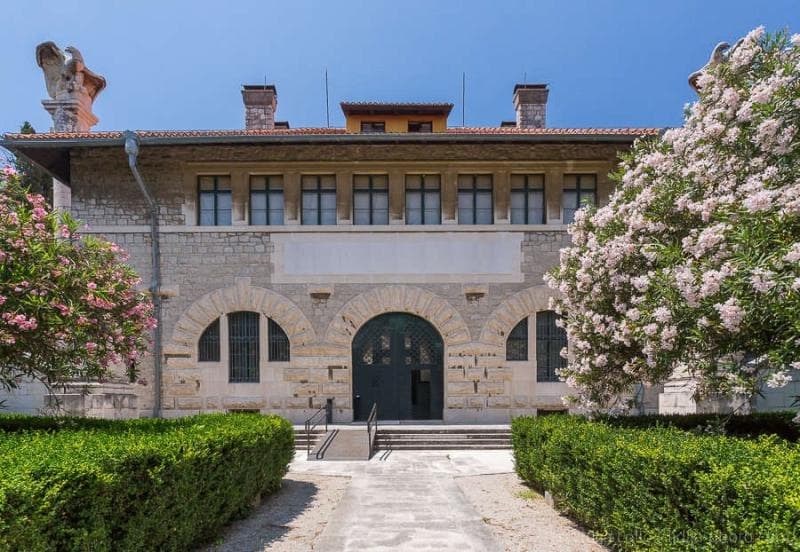
Explore the Archaeological Courtyard of the Split Archaeological Museum in Split, Croatia. Discover ancient Roman sarcophagi, steles, and artifacts.
Overview
Nestled in the vibrant city of Split, Croatia, the Archaeological Courtyard of the Split Archaeological Museum offers a fascinating journey through time. As Croatia's oldest museum, established in 1820, this institution is a treasure trove of over 150,000 artifacts spanning prehistoric times to the early Middle Ages. While the indoor exhibitions delve into diverse periods, the Archaeological Courtyard, also known as the lapidarium or arcaded garden, stands out as a unique open-air display, inviting visitors to directly engage with ancient stone monuments.
Located at Zrinsko-Frankopanska 25, the museum is easily accessible, just a short walk from Split's bustling city center and Diocletian's Palace. The courtyard itself is a meticulously arranged space, housing an impressive collection of Roman sarcophagi, inscribed funerary steles, altar fragments, and architectural elements, many of which were unearthed from the nearby ancient city of Salona. This outdoor gallery provides a tangible connection to the past, allowing the city's rich history to unfold amidst its ancient stone inhabitants.
History & Cultural Background
The Split Archaeological Museum began its remarkable journey in 1820, founded by a decree from the Dalmatian government in Zadar. Its initial collection grew primarily from archaeological finds discovered in the ruins of ancient Solin, known in Roman times as Salona. This strong connection to Salona, a thriving Roman city and later an important early Christian center, forms the backbone of the museum's identity and its courtyard collection.
The current Neo-Romantic style building, which houses the museum, was constructed between 1912 and 1914, with the museum officially relocating to this site in 1922. A pivotal figure in the museum's development was the renowned archaeologist Frane Bulić, who served as director for over fifty years starting in 1884. He was instrumental in shaping both the building's design and the systematic expansion of its vast holdings. The museum's permanent exhibition, including the courtyard, meticulously presents the material culture of Illyricum and Dalmatia, offering a comprehensive look at Greek, Roman, and medieval periods.
What Makes It Special
The Archaeological Courtyard sets the Split Archaeological Museum apart. While many museums house artifacts indoors, this open-air lapidarium provides an immersive experience. Here, visitors aren't just viewing exhibits; they are almost walking through a preserved fragment of ancient Dalmatia.
The courtyard is a carefully curated display of monumental stone pieces, including sarcophagi, intricate stone inscriptions, and architectural fragments, most of which originated from Salona and other significant sites in the region. Imagine standing before Roman sarcophagi dating back to the 2nd and 3rd centuries CE, some still bearing clearly readable Latin inscriptions. This tangible connection to the past, the ability to observe these ancient relics under the Croatian sky, offers a sense of scale and authenticity that can't be replicated within traditional indoor exhibits.
Stories, Fun Facts & Local Details
A visit to the Archaeological Courtyard is a step back into the daily lives and grand narratives of ancient civilizations. Many of the grave steles on display bear carved portraits of Roman families, prompting quiet reflection on their existence and aspirations. One might ponder the sculptor's process—did these families pose for hours, adorned in their finest attire, or were their likenesses idealized for eternity?
Among the noteworthy pieces is a relief known as the 'Tyche of Salona', depicting the patron deity of the ancient town. This significant artifact, believed to date from the mid-4th century AD, originally adorned Salona's city gate, the Porta Caesarea. The museum's ethos centers on preserving the authentic history of the region, emphasizing that its collections were not gathered from distant lands but represent the very heritage rooted in Dalmatia.
Visitor Perspective
For any curious traveler, the Archaeological Courtyard provides a memorable and insightful experience. Many advise beginning your visit here to fully appreciate the monumental scope of the ancient world before moving indoors. The arcaded garden offers a tranquil setting for contemplation, away from the immediate bustle of the city, where one can truly absorb the silent stories etched in stone. It's a particularly rewarding destination for enthusiasts of Roman history and archaeology, offering a profound understanding of the region's historical layers. Allow ample time to explore, as the outdoor exhibits are extensive and merit unhurried observation, often captivating visitors for as long as the indoor collections.
Coordinates: 16.43444, 43.51556
View on Google Maps💬 How Travelers Describe This Place
Based on community votes
Beautiful
639Unique
569Photogenic
476Interesting
128Must See
93
Traveler Stories
Discover memorable experiences shared by travelers who have visited this place.
No traveler stories yet.
Be the first traveler to share what made this place memorable.

Tour
By
Spot
Discover amazing places around the world. Your journey starts here.
Explore
© 2026 TourBySpot. All rights reserved.