Arcades
Zagreb, Croatia
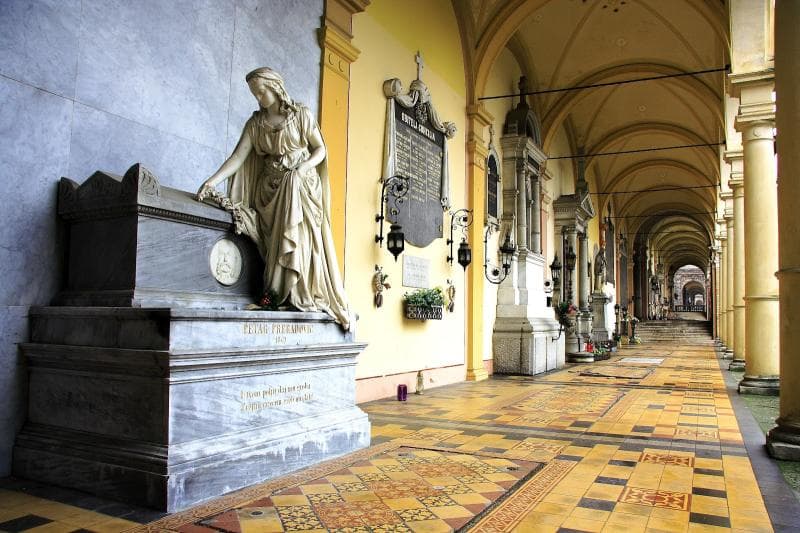
Explore the magnificent Arcades of Mirogoj Cemetery in Zagreb, Croatia, a stunning Neo-Renaissance architectural marvel and a resting place for Croatian greats.
Overview
Nestled within the magnificent Mirogoj Cemetery in Zagreb, Croatia, the Arcades stand as a breathtaking testament to architectural grandeur and cultural heritage. Far more than mere structures, these elegant, ivy-ddraped walkways are a central feature of what is often considered one of Europe's most beautiful cemeteries, serving as both a majestic entrance and a revered resting place. The Arcades provide a serene and reflective atmosphere, inviting visitors to wander through a harmonious blend of nature, art, and history.
Designed to be inclusive, Mirogoj Cemetery, and by extension its Arcades, welcomes all faiths, offering a final repose to individuals across Catholic, Orthodox, Muslim, Jewish, and Protestant traditions. This multiconfessional approach is rare and deeply significant, reflecting a broader spirit of unity and respect. Known affectionately as the 'Croatian Pantheon,' the Arcades house the graves of many of Croatia's most influential figures, from acclaimed artists and writers to notable politicians and scientists.
History & Cultural Background
The construction of Mirogoj Cemetery's iconic Arcades began in 1879, just a few years after the cemetery itself was inaugurated in 1876. The visionary behind this architectural marvel was Hermann Bollé, a renowned German architect who left an indelible mark on Zagreb's urban landscape, also famously renovating the city's Cathedral and designing the distinctive roof of St. Mark's Church.
Bollé's design for the Arcades was in the stately Neo-Renaissance and Neoclassical styles, characterized by its symmetry, balanced proportions, and clear perspectives. The initial construction of the Arcades was largely completed by Bollé in 1917, though the entire complex, including the central portal and a chapel, was not fully finished until 1929, some years after his passing in 1926. Bollé himself is among the many distinguished individuals interred within the cemetery he helped create.
Culturally, the establishment of Mirogoj as a city-owned cemetery that accepted all confessions was groundbreaking for its time, setting it apart from older, church-owned burial grounds. This ethos of universal acceptance is physically embodied within the Arcades, where the memorials of diverse backgrounds stand side-by-side, creating a powerful narrative of Croatian society and its evolving history.
What Makes It Special
The Arcades of Mirogoj are truly special for their exceptional architectural beauty and their profound symbolic significance. With their sweeping archways, robust pillars, and majestic green-copper domes, they create an awe-inspiring first impression. Inside, many of the domes feature intricate, pastel-coloured designs that illuminate beautifully with natural light, offering photographers a unique visual treat.
Beyond their aesthetic appeal, the Arcades are renowned for their remarkable construction. They famously withstood the devastating Zagreb earthquake of 1880 without sustaining even minor damage, a testament to Bollé's engineering prowess. The combination of monumental architecture with lush, often ivy-clad greenery transforms the space into an 'open-air art gallery,' showcasing numerous examples of sepulchral art and sculptures by prominent Croatian artists like Ivan Meštrović and Antun Augustinčić.
More recently, the Arcades faced challenges, suffering significant damage during the 2020 Zagreb earthquakes. Restoration efforts are underway, and there are plans to extend the arcades to the south, further enhancing this historic site while maintaining its original architectural integrity.
Stories, Fun Facts & Local Details
The Arcades are steeped in stories, acting as a quiet chronicler of Croatian history. Many of the nation's most celebrated figures found their final resting places here, particularly within these prestigious arcaded sections. Poet Petar Preradović, a pivotal figure in Croatian Romantic poetry, was one of the first prominent individuals reinterred in the Arcades in 1879, a moment that became a patriotic demonstration. Other revered figures of the Croatian National Revival, such as Ljudevit Gaj, Stanko Vraz, and Vatroslav Lisinski, also rest within these hallowed halls.
It's also where you'll find the graves of more contemporary icons, including Franjo Tuđman, the first president of independent Croatia, and the legendary NBA basketball player Dražen Petrović. This diverse collection of interments underscores the Arcades' role as a true national pantheon. The inclusion of graves from various religions, often in close proximity, serves as a poignant reminder of Zagreb's multicultural past and its enduring spirit of coexistence.
Visitor Perspective
For the curious traveler, a visit to the Arcades at Mirogoj Cemetery offers a uniquely tranquil and enriching experience. It's a place that encourages slow movement and quiet contemplation, rewarding those who take the time to observe the intricate details of the architecture and the poignant artistry of the memorials.
Walking through the long, tiled arcades, with sunlight filtering through the arches and ivy, can feel like stepping into a different era. The atmosphere is calm and peaceful, often described as a welcome respite from the bustling city. While it is an architectural landmark and an open-air gallery, it remains a working cemetery. Visitors are encouraged to maintain a respectful demeanor, keep voices low, and be mindful of mourning families, ensuring a visit that is both culturally insightful and appropriate for this sacred space.
Coordinates: 15.986, 45.835
View on Google Maps💬 How Travelers Describe This Place
Based on community votes
Unique
886Interesting
564Must See
443Beautiful
233Photogenic
201
Traveler Stories
Discover memorable experiences shared by travelers who have visited this place.
No traveler stories yet.
Be the first traveler to share what made this place memorable.

Tour
By
Spot
Discover amazing places around the world. Your journey starts here.
Explore
© 2026 TourBySpot. All rights reserved.