Arcaded Courtyard
Graz, Austria
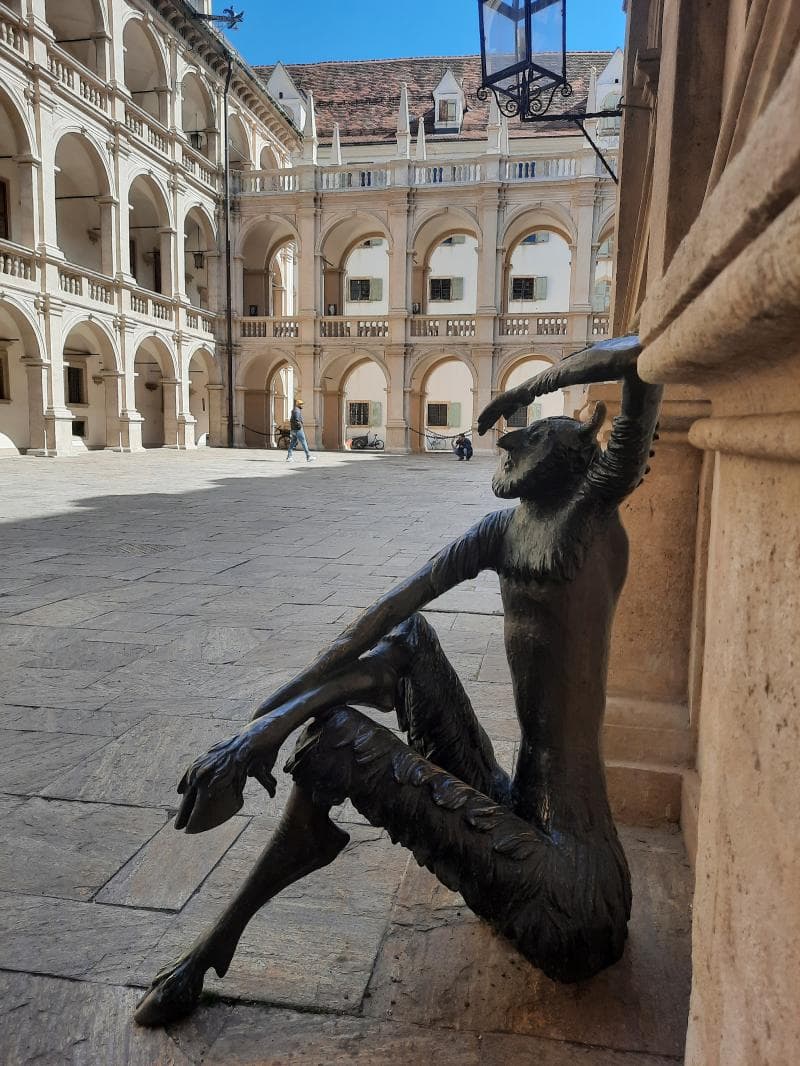
Discover the stunning Arcaded Courtyard of Landhaus Graz in Austria, a Renaissance masterpiece and seat of the Styrian Parliament.
Overview
Tucked within the historic Landhaus Graz in the heart of Graz, Austria, lies the exquisite Arcaded Courtyard, a true masterpiece of Italian Renaissance architecture. This captivating space serves as a central gem within the larger Landhaus complex, which has long been the seat of the Styrian provincial parliament. Often cited as one of Graz's top attractions, the courtyard immediately transports visitors to a different era with its harmonious design and serene atmosphere. It stands as a vivid testament to the city's rich history and enduring connection to European artistic traditions.
History & Cultural Background
The story of the Landhaus Graz and its Arcaded Courtyard began to take significant shape in the late 15th century when the Styrian estates decided to establish a dedicated assembly building in the capital. What started as a more modest 'office' was profoundly transformed in the 16th century by skilled Italian master builders. The most influential figure in this architectural evolution was Domenico dell'Allio, who arrived in Graz from Northern Italy as a fortress architect. Starting in 1557, dell'Allio oversaw the construction of the main wing on Herrengasse and, crucially, the magnificent inner courtyard, infusing the complex with the distinctive Northern Italian Renaissance style. This made the Landhaus Graz one of the first Renaissance buildings in the city, marking a significant architectural breakthrough for the region.
Beyond its architectural grandeur, the Landhaus has a rich political and cultural history. It has served as the meeting place for the Styrian provincial parliament for centuries. A fascinating historical detail is the 'Rumortafeln,' or 'rumbling panels,' fixed near the gateways since 1588. These unique regulations explicitly forbade 'rumbling,' drawing swords, daggers, or knives, scuffling, and fighting within the building, urging members to be humble in their words and deeds to avoid severe punishment. These panels remain visible today, serving as a quaint reminder of historical parliamentary decorum.
What Makes It Special
The Arcaded Courtyard's exceptional beauty lies in its intricate details and the overwhelming sense of balance and grandeur it evokes. Its most striking feature is the three-story arcaded walkways, adorned with elegant round arches supported by pilasters, which create a captivating rhythm and an illusion of lightness. Many observers note its strong resemblance to a Venetian palazzo, bringing a piece of Northern Italy to the heart of Graz. The courtyard is further embellished with 16th-century copper gargoyles, adding a whimsical yet historic touch to the facade. At its center stands a magnificent bronze fountain, a Mannerist masterpiece that adds to the courtyard's artistic allure. The seamless blend of functionality and aesthetic appeal, alongside its UNESCO World Heritage status as part of Graz's historic city center, truly sets this courtyard apart.
Stories, Fun Facts & Local Details
The Arcaded Courtyard is not just a static historical monument; it's a vibrant space deeply integrated into the cultural life of Graz. During the Advent season, it becomes home to the city's famous ice nativity scene, where master sculptors carve intricate figures from solid blocks of ice, transforming the Renaissance setting into a magical winter wonderland. Throughout the year, the courtyard hosts a variety of events, including concerts, theater performances, and celebrations, making it a lively hub for the community. The aforementioned 'Rumortafeln' are a particularly charming and unique historical footnote, offering a glimpse into the behavioral expectations of centuries past. Adjacent to the Landhaus is the Styrian Armoury (Landeszeughaus), one of the world's largest historic weapons collections, providing an excellent complementary visit for those interested in the region's martial history.
Visitor Perspective
Stepping into the Arcaded Courtyard of the Landhaus Graz is often described as an unexpectedly tranquil and awe-inspiring experience. Visitors frequently remark on the immediate sense of being transported back in time, finding a quiet pocket of the past amidst the bustling city. The accessibility of the courtyard is a major plus; it is generally open to the public, often 24/7, allowing for leisurely exploration at any time, whether to capture the morning light on its ancient arches or to enjoy the evening ambiance. Many recommend taking your time to simply gape at the architecture, admire the detailed copper gargoyles, and appreciate the craftsmanship of the bronze fountain. Its central location, easily reachable from Herrengasse or Schmiedgasse, makes it an ideal stop on any tour of Graz's Old Town. Combining a visit with a stroll along the historic streets or a trip to the nearby Styrian Armoury creates a comprehensive cultural experience, offering an unparalleled opportunity to connect with Graz's rich Renaissance heritage.
Coordinates: 15.4394194, 47.0700949
View on Google Maps💬 How Travelers Describe This Place
Based on community votes
Must See
1.0kPhotogenic
804Interesting
563Beautiful
100Unique
63
Traveler Stories
Discover memorable experiences shared by travelers who have visited this place.
No traveler stories yet.
Be the first traveler to share what made this place memorable.

Tour
By
Spot
Discover amazing places around the world. Your journey starts here.
Explore
© 2026 TourBySpot. All rights reserved.