Antiquarium
Munich, Germany
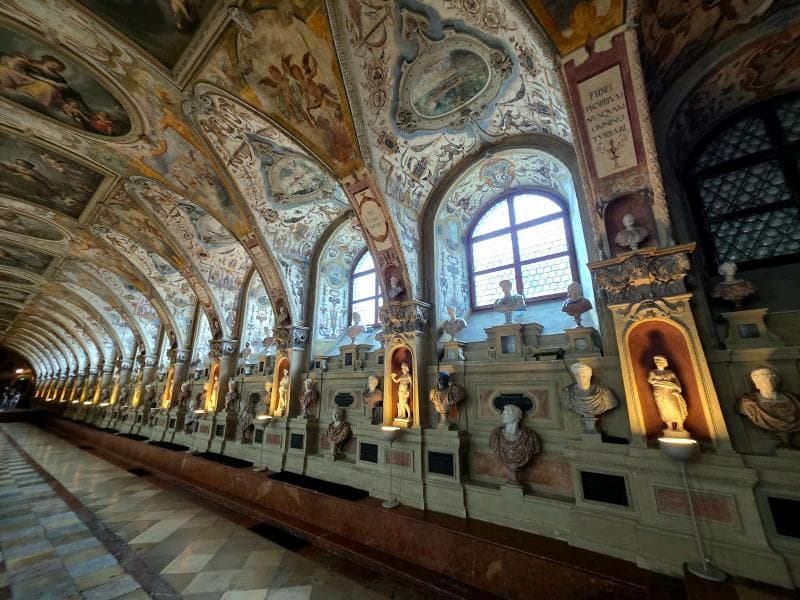
Explore the Antiquarium in Munich Residenz, Germany's largest Renaissance hall north of the Alps, famed for its frescoes and history.
Overview
Deep within the sprawling Munich Residenz, a former royal palace nestled in the heart of Munich, Germany, lies a true Renaissance marvel: the Antiquarium. This magnificent hall, considered the oldest room within the Residenz, is renowned as the largest and most lavish Renaissance hall north of the Alps. Originally conceived as a dedicated space to house a ducal collection of antique sculptures and a library, it quickly transformed into a grand setting for princely celebrations. Today, the Antiquarium continues to captivate visitors with its remarkable architecture, vibrant frescoes, and the echoes of centuries of Bavarian history.
Measuring approximately 66 to 69 meters in length, the Antiquarium is a central highlight of any visit to the Munich Residenz Museum. Its impressive scale and intricate decorations offer a window into the artistic tastes and power of the Wittelsbach dynasty, who ruled Bavaria for centuries. The hall's dual purpose—first as a gallery for classical antiquities and later as a lavish banquet and festival hall—speaks to its adaptability and enduring significance within the royal complex.
History & Cultural Background
The Antiquarium's story begins between 1568 and 1571 when Duke Albrecht V commissioned its construction. His vision was to create a suitable home for his extensive collection of antique sculptures and his ducal library. This ambition marked the hall as one of the most important surviving Renaissance collection buildings. However, its function soon evolved. From 1581 to 1600, under the successive reigns of Albrecht V's son, Duke Wilhelm V, and his grandson, Maximilian I, the Antiquarium was transformed into an opulent hall for festivities and banquets.
This conversion saw significant redecoration efforts, with Friedrich Sustris playing a key role in redesigning the hall to its current appearance as a banquet hall between 1586-1600. The original low hall was covered with a majestic barrel vault, featuring 17 window lunettes, and adorned with lavish paintings. During World War II, like much of the Munich Residenz, the Antiquarium suffered damage, with its vault being particularly affected. However, much of the movable inventory had been safely removed, and meticulous reconstruction efforts ensured the hall's preservation and restoration to its former glory.
What Makes It Special
What truly sets the Antiquarium apart is its breathtaking blend of classical inspiration and Renaissance grandeur. Its immense length, making it the largest Renaissance hall north of the Alps, immediately impresses visitors. The crowning glory is its elaborately decorated barrel-vaulted ceiling, a testament to Renaissance artistry. This ceiling is adorned with exquisite frescoes, depicting allegories of fame and virtues, and strikingly, 102 views of towns, markets, and palaces that comprised the Duchy of Bavaria at the time. These vibrant paintings were created in the workshop of artists like Peter Candid.
Along the walls, niches house a collection of antique busts and classical sculptures, some originating from Duke Albrecht V's initial collection, which were expanded upon in later centuries. The intricate grotesque ornaments, inspired by classical antiquity and much of it designed by Sustris himself, further enhance the hall's unique aesthetic. This detailed ornamentation, combined with the sheer scale and historical depth, creates an immersive experience, allowing visitors to feel transported back to the opulent courts of the Wittelsbach rulers.
Stories, Fun Facts & Local Details
Beyond its grand facade, the Antiquarium holds fascinating stories. Its transformation from a quiet scholarly space for collections to a vibrant festival hall reflects the changing priorities and lavish lifestyles of the Bavarian dukes. Imagine the elaborate banquets and courtly events that unfolded beneath its magnificent frescoes, with the duke and his guests dining on a gallery while the court observed. The visual narrative of Bavarian towns on the ceiling offers a unique historical map, showcasing the extent and pride of the duchy in the 16th century.
A fun fact for film enthusiasts is that the Antiquarium served as a memorable filming location for Alain Resnais' influential 1961 film, 'Last Year at Marienbad,' highlighting its timeless and evocative atmosphere. Despite the extensive damage sustained during World War II, the hall was rebuilt with remarkable dedication, ensuring that its historical and artistic integrity was largely preserved. Today, the Antiquarium is not just a museum piece; it continues to be used for official state receptions and concerts, carrying forward its legacy as a venue for significant events.
Visitor Perspective
Visiting the Antiquarium offers a deeply enriching cultural experience. As part of the extensive Munich Residenz Museum, it's recommended to allocate at least two hours to explore the palace complex thoroughly, though many find themselves wanting more time. Upon entry, visitors can avail themselves of free audio guides available in multiple languages, providing detailed insights into the hall's history and artistry. While photography for personal use is permitted, flash and tripods are prohibited, ensuring the preservation of the artwork and a respectful atmosphere for all guests.
To enhance comfort, large bags and rucksacks are not allowed inside and can be stored at a free supervised cloakroom. Free Wi-Fi is also available in certain areas of the Residenz, including the Antiquarium, allowing for easy access to digital information. The Antiquarium provides a unique opportunity to step into a monumental piece of Renaissance history, offering both a comprehensive understanding of its past and an appreciation for its enduring beauty. It's a journey into the heart of Bavarian ducal power and artistic achievement, leaving a lasting impression on every curious traveler.
Coordinates: 11.578587398015591, 48.141163282601696
View on Google Maps💬 How Travelers Describe This Place
Based on community votes
Unique
445Interesting
416Must See
289Beautiful
141Photogenic
33
Traveler Stories
Discover memorable experiences shared by travelers who have visited this place.
No traveler stories yet.
Be the first traveler to share what made this place memorable.

Tour
By
Spot
Discover amazing places around the world. Your journey starts here.
Explore
© 2026 TourBySpot. All rights reserved.