Antikythera Mechanism
Athens, Greece
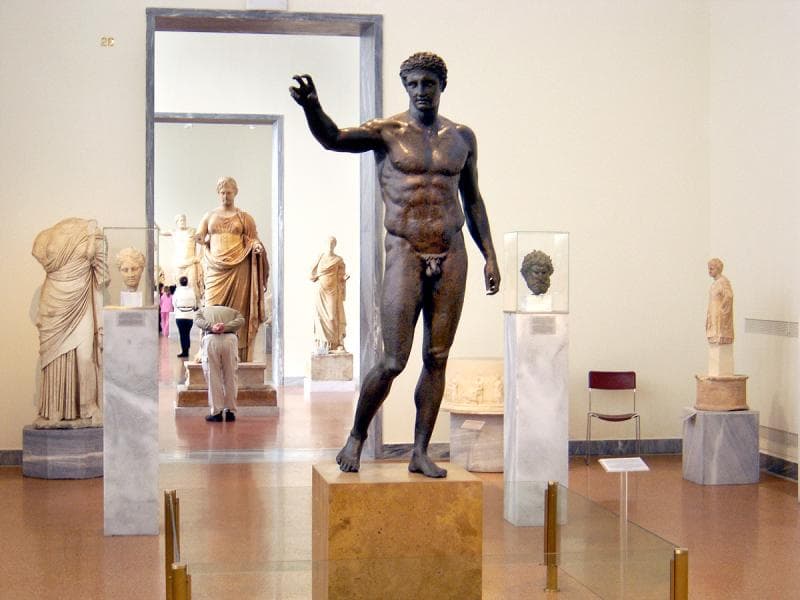
Explore the Antikythera Mechanism, the world's first analog computer, at the National Archaeological Museum in Athens, Greece.
Overview
Deep within the esteemed National Archaeological Museum in Athens, Greece, lies an artifact that continues to challenge our understanding of ancient capabilities: the Antikythera Mechanism. Discovered over a century ago in a shipwreck, this sophisticated device is widely recognized as the world's first analog computer. Crafted in ancient Greece, its intricate bronze gears were designed to predict astronomical positions, lunar phases, and even the timing of significant athletic events like the Olympic Games. It is a testament to the advanced scientific and engineering knowledge of Hellenistic civilization, prompting continuous study and fascination from researchers and visitors alike.
Housed in a dedicated exhibit, the Antikythera Mechanism represents a profound leap in mechanical ingenuity, far surpassing any known technology for over a thousand years after its creation. Its current state comprises multiple corroded fragments, but advanced imaging techniques have revealed the astonishing complexity hidden within, allowing for detailed reconstructions that bring its ancient purpose to life.
History & Cultural Background
The story of the Antikythera Mechanism begins dramatically in 1900, when Greek sponge divers, seeking shelter from a storm near the island of Antikythera, stumbled upon a Roman-era shipwreck. From the depths of the Aegean Sea, they retrieved a trove of ancient treasures, including bronze and marble statues, pottery, and jewelry. Among these magnificent finds was an unassuming, corroded lump of bronze and wood, about the size of a shoebox.
For nearly two years, this enigmatic object remained largely unexamined, its true significance unrecognized amidst the more overtly artistic discoveries. It was not until 1902 that Valerios Stais, a Greek archaeologist and then-director of the National Archaeological Museum, noticed the presence of interlocking gears within the encrusted mass. This observation sparked decades of intensive research. Dating back to the 2nd century BCE, with estimates ranging from 205 to 60 BCE, the mechanism predates any comparable device by an astonishing margin. Its existence fundamentally re-evaluates the technological capabilities of ancient Greeks and highlights a lost chapter in the history of science and engineering.
What Makes It Special
What sets the Antikythera Mechanism apart is its unparalleled sophistication. It is often hailed as the world's first analog computer, a device capable of processing complex astronomical data through an intricate system of at least 30 precisely machined bronze gear wheels. This level of mechanical complexity was not seen again in human history until the development of medieval cathedral clocks, more than a millennium later. The mechanism could accurately predict the movements of the Sun, Moon, and the five planets known to the ancients (Mercury, Venus, Mars, Jupiter, and Saturn).
Beyond planetary positions, it calculated lunar phases, predicted solar and lunar eclipses using the Metonic and Saros cycles, and even tracked the four-year cycle of ancient Panhellenic Games, including the Olympics. The precision of its predictions was remarkable, with planetary motion modeled to within one degree over 500 years. The discovery of its inscribed 'user manual' on the back plate, revealed through modern CT scans, further underscores its purpose as a highly advanced educational and calendrical tool.
Stories, Fun Facts & Local Details
Imagine the initial skepticism: the Antikythera Mechanism was so encrusted and nondescript when found that it was almost discarded, mistaken for a mere lump of rock or corroded metal. Fortunately, an observant eye prevented this priceless relic from being lost forever. The very conditions of its long slumber underwater, however, led to its current fragmented state; the bronze corroded into brittle atacamite, distorting its original form.
A famous quote attributed to science fiction author Arthur C. Clarke likens finding such a device to 'opening a pyramid and finding an atomic bomb,' vividly expressing the profound shock and wonder it evoked among scientists. Modern researchers have painstakingly used X-rays, CT scans, and other advanced techniques to digitally reconstruct the mechanism, effectively bringing it back to life and allowing us to understand its inner workings. These digital models, alongside physical replicas, often accompany the original fragments on display, offering a clearer picture of its ancient grandeur. The shipwreck itself was a veritable time capsule, carrying not only this mechanical marvel but also a diverse cargo that paints a vibrant picture of ancient commerce and culture.
Visitor Perspective
For any curious traveler visiting Athens, the Antikythera Mechanism is an absolute must-see within the National Archaeological Museum. You'll find it thoughtfully displayed in a dedicated room, typically on the ground floor. While the original fragments, preserved in their aged beauty, offer a tangible connection to antiquity, the exhibit often includes modern reconstructions and interactive displays. These supplementary materials are crucial, as they help visitors unravel the complex gears and dials, explaining how this 'clockwork computer' functioned.
The museum is conveniently located in central Athens and is easily accessible by metro, bus, or trolleybus, making it a straightforward addition to your itinerary. Allow ample time not only for the Antikythera Mechanism but also to explore the museum's vast and unparalleled collection of Greek antiquities, including many other artifacts recovered from the same Antikythera shipwreck. It's an experience that offers a profound reflection on the enduring ingenuity of ancient minds and the continuous quest for knowledge.
Coordinates: 23.73222, 37.98917
View on Google Maps💬 How Travelers Describe This Place
Based on community votes
Must See
545Unique
211Photogenic
123Interesting
74Beautiful
20
Traveler Stories
Discover memorable experiences shared by travelers who have visited this place.
No traveler stories yet.
Be the first traveler to share what made this place memorable.

Tour
By
Spot
Discover amazing places around the world. Your journey starts here.
Explore
© 2026 TourBySpot. All rights reserved.