Ancient Walls
Yerevan, Armenia
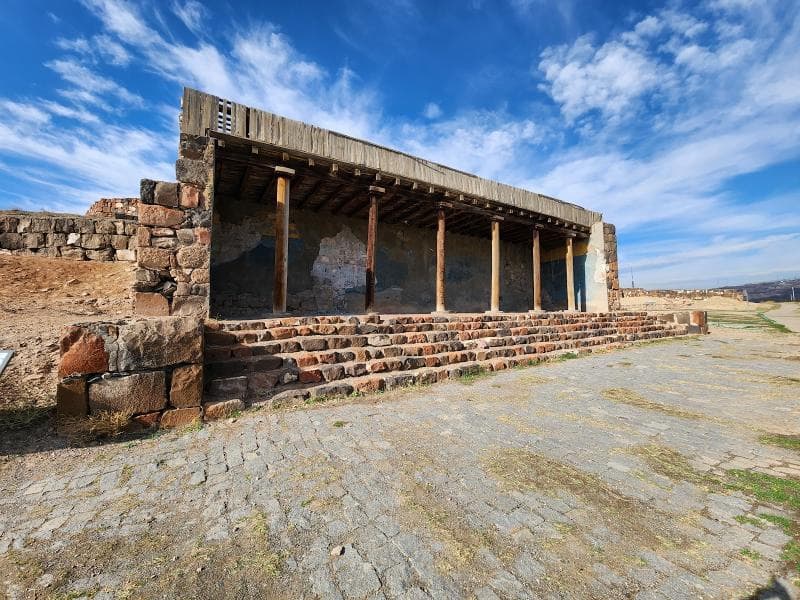
Explore the Ancient Walls of Erebuni Fortress in Yerevan, Armenia. Discover 2800 years of Urartian history, strategic architecture, and panoramic views.
Overview
Perched majestically on Arin Berd hill in Yerevan, Armenia, the Ancient Walls of Erebuni Fortress offer a tangible journey back to the powerful Urartian kingdom. This historic sub-spot within the larger Erebuni Fortress is a testament to sophisticated ancient engineering and strategic prowess. Built in 782 BCE by King Argishti I, Erebuni was more than just a military outpost; it was a vibrant administrative, economic, and cultural heartland. The fortress walls, though weathered by millennia, continue to define the contours of one of the world's oldest continuously inhabited cities, Yerevan, whose very name echoes the ancient 'Erebuni'.
Today, visitors can walk among the remnants of these colossal fortifications, experiencing a profound connection to a civilization that flourished almost three millennia ago. The site's elevated position provides breathtaking panoramic views of modern-day Yerevan and the distant, iconic Mount Ararat, creating a powerful contrast between past and present. The ancient walls, crafted from durable local materials, once protected a bustling royal palace, temples, and residential quarters, showcasing the grandeur of Urartian architectural achievements.
History & Cultural Background
The story of Erebuni's Ancient Walls begins with the ambitious King Argishti I, who founded the fortress in 782 BCE. His cuneiform inscription, discovered in 1950, proudly proclaims the fortress's establishment, serving as what many consider Yerevan's 'birth certificate'. Erebuni was strategically positioned to safeguard the northern borders of the Urartian kingdom and to oversee the fertile Ararat Valley. It quickly became a crucial center, rivaling the importance of other Urartian strongholds.
The fortress's significance endured long after the decline of the Urartian kingdom. In the 6th century BCE, it continued to thrive as a vital administrative capital under the Persian Satrapy of Armenia, a testament to its enduring strategic location. Archaeological excavations, initiated in the late 19th century and intensified from 1950 onwards, have gradually unearthed the secrets held within and around these ancient walls. These findings have provided invaluable insights into Urartian daily life, warfare, and religious practices, revealing an advanced civilization with sophisticated engineering and artistic capabilities.
What Makes It Special
The Ancient Walls of Erebuni are remarkable for their construction and enduring presence. Built on a natural triangular plan atop Arin Berd hill, the fortifications originally soared to heights of 10-12 meters, designed to be formidable and impregnable. The lower sections were meticulously constructed from large, irregular basalt and tuff stones, often bonded with a clay mixture to enhance their stability and reinforcement. Above these stone foundations, the walls transitioned to mud bricks (adobe), which were then often plastered with clay. This combination of materials speaks to a deep understanding of available resources and structural integrity.
Beyond their structural brilliance, the interior walls of the fortress were adorned with elaborate murals and frescoes. These vibrant paintings depicted both religious and secular scenes, featuring intricate motifs and figures rendered in striking dark blue and red on a white background. These artistic expressions offer a rare glimpse into the aesthetic and spiritual world of the Urartians. Fragments of these ancient frescoes can still be observed today, providing a direct visual link to the past. Additionally, numerous cuneiform inscriptions carved into basalt and incorporated into the walls provide detailed records of the fortress's construction and various functions, acting as ancient historical documents set in stone.
Stories, Fun Facts & Local Details
Stepping within Erebuni's Ancient Walls feels like entering a living history book, where every stone has a tale. One of the most compelling facts is that Erebuni was founded approximately 20 years before Rome, solidifying Yerevan's claim as one of the world's oldest cities with a documented foundation date. Imagine King Argishti I bringing 6,600 captives to populate this nascent city, transforming a military strongpoint into a thriving community.
The name 'Arin Berd,' often used for the hill where the fortress stands, translates ominously to 'Fortress of Blood,' hinting at the countless struggles and defenses these walls witnessed throughout their long history. Within the richly decorated walls, ancient artists painted scenes that were both symbolic and illustrative of daily life and religious devotion. Look for motifs of the 'tree of life,' palmettes, and powerful bull or lion figures that once graced the royal halls and temples. Even mundane aspects of life are preserved: archaeologists have uncovered pottery, storage vessels (karasses) for wine, and advanced drainage systems made of basalt slabs, showcasing the Urartians' practical ingenuity.
Visitor Perspective
A visit to the Ancient Walls of Erebuni Fortress is an immersive experience that transcends typical sightseeing. As you ascend the hill to the fortress, there's a palpable sense of making a 'pilgrimage' to an ancient past, leaving the bustling modern city behind. Walking along the impressive remaining basalt and tuff stone foundations, you can almost trace the original layout of this formidable citadel. The sheer scale and strategic placement of the walls provide a profound understanding of Urartian military and urban planning.
From the ramparts, pause to absorb the magnificent panoramic views, stretching across Yerevan's urban sprawl to the majestic peaks of Mount Ararat. This vista offers a unique perspective, connecting the ancient kingdom with contemporary Armenia. Before or after exploring the outdoor ruins, a visit to the Erebuni Historical & Archaeological Museum, located at the base of the hill, is highly recommended. The museum houses a vast collection of artifacts unearthed from the site, including cuneiform tablets, pottery, and restored wall paintings, providing essential context and bringing the stories of the walls to vivid life. Clear pathways and interpretive signs throughout the site help guide your exploration, ensuring a meaningful and informative journey through one of Armenia's most significant historical treasures.
Coordinates: 44.5381, 40.1406
View on Google Maps💬 How Travelers Describe This Place
Based on community votes
Unique
657Must See
498Beautiful
481Interesting
299Photogenic
19
Traveler Stories
Discover memorable experiences shared by travelers who have visited this place.
No traveler stories yet.
Be the first traveler to share what made this place memorable.

Tour
By
Spot
Discover amazing places around the world. Your journey starts here.
Explore
© 2026 TourBySpot. All rights reserved.