Ancient Mosaics
Split, Croatia
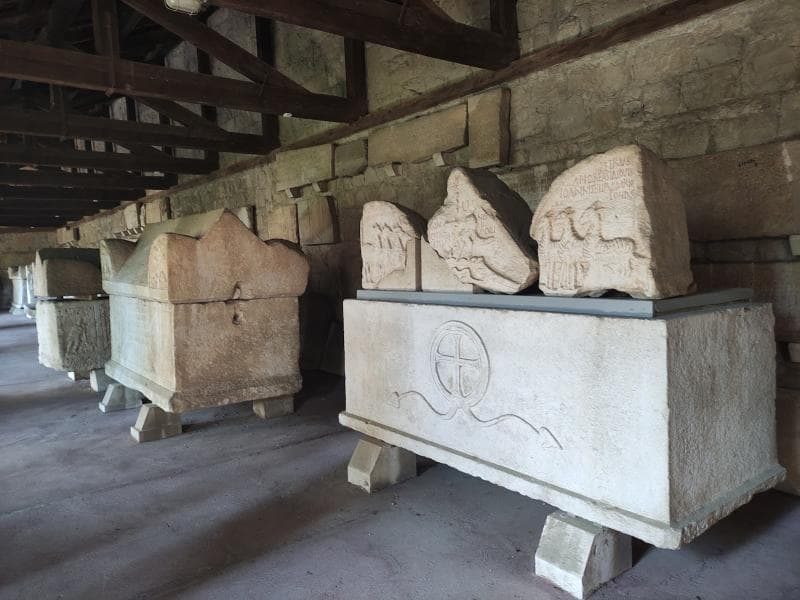
Explore Ancient Mosaics at the Split Archaeological Museum in Split, Croatia. Discover stunning Roman and Early Christian tessellations from Salona.
Overview
Nestled within the venerable walls of the Split Archaeological Museum, the Ancient Mosaics collection offers a captivating journey into the rich artistic and historical tapestry of Dalmatia. As Croatia's oldest museum, established in 1820, this institution houses an extraordinary array of artifacts, with its mosaics standing out as shimmering testaments to the region's Roman and Early Christian past. These intricate floor and wall decorations, predominantly unearthed from the ancient city of Salona, provide a vibrant window into the daily lives, beliefs, and artistic sophistication of past civilizations. Walking among these preserved tessellations, visitors can almost hear the echoes of Roman footsteps and feel the devotion of early Christians who once adorned their spaces with these colorful works of art.
History & Cultural Background
The story of these ancient mosaics is inextricably linked to Salona, the former capital of the Roman province of Dalmatia, situated just a few kilometers from modern-day Split. Once a bustling metropolis of over 60,000 inhabitants, Salona was a melting pot of cultures and a significant center for early Christianity. The Roman Provincial and Early Christian eras are particularly well-represented in the museum's mosaic collection. Many of the mosaic panels and architectural fragments on display were meticulously recovered from Salona's grand villas, public buildings, and early Christian basilicas. These pieces speak to the prosperity and advanced craftsmanship prevalent in Salona from the 3rd to the 5th centuries AD.
The museum itself has a storied past, with its foundations dating back to the early 19th century when archaeologists and enthusiasts began systematically collecting artifacts from Salona. Figures like Dominik Papalić in the 16th century and later, the esteemed archaeologist Frane Bulić, were instrumental in preserving these treasures. The mosaics represent a crucial part of this heritage, showcasing not only decorative art but also providing invaluable historical data through their imagery and, sometimes, embedded inscriptions. They reflect the evolution of artistic styles, from classical Roman motifs to the burgeoning symbolism of Early Christian art.
What Makes It Special
What truly sets the Ancient Mosaics collection apart is its direct connection to Salona, one of the most important archaeological sites in Croatia. The mosaics are not merely decorative elements; they are primary historical documents. For instance, the museum proudly displays a Roman mosaic from the Governor's Palace in Salona, which strikingly depicts the god of the sea, Triton. This piece, with its vivid mythological imagery, offers a glimpse into the opulent secular spaces of Roman aristocracy. Imagine the grandeur of a governor's residence, its floors alive with such dynamic scenes!
Equally compelling are the early Christian mosaics. One particularly significant piece is a dedicatory mosaic inscription from the urban basilica of Salona. Dating to the early 5th century, this inscription commemorates the construction of a new basilica by Bishop Symferius and his nephew Hesychius. Such artifacts provide tangible evidence of Salona's pivotal role in the spread of Christianity in the Adriatic. To stand before these mosaics is to witness the artistic and religious transitions of an empire, etched in countless small stones.
Stories, Fun Facts & Local Details
Many of these mosaics, especially those from Salona's Manastirine section, transport us to a time when life unfolded on these very patterns. The Manastirine, a significant early Christian complex outside Salona's city walls, yields mosaics that were once part of grand basilicas and cemeteries. Imagine the stories these floors could tell – of baptisms, prayers, and solemn processions. It's a mosaic that depicts not just a scene, but a cultural moment frozen in time. The detailed geometric patterns found in many Roman floor mosaics, like those from a 3rd-century AD Salona villa, highlight the mathematical precision and aesthetic sensibilities of ancient artisans. These designs were often chosen not just for beauty, but also for their perceived ability to protect the inhabitants or symbolize certain virtues.
The process of creating a mosaic was incredibly labor-intensive. Each tiny stone cube, or 'tessera,' was hand-cut from natural stone, glass, or ceramic, then meticulously placed to form images and patterns. The range of colors and materials reflects the sophisticated trade networks that brought exotic stones and pigments to this Adriatic port city. The sheer dedication and skill involved in creating these enduring artworks is awe-inspiring, a testament to human creativity that transcends millennia. These mosaics aren't just museum pieces; they're echoes of ancient lives, inviting you to connect with the human experience across vast stretches of time.
Visitor Perspective
For the curious traveler, encountering the Ancient Mosaics at the Split Archaeological Museum is a profoundly enriching experience. Away from the bustling crowds of Diocletian's Palace, this museum offers a quieter, more contemplative insight into the region's profound history. The mosaic collection, while part of a larger display that includes Roman sculptures, coins, and everyday objects, merits focused attention. It allows you to appreciate the artistry up close, noticing the individual tesserae and the overall narrative they construct.
Many find a visit here enhances their understanding of the nearby archaeological site of Salona. Seeing these perfectly preserved mosaic fragments within the museum makes the ruined foundations of Salona much more 'legible' and imaginable. It provides the missing context, transforming abstract ruins into vibrant, living spaces. The museum's accessible location, a short walk from Split's city center, makes it an ideal cultural detour. It's an opportunity to delve deeper than the surface-level attractions, to truly 'understand Dalmatia, not just visit it.'
Coordinates: 16.43487572504272, 43.51580916740614
View on Google Maps💬 How Travelers Describe This Place
Based on community votes
Unique
996Interesting
726Photogenic
717Must See
494Beautiful
193
Traveler Stories
Discover memorable experiences shared by travelers who have visited this place.
No traveler stories yet.
Be the first traveler to share what made this place memorable.

Tour
By
Spot
Discover amazing places around the world. Your journey starts here.
Explore
© 2026 TourBySpot. All rights reserved.