Ancient Merv Exhibits
Ashgabat, Turkmenistan
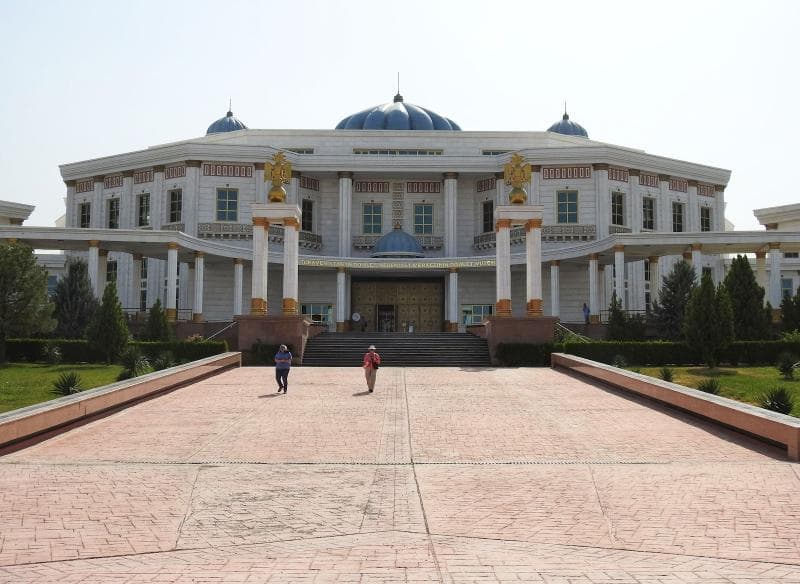
Explore Ancient Merv Exhibits at the National Museum Of Turkmenistan in Ashgabat. Discover artifacts from the Silk Road's ancient oasis city.
Overview
Step into a journey through time at the National Museum Of Turkmenistan in Ashgabat, where the 'Ancient Merv Exhibits' unveil the profound history of one of the Silk Road's most pivotal cities. These dedicated displays within the museum's extensive collections offer a detailed look into the archaeological treasures unearthed from Merv, an ancient oasis city that once flourished in Central Asia. The exhibits are a testament to Merv's enduring legacy as a cultural crossroads and a cradle of civilization.
Housed within the grand National Museum, which officially opened its doors on November 12, 1998, the Ancient Merv collection forms a significant part of its historical and ethnographic sections. It provides visitors with a unique opportunity to connect with Turkmenistan's rich past, exploring artifacts that span millennia and tell stories of empires, trade, and intellectual flourishing. The museum itself is a prominent landmark in Ashgabat, offering a fitting home for such invaluable heritage.
History & Cultural Background
Ancient Merv, located near the modern city of Mary, Turkmenistan, boasts a history stretching back to the 3rd millennium BCE. Its strategic position in the Murghab River delta, surrounded by the Karakum Desert, made it a vital hub along the historical Silk Road. Over centuries, Merv evolved through various incarnations, with different cities built adjacently, each leaving its own historical footprint relatively well-preserved.
Referred to as 'Mouru' in ancient Persian texts and 'Margu' in cuneiform inscriptions, Merv was a satrapy of the Persian Achaemenid Empire. It later came under the rule of Hellenistic kings, Parthians, Sasanians, and Arabs, serving as a base for Muslim expansion into Central Asia. The city reached its zenith as the capital of the Great Seljuk Empire in the 11th–12th centuries, transforming into a chief center of Islamic science and culture, attracting renowned poets, musicians, physicians, mathematicians, and astronomers. The exhibits vividly portray these layers of history, showcasing the artistic and scientific achievements that characterized Merv's golden ages.
What Makes It Special
What makes the Ancient Merv Exhibits truly special is the direct window they offer into the extraordinary life of an ancient Silk Road metropolis. Unlike many archaeological sites where continuous occupation obscures earlier layers, Merv's unique urban development saw cities shift, allowing for better preservation of distinct periods. The museum's collection brings these discoveries to life, ranging from the mundane objects of daily life to exquisite works of art and advanced technological tools.
Among the notable items are intricate fragments of glazed and unglazed ceramic dishware, glass, and stone articles, reflecting sophisticated craftsmanship. The collection also includes small bronze items, such as a miniature pendant in the form of a wolf's head, which offers a glimpse into ancient symbolism and adornment. Particularly striking are the Buddhist images and a beautifully painted vase from Merv, demonstrating the diverse cultural and religious influences that converged in this cosmopolitan center. Medieval gold and silver coins, along with miniature copies of the Mausoleum of Sultan Sanjar, further highlight Merv's economic power and architectural grandeur during its Seljuk era.
Stories, Fun Facts & Local Details
Imagine Merv, an oasis city thriving for over 4,000 years, a vibrant tapestry woven with countless stories. One fascinating detail is Merv's mention in Zoroastrianism, where the god Ahura Mazda reportedly created 'Mouru' as one of sixteen perfect lands. This sacred connection underscores its ancient significance. During its peak as the Seljuk capital, Merv was not just a trading post but an intellectual powerhouse, fostering advancements in astronomy and mathematics that shaped the medieval world. Scholars flocked to its libraries, which were among the greatest of their time.
Archaeological finds continue to reveal surprises, like the discovery of three construction periods in medieval buildings, showing how structures were slightly redesigned over time, along with ceramic shards displaying geometric patterns and stylized human figures from the 9th-10th centuries. These intricate details provide a tangible link to the daily lives and artistic sensibilities of Merv's inhabitants. The exhibits offer a chance to ponder the lives of merchants, scholars, and artisans who walked the ancient streets of this once-magnificent city.
Visitor Perspective
As a curious traveler, visiting the 'Ancient Merv Exhibits' within the National Museum Of Turkmenistan offers more than just a historical overview; it's an immersive cultural experience. The museum is well-equipped, with the latest museum techniques and controlled environments to preserve these precious artifacts. While photography might require an additional fee, the opportunity to see these artifacts up close, without the crowds often found in more globally recognized museums, allows for a deeply personal connection with the past.
The displays are thoughtfully arranged, guiding visitors through chronological periods and thematic collections, making the vastness of Merv's history comprehensible and engaging. Expect to spend ample time appreciating the intricate details of pottery, the sheen of ancient metals, and the silent stories told by each exhibit. It is a journey that enriches understanding of Central Asian history and the pivotal role Turkmenistan played in shaping world civilizations along the legendary Silk Road.
Coordinates: 58.349114, 37.885151
View on Google Maps💬 How Travelers Describe This Place
Based on community votes
Interesting
826Beautiful
800Unique
387Photogenic
242Must See
90
Traveler Stories
Discover memorable experiences shared by travelers who have visited this place.
No traveler stories yet.
Be the first traveler to share what made this place memorable.

Tour
By
Spot
Discover amazing places around the world. Your journey starts here.
Explore
© 2026 TourBySpot. All rights reserved.