Ancient Manuscript Hall
Yerevan, Armenia
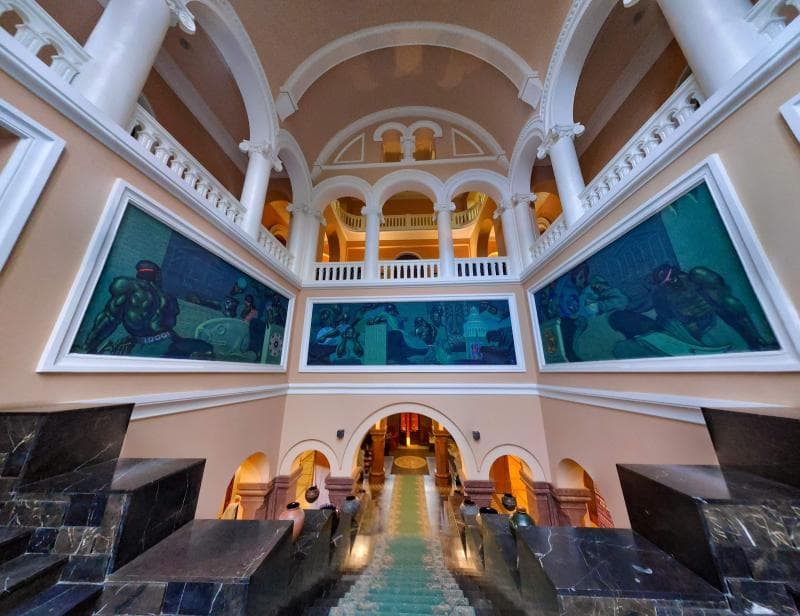
Explore the Ancient Manuscript Hall in Matenadaran, Yerevan, Armenia. Discover a world-renowned collection of ancient Armenian and foreign manuscripts, rich history, and unique cultural treasures.
Overview
The Ancient Manuscript Hall, nestled within the esteemed Mesrop Mashtots Institute of Ancient Manuscripts, affectionately known as Matenadaran, stands as a monumental testament to Armenia's rich cultural and intellectual heritage. Located in Yerevan, Armenia, this institution is not merely a museum but a vibrant hub dedicated to the preservation, study, and popularization of ancient manuscripts. Matenadaran, a word meaning 'repository of manuscripts' or 'library' in ancient Armenian, truly lives up to its name, housing the world's most extensive collection of Armenian manuscripts—approximately 23,000, along with half a million documents. Its invaluable collection has been recognized globally, earning a place in UNESCO's Memory of the World Register. Visitors to the Ancient Manuscript Hall embark on a journey through centuries of written history, encountering treasures that reveal the profound depth of Armenian scholarship and artistry.
History & Cultural Background
The genesis of Matenadaran's collection can be traced back to the 5th century, coinciding with Mesrop Mashtots' creation of the Armenian alphabet and the establishment of the Armenian Catholicosate's library at Etchmiadzin. This foundational collection grew significantly over the centuries, despite periods of conflict and pillage. During the tumultuous times of World War I and the Armenian Genocide in 1915, the precious manuscripts were moved to Moscow for safekeeping, returning to Armenia in 1922. The collection was nationalized in 1920 and eventually relocated to Yerevan in 1939. The modern Matenadaran, as it is known today, was officially established in 1959. The iconic building, designed by architect Mark Grigorian, was constructed between 1945 and 1959, with architectural elements echoing the grandeur of Ani, the medieval Armenian capital. In 1962, the institution was formally named after Mesrop Mashtots, honoring the visionary behind the Armenian alphabet. Matenadaran is more than an archive; it is a profound source of national pride, viewed as a 'citadel of Armenian identity' for its role in safeguarding the nation's intellectual legacy and preserving original works that might otherwise have been lost to history.
What Makes It Special
The Ancient Manuscript Hall showcases a collection unparalleled in its scope and significance, making it one of the world's richest depositories of medieval manuscripts. Its holdings span an astonishing array of subjects including history, geography, grammar, philosophy, law, medicine, mathematics, cosmology, and literature, alongside exquisite miniature paintings and musical texts. While predominantly Armenian, the collection also boasts significant manuscripts in Greek, Arabic, Persian, Syriac, Latin, Ethiopian, and Hebrew, highlighting Armenia's historical role as a nexus of cultural exchange. Visitors can marvel at illuminated manuscripts, adorned with gold and vibrant colors derived from natural minerals, some dating from the 5th to the 18th centuries. Among its most celebrated exhibits are the colossal Mush Homilary (Msho Charentir), the largest Armenian manuscript, weighing 27.5 kilograms and measuring 70 by 55 centimeters, and in stark contrast, the tiny 1434 Calendar, a miniature marvel just 4 by 3 centimeters and weighing a mere 19 grams. The oldest fragments date back to the 5th-6th centuries, while the 6th-century Etchmiadzin Gospel displays some of the earliest illustrations. The Matenadaran also innovatively features tactile display cases, allowing visually impaired visitors to appreciate the intricate art of medieval manuscript creation. A dedicated Hall of Foreign-Language Manuscripts further illustrates the profound intellectual interactions across diverse civilizations.
Stories, Fun Facts & Local Details
Beyond the impressive displays, Matenadaran is rich with captivating stories and symbolic details. At its entrance, visitors are greeted by a striking statue of Mesrop Mashtots, the creator of the Armenian alphabet, accompanied by his pupil Koryun, along with other revered Armenian intellectuals like Movses Khorenatsi, Mkhitar Gosh, and Toros Roslin. Inside, the main hall features a powerful mosaic depicting the Avarayr Battle and a vibrant fresco illustrating Armenian history, immersing visitors in the nation's enduring spirit. One particularly poignant tale connected to the Mush Homilary recounts how two women, during the horrors of the Armenian Genocide, bravely divided the enormous book into two parts to save it from destruction. This act of heroism ensured the manuscript's survival, making its presence in the Matenadaran even more profound. The building itself is a masterpiece, echoing the architecture of Ani, the medieval Armenian capital, with strict proportions and narrow window slits that imbue it with a sense of timeless strength. Matenadaran actively continues to expand its collection, often through generous donations from the global Armenian diaspora, a testament to the enduring connection Armenians have to their written heritage.
Visitor Perspective
Stepping into the Ancient Manuscript Hall offers a profoundly peaceful and inspiring experience, leaving visitors with a deep sense of admiration for the sheer volume of human knowledge and artistry preserved within its walls. Many find the experience of seeing millennia-old manuscripts up close to be truly incredible, fostering an appreciation for how history and culture have been diligently protected across generations. To enhance the experience, Matenadaran provides knowledgeable guides who offer tours in multiple languages, including Armenian, Russian, English, French, German, Italian, Spanish, and Persian, ensuring a comprehensive understanding of the exhibits. For those seeking a quieter visit, arriving in the morning is often recommended. The museum is generally open from Tuesday to Saturday, typically from 10:00 AM to 5:00 PM, though it is always advisable to check the official website for the most current operating hours. The institution's commitment to accessibility is evident through features like tactile display cases for visually impaired guests. Moreover, the Matenadaran's location on Mashtots Avenue provides an excellent starting point for exploring nearby parks and recreational areas in Yerevan, allowing visitors to seamlessly blend cultural immersion with relaxation.
Coordinates: 44.52082, 40.19195
View on Google Maps💬 How Travelers Describe This Place
Based on community votes
Interesting
950Must See
929Unique
858Photogenic
287Beautiful
275
Traveler Stories
Discover memorable experiences shared by travelers who have visited this place.
No traveler stories yet.
Be the first traveler to share what made this place memorable.

Tour
By
Spot
Discover amazing places around the world. Your journey starts here.
Explore
© 2026 TourBySpot. All rights reserved.