Ancient Egyptian Galleries
London, United Kingdom
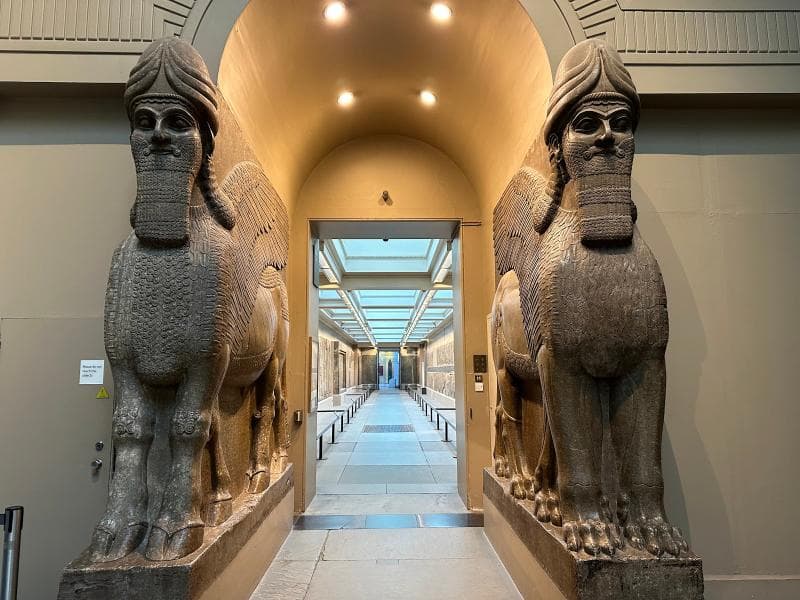

Explore the British Museum's Ancient Egyptian Galleries in London, United Kingdom. Discover the Rosetta Stone, mummies, and colossal statues.
Overview
Step into a realm where ancient pharaohs ruled and gods were revered, right in the heart of London. The Ancient Egyptian Galleries at the British Museum boast one of the world's most extensive collections of Egyptian antiquities outside of Cairo, making it an unmissable journey through over 3,000 years of history. Spread across multiple rooms, these galleries offer a comprehensive look at the life, death, and beliefs of one of history's most enduring civilizations.
Visitors can explore monumental sculptures in Room 4 on the ground floor and delve into the fascinating world of mummies, funerary practices, and daily life in Rooms 61 to 64 on the upper floor. From the colossal statues of powerful rulers to intricate burial artifacts, the collection presents a vivid tapestry of ancient Egyptian culture, inviting curious travelers to uncover its many secrets.
History & Cultural Background
The foundation of the British Museum's extraordinary Egyptian collection dates back to 1753 with a significant bequest from Sir Hans Sloane. However, the collection truly began its remarkable expansion following the British defeat of Napoleon's forces in Egypt. In 1803, many crucial artifacts, including the iconic Rosetta Stone, were presented to the museum, marking the acquisition of its first major sculptures.
Throughout the 19th century, figures like British Consul Henry Salt and the adventurous Italian explorer Giovanni Belzoni played pivotal roles in amassing more treasures. Later, archaeological excavations continued to enrich the museum's holdings, adding thousands of objects that span the Predynastic period, the Old, Middle, and New Kingdoms, and even the Ptolemaic and Roman periods of Egyptian rule. This vast timeline, beginning in the fourth millennium BC and extending into the first centuries AD, showcases how a civilization sustained its unique culture for millennia.
What Makes It Special
What truly sets the Ancient Egyptian Galleries apart is not just the sheer volume of its collection, but the extraordinary significance of its key artifacts. The most celebrated, of course, is the Rosetta Stone. This slab of granodiorite, inscribed with a decree in three scripts—hieroglyphic, Demotic, and ancient Greek—provided the indispensable key to deciphering ancient Egyptian hieroglyphs, unlocking a language that had been a mystery for centuries. Its presence here transformed our understanding of an entire civilization.
Beyond this linguistic marvel, the galleries are home to the colossal bust of Ramesses II, one of Egypt's greatest pharaohs, whose imposing presence commands attention. Another unique aspect is the extensive display of mummies, including the remarkably preserved Gebelein Man, affectionately known as 'Ginger,' whose natural mummification offers a direct link to ancient funerary practices from around 3400 BCE. These artifacts are not merely objects; they are windows into the spiritual beliefs, artistic achievements, and daily lives of ancient Egyptians.
Stories, Fun Facts & Local Details
Imagine the excitement surrounding the Rosetta Stone's arrival; it was the ultimate puzzle piece, enabling scholars like Jean-François Champollion to crack the code of a lost language. The massive bust of Ramesses II, weighing seven tonnes, was such a monumental acquisition that its transport inspired Percy Bysshe Shelley's famous poem 'Ozymandias.' Speaking of mummies, the Gebelein Man is not only ancient but also holds a compelling story: a CT scan revealed he met a violent end, having been stabbed in the back when he was a young man.
For those interested in daily life and the afterlife, the wall paintings from the tomb chapel of Nebamun offer an idealized glimpse into a wealthy official's existence around 1350 BC, illustrating hunting scenes and banquets. These elaborate burial preparations underscore the ancient Egyptians' profound belief in the afterlife and their meticulous efforts to ensure a successful journey to the next world. While early Egyptian funerals were simple, the practice of mummification, so famously associated with Egypt, began around 2500 BC, evolving into the complex rituals we know today.
Visitor Perspective
Visiting the Ancient Egyptian Galleries is an immersive experience. While entry to the British Museum is free, it's advisable to book timed tickets online in advance to manage crowds, especially around popular exhibits like the Rosetta Stone. Allow a minimum of two to three hours to comfortably explore the highlights across both the ground and upper floors, or even a full day if you wish to delve deeper into the detailed descriptions and vast array of artifacts.
The galleries can get busy, particularly around the Rosetta Stone and the mummies, so arriving early is often recommended for a more tranquil experience. The thoughtful arrangement of the exhibits, from towering sculptures to delicate funerary objects, ensures that every turn presents a new discovery, offering a profound connection to a civilization that continues to captivate hearts and minds across millennia.
Coordinates: -0.126484, 51.518369
View on Google Maps💬 How Travelers Describe This Place
Based on community votes
Interesting
963Unique
663Must See
653Beautiful
503Photogenic
201
Traveler Stories
Discover memorable experiences shared by travelers who have visited this place.
No traveler stories yet.
Be the first traveler to share what made this place memorable.

Tour
By
Spot
Discover amazing places around the world. Your journey starts here.
Explore
© 2026 TourBySpot. All rights reserved.