Anafiotika
Athens, Greece
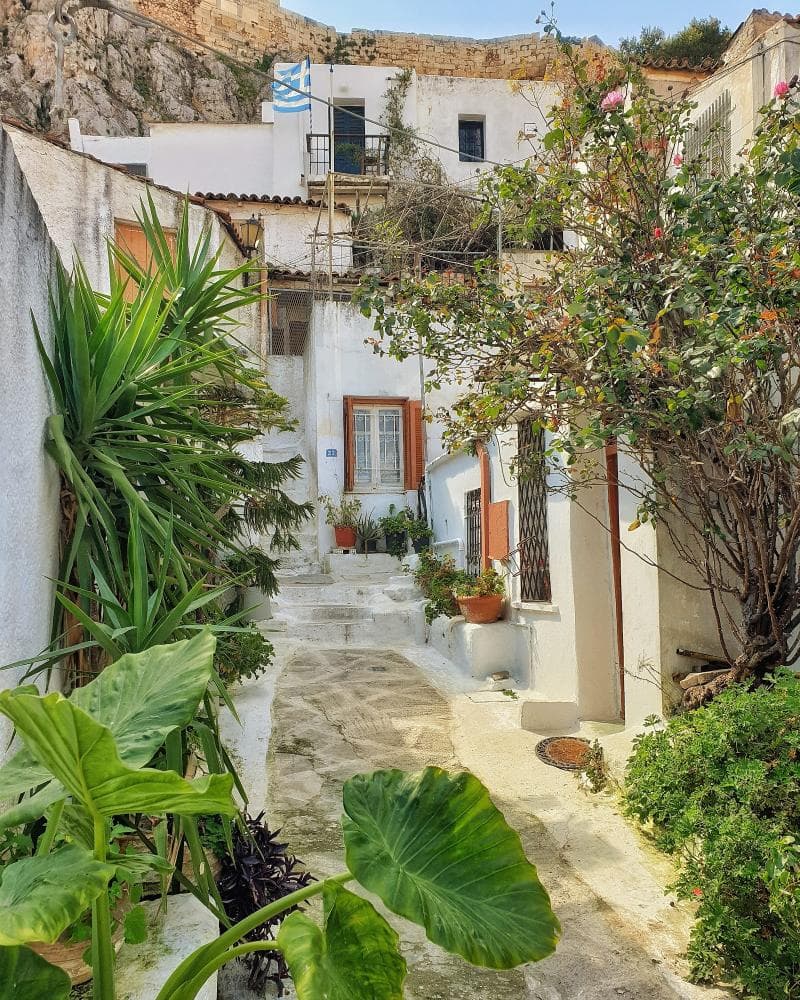
Discover Anafiotika, a hidden Cycladic village nestled in Athens, Greece, offering whitewashed houses, narrow alleys, and serene island charm beneath the Acropolis.
Overview
Tucked away beneath the majestic Acropolis in the heart of Athens, Greece, lies Anafiotika, a captivating 'village within a city'. This enchanting sub-spot within the larger Plaka district instantly transports visitors to a serene Cycladic island, far removed from the urban bustle. With its whitewashed cubic houses, labyrinthine narrow alleys, and vibrant bougainvillea spilling over walls, Anafiotika offers a unique architectural and atmospheric contrast to the neoclassical grandeur of Athens. It is primarily a residential neighborhood, offering an authentic glimpse into local life rather than a commercial tourist hub, with no shops, cafes, or restaurants within its immediate lanes.
Often described as an 'island without a sea', Anafiotika provides a tranquil oasis where time seems to slow down. Its car-free, winding footpaths lead explorers through a picturesque maze, occasionally opening up to small terraces that offer breathtaking panoramic views of Athens and Lycabettus Hill.
History & Cultural Background
The story of Anafiotika begins in the mid-19th century, during the reign of King Otto I, when Athens was undergoing significant reconstruction to become the capital of newly independent Greece. Skilled craftsmen and builders were sought from across Greece, with many coming from the small Cycladic island of Anafi, renowned for its stonemasons and carpenters.
These workers, needing housing near their construction sites, settled on the rocky northeastern slope of the Acropolis. Legend has it that they built their homes quickly, often overnight, taking advantage of an Ottoman-era law that granted ownership of any structure completed between sunset and sunrise. This audacious act occurred despite the area already being designated an archaeological zone. The first recorded inhabitants were G. Damigos, a carpenter, and M. Sigalas, a construction worker.
They constructed their houses in the traditional style of their homeland: simple, cubic, whitewashed structures with thick walls, colorful shutters, and terracotta roofs, reminiscent of the homes they had left behind on Anafi. Over time, more workers from other Cycladic islands and later, refugees from Asia Minor in 1922, also settled here, contributing to the neighborhood's unique character. Anafiotika faced challenges, including partial demolition for archaeological research in the 1950s and government acquisitions in the 1970s. Today, approximately 45 to 60 houses remain, largely inhabited by descendants of the original settlers, and are protected by a law stating they can only be passed down through families or returned to the state, not sold on the open market.
What Makes It Special
Anafiotika's undeniable charm lies in its striking resemblance to a Cycladic island village, a sight truly unexpected in a bustling metropolis like Athens. This architectural anomaly, directly beneath the ancient Acropolis, creates a fascinating juxtaposition of historical grandeur and humble, picturesque living. The absence of commercial establishments preserves its authentic residential feel, allowing for a deep sense of peace and quiet. Lush fuchsia bougainvillea and other seasonal flowers cascade over walls, enhancing its postcard-worthy beauty.
Beyond its visual appeal, Anafiotika is special for its quietude and unique atmosphere, providing a true escape from city life. The elevated position offers stunning vistas, particularly of Athens stretching towards Lycabettus Hill. The neighborhood also hosts several significant Byzantine churches, such as Agios Georgios tou Vrachou (St. George of the Rock), which anchors its southeastern edge, and the 17th-century Agios Simeon, which houses a revered copy of the Virgin Mary Kalamiotissa icon from Anafi.
Stories, Fun Facts & Local Details
One of the most captivating stories of Anafiotika is its illicit birth. The first inhabitants literally raced against the sun, building their homes in a single night to claim ownership, a testament to their resourcefulness and determination to create a slice of home in the capital. This explains why the houses are often simply numbered, like 'Anafiotika 1' or 'Anafiotika 2', with no formal street names – a subtle nod to its informal beginnings.
The neighborhood is affectionately known as 'little Anafi' due to its distinct Cycladic architectural style and the strong community ties to the island. Visitors often encounter the area's numerous feline residents, lazily basking in the sun or weaving through the narrow lanes, adding to the relaxed, island-like ambiance. Evidence of everyday life is everywhere, from laundry gently swaying in the breeze to potted herbs adorning doorsteps, giving a genuine sense of a living, breathing community.
The Church of St. George of the Rock holds a poignant memorial to Konstantinos Koukidis, an Evzone guard who, during the German occupation in 1941, reportedly wrapped himself in the Greek flag and leapt from the Acropolis rather than surrender it.
Visitor Perspective
Exploring Anafiotika is an experience best approached with a sense of wonder and a willingness to simply wander. There are no structured paths or prominent signs; the joy comes from getting a little 'lost' in its enchanting alleys. Comfortable, sturdy shoes are highly recommended, as the pathways are often steep and the stone steps irregular.
To fully appreciate its beauty and avoid crowds, visiting early in the morning or during the hour before sunset is ideal, when the light is soft and the atmosphere most serene. Given that Anafiotika is an active residential area, visitors are encouraged to be mindful and respectful of the inhabitants' privacy, maintaining a quiet presence and avoiding peeking into private courtyards. While GPS can be unreliable in its winding lanes, the general direction upwards from Plaka towards the Acropolis will lead you into this hidden gem.
Coordinates: 23.72778, 37.97222
View on Google Maps💬 How Travelers Describe This Place
Based on community votes
Unique
872Beautiful
846Interesting
684Photogenic
363Must See
87
Traveler Stories
Discover memorable experiences shared by travelers who have visited this place.
No traveler stories yet.
Be the first traveler to share what made this place memorable.

Tour
By
Spot
Discover amazing places around the world. Your journey starts here.
Explore
© 2026 TourBySpot. All rights reserved.