Amalienborg Museum
Copenhagen, Denmark
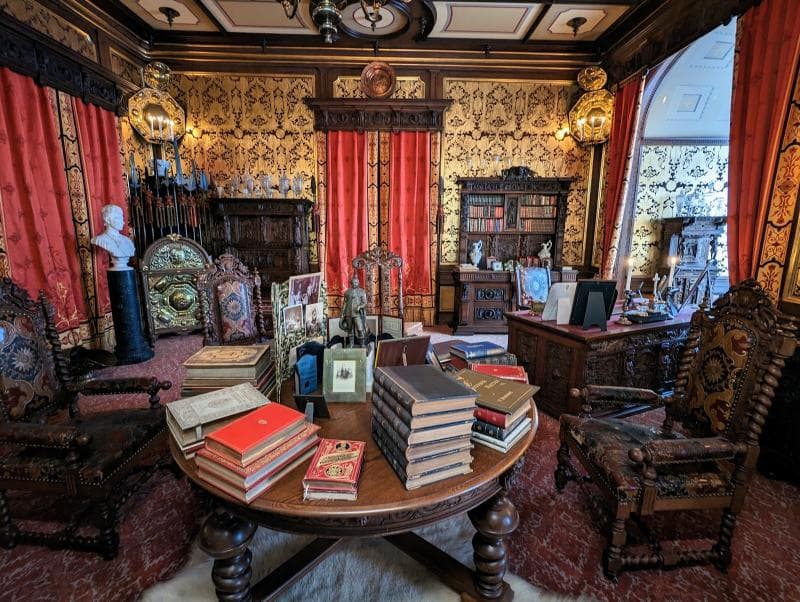
Explore Amalienborg Museum in Copenhagen, Denmark, delving into 150 years of Danish royal history, private interiors, and precious artifacts.
Overview
Nestled within the majestic Amalienborg Palace complex in Copenhagen, Denmark, the Amalienborg Museum offers a captivating journey into the heart of the Danish monarchy. This museum, housed specifically in Christian VIII's Palace, provides an intimate glimpse into the private lives and public roles of Denmark's royal family over the last 150 years. It stands as a testament to a living monarchy, showcasing the personal stories and grand traditions that have shaped a nation. Visitors can explore meticulously preserved royal apartments and extensive collections of artifacts, revealing the evolution of royal life from the mid-19th century to the present day.
Amalienborg Palace itself is a striking example of Rococo architecture, comprising four identical palaces arranged around an octagonal courtyard. In the center of this grand square stands an impressive equestrian statue of King Frederik V, the founder of Frederiksstaden, the district where Amalienborg is located. While the museum offers a deep dive into royal history, the palace square remains a vibrant public space, famous for the daily Changing of the Royal Guard, a spectacle that draws crowds to witness tradition in action.
History & Cultural Background
The history of Amalienborg Palace is a fascinating tale of aristocratic grandeur and royal adaptation. The four palaces were originally constructed between 1750 and 1760 for four prominent noble families as part of King Frederik V's ambitious Frederiksstaden district, designed to commemorate the Oldenburg family's long reign. However, fate intervened dramatically in 1794 when Christiansborg Palace, the royal family's primary residence, was destroyed by fire. The Danish Royal Family then acquired the Amalienborg palaces, initially as a temporary measure, but they soon became the permanent royal residence.
The Amalienborg Museum specifically chronicles the Glücksburg dynasty, which ascended to the Danish throne in 1863. This era marked a significant period for the Danish royal house, as its members forged strong dynastic ties across Europe. The museum's collections extend the narrative of the Royal Collections found at Rosenborg Castle, offering a continuous historical thread through Danish royal heritage.
What Makes It Special
What truly sets the Amalienborg Museum apart is its ability to transport visitors directly into the private world of royalty. Unlike many museums that display artifacts in a detached manner, Amalienborg Museum recreates authentic royal interiors, allowing one to step into the actual studies and salons used by past monarchs. You can walk through Christian X's study or Frederik IX's office, preserved exactly as they were when these kings worked and lived in them.
The museum's collection features an extraordinary array of personal belongings, including royal furniture, intricate jewelry, and ceremonial garments. A particular highlight is the Fabergé Chamber, home to one of the world's most significant collections of Russian jewelry, much of which arrived in Denmark through Empress Dagmar (Maria Feodorovna), daughter of King Christian IX. Furthermore, the museum provides access to the grand Gala Hall and other magnificent rooms on the 'piano nobile,' or noble floor, which are still used by the Royal Family for official receptions and events today, bridging the past with the present.
Stories, Fun Facts & Local Details
One of the most compelling stories woven into the fabric of the Amalienborg Museum is that of Christian IX and Queen Louise, often referred to as 'the in-laws of Europe.' This royal couple, whose private rooms are meticulously preserved in the museum, saw four of their six children ascend to various European thrones. Their offspring became monarchs of Denmark, Greece, Great Britain, and Russia, establishing an unparalleled network of royal connections across the continent. This familial influence underscored Denmark's position on the European stage during the late 19th and early 20th centuries.
A visit to Amalienborg is incomplete without experiencing the daily Changing of the Royal Guard, a tradition rich in pomp and circumstance. Every day at noon, the Royal Life Guard marches from Rosenborg Castle through the streets of Copenhagen to Amalienborg, culminating in a ceremonial changing of the guard. If the monarch is in residence, a full marching band often accompanies the guard, adding to the spectacle. Visitors are encouraged to observe this tradition from designated areas around the palace square.
Visitor Perspective
A visit to the Amalienborg Museum offers a unique and enriching experience for curious travelers interested in history, culture, and royalty. It provides an immersive look at Danish royal life, allowing one to appreciate the personal tastes and historical contexts of the monarchs. The museum’s layout within Christian VIII's Palace means that you are exploring a real royal residence, not just a gallery of objects. This creates an authentic connection to the lives of those who once inhabited these very rooms.
Beyond the historical exhibits, the museum provides insight into the ongoing relevance of the Danish monarchy in contemporary society, often featuring exhibitions that reflect current royal events. The blend of historical artifacts with the sense of a living, breathing institution makes the Amalienborg Museum a truly special destination in Copenhagen, inviting visitors to ponder the enduring legacy of one of the world's oldest monarchies.
Coordinates: 12.59333, 55.684028
View on Google Maps💬 How Travelers Describe This Place
Based on community votes
Photogenic
998Must See
685Unique
472Beautiful
399Interesting
92
Traveler Stories
Discover memorable experiences shared by travelers who have visited this place.
No traveler stories yet.
Be the first traveler to share what made this place memorable.

Tour
By
Spot
Discover amazing places around the world. Your journey starts here.
Explore
© 2026 TourBySpot. All rights reserved.